OFA started recording butterflies in the west Oxford floodplain in 2024. Each week from 1 April to the end of September volunteers record along a fixed route (a transect) using a methodology developed by the UK Butterfly Monitoring Scheme. We’ve just finished surveying the transect for 2026 and our records have been submitted to the national database.
It has been a good year with 317 butterflies recorded in total, well up on the 186 we recorded last year. The route starts near Osney Mead, crosses the meadows to the south of the Bulstake Stream, and finishes at Hogacre Common. Around 60% of the butterflies recorded were at Hogacre, the same percentage as last year.
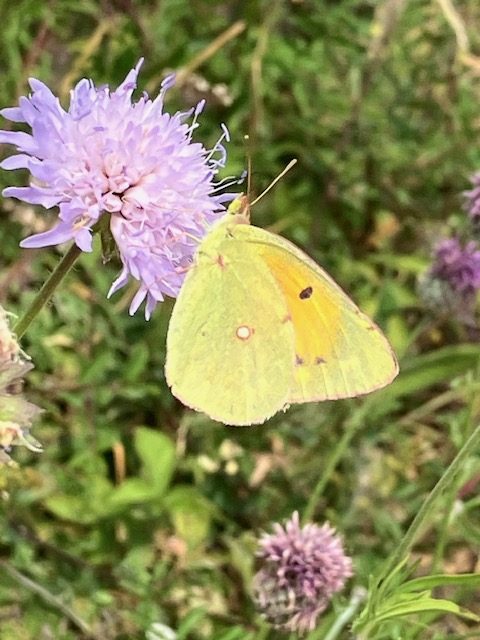
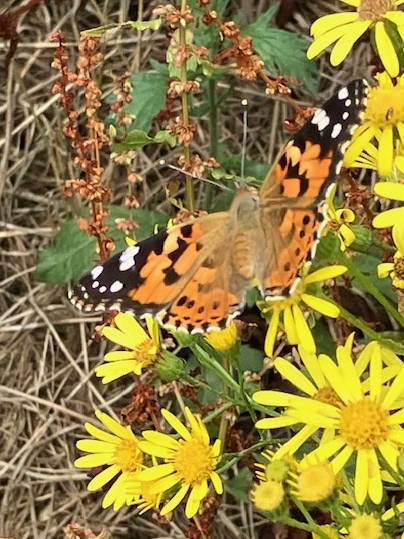
The number of species recorded was also up – 22 versus 19 last year. This was helped by the large numbers of migrant Painted Lady (below right) and Clouded Yellow (below left) coming across from Europe this summer.
There is some concern in butterfly conservation circles about what the drought over the summer will mean for numbers next year. Caterpillars depend on grasses, various herbaceous plants and shrubs for food, and vegetation was very parched. Eggs can also be affected by the heat. These kinds of temperatures are uncharted territory for the UK and we can only wait to see how butterflies will cope.
We need at least 5 years of data to be able to establish a reliable trend, and with climate change this becomes even more challenging. The survey route passes partly through areas where the Environment Agency will carry out habitat enhancement work as part of the flood alleviation scheme, and across land which is not within the flood scheme area (Hogacre). We are sharing our data with the Environment Agency as a contribution to establishing baseline conditions in the scheme area against which future trends can be measured. During the summer we met with a post-doctoral researcher from University of Oxford who is undertaking invertebrate surveying for the EA. We showed him the route of the transect and have shared our data with him.
We also share our data with the Hogacre trustees to help them understand what’s happening to butterflies at their site.