Letter in Oxford Times

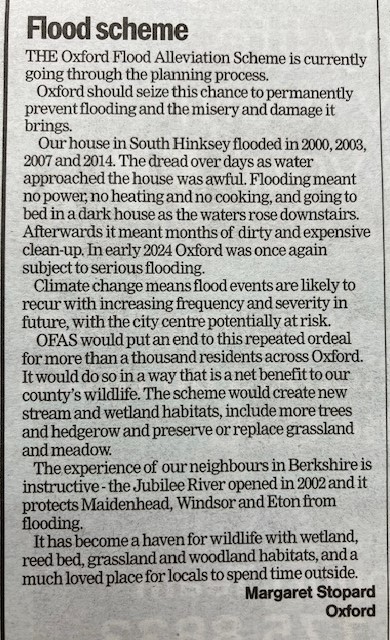
Today’s Oxford Times (8 February 2024) carries a letter supporting the flood alleviation scheme from Maggie Stoppard, the widow of Dr Peter Rawcliffe. Peter was one of the founders of the Oxford Flood Alliance. The letter describes Maggie’s personal experience of floods in South Hinksey, where she and Peter lived, and goes on to say:

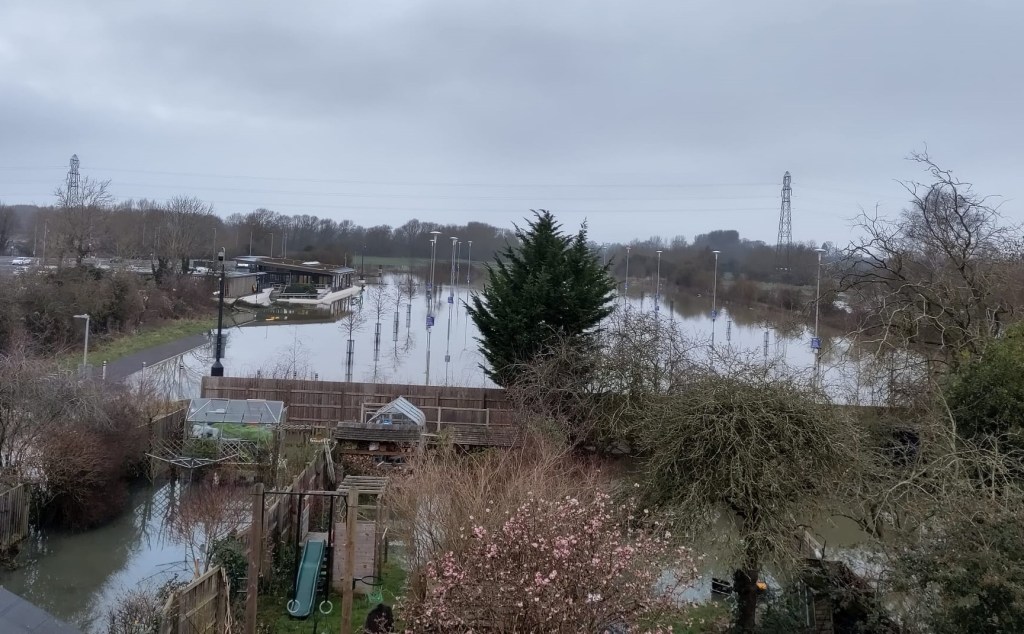
‘In early 2024 Oxford was once again subject to serious flooding. Climate change means flood events are likely to recur with increasing frequency and severity in future, with the city centre potentially at risk.

OFAS would put an end to this repeated ordeal for more than a thousand residents across Oxford. It would do so in a way that is a net benefit to our county’s wildlife. The scheme would create new stream and wetland habitats, include more trees and hedgerow and preserve or replace grassland and meadow.’

Maggie’s letter appears alongside an Oxford Times editorial about the flooding in January of a number of sites across the county which are earmarked for housing development. Planning professionals are now calling for a rethink of housing plans, and their comments have attracted support from across the political spectrum. ‘Flood risk needs to be taken seriously by the planning authorities,’ says the editorial.

OFA fully endorses this view. One of the reasons we have problems with flooding in areas like Earl St and Duke St is because of bad planning decisions in prior decades. Building on the floodplain has to stop.

Residents off Botley Rd call for flood scheme to be built

Fifty-seven residents from Earl St, Duke, St and Marlborough Court have written to the Leader of Oxfordshire County Council calling for construction work on the Oxford Flood Alleviation Scheme to begin urgently. They are frustrated that the scheme has been 10 years in design but there is still no firm date for when construction will start. These streets are some of the most vulnerable in Oxford and this January many residents relived the nightmare of past floods.

The letter, organsied by Earl St resident Dr Sebastiaan van Schaik, says:

Re: floods in West Oxford and the urgency of the Oxford Flood Alleviation Scheme 

Dear Cllr Leffman,

I’m writing to you on behalf of 57 residents of Earl Street, Duke Street, and Marlborough Court in West Oxford. As I’m sure you are aware, West Oxford and the Abingdon Road areas were severely affected by the floods in early January. We’re grateful to the people from the EA and ODS who worked 24/7 to redirect water and reduce damage to the best of their abilities. Most floors have now dried, pumps are gone, and the electricity is back on, but the streets are still littered with sewage and road surfaces remain in urgent need of repair. 

Needless to say, these floods come at a huge emotional and financial cost. For some of us, these were the first or most serious floods we’ve experienced; others still remember the trail of destruction left by the water back in 2000, 2003, 2007 and 2014. On top of that, the impact on local businesses is substantial, at a time many are already struggling. And all of us know: these floods could have been prevented. 

In 2015, the Environment Agency first consulted with local residents and organisations on draft designs of Oxford’s Flood Alleviation Scheme (OFAS). Of all the different options to reduce flood risks, the proposed natural channel has been shown by detailed modelling to be the most effective, and residents cannot wait for the work to commence. With this channel, our streets and homes wouldn’t have flooded. But instead, 10 years on from the 2014 floods, not a single spade has touched soil. And we all know that climate change will only result in more frequent and more severe floods. We need action now.

It is profoundly disappointing that we are still waiting for work to start. And to West Oxford residents, there is a deep added irony: badly planned railway works have cut us off from the city we live in. Meanwhile, the Botley Interchange can apparently be closed at the drop of a hat, effectively cutting us off from both sides. Private companies like Thames Water are allowed to flood our streets with sewage, and are permitted to maintain a semi-permanent bike lane closure on Osney Bridge. And big, tall biotech labs can be designed, approved, and built in the area within only a few years.

Yet our local and central governments and agencies are somehow unable to commence work on a carefully-designed natural flood channel through empty grassland, in order to provide West Oxford residents with the most basic of comforts: a safe and dry home. We all understand the need for due diligence, careful planning application processes, and procedures around compulsory purchase orders, but at the current rate it is likely that some of us will not live to see the completion of this scheme. We feel deeply let down.

Therefore, on behalf of 57 residents of our streets, I urge you and the County Council you lead to please collaborate closely with central government and the Environment Agency in order to cut red tape and expedite the building of the Oxford Flood Alleviation Scheme. 

At the same time, I urge our local City Councillors Pressel and Muddiman (both CC) to work with the County Council and EA to have the new flood channel completed as soon as possible. There are local elections coming up in 2024 (City) and 2025 (County), and it should not come as a surprise to anyone that this topic is high on the list of concerns of local residents.

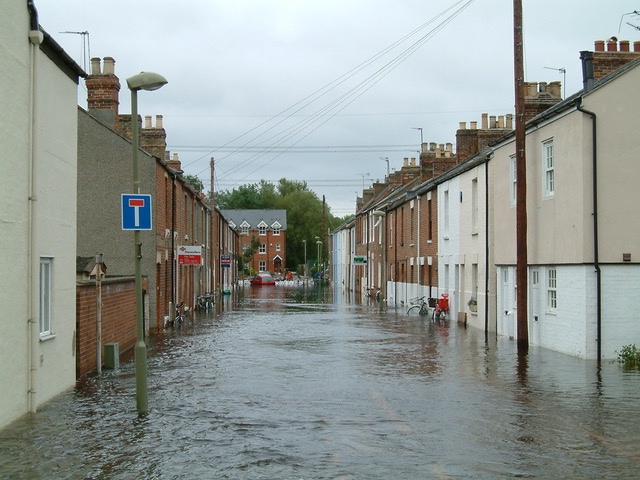
Earl St in July 2007

Dr van Schaik was interviewed on BBC Radio Oxford on Monday 5 Feb, and the story was also picked up by the Oxford Mail, and the Oxford Clarion.

Oxford Mail 7 Feb 2024

OFA on BBC Radio Oxford

Simon Collings, for OFA, was interviewed on the Sophie Law programme this morning, 29 January, at 8.20am. He spoke in support of the flood alleviation scheme as part of a news item marking the end of the public inquiry into the compulsory purchase order for the scheme. Simon emphasized the positive benefits for the natural environment which the scheme offers, and challenged ‘scaremongering’ predictions of ’a decade’ of traffic chaos from an objector.

After the interview there was a short report on the Jubilee River, an example of a scheme elsewhere in the country which has worked. The reporter said that before the scheme was built public opinion had been divided on the project. Ten years on the vast majority of people recognise the benefits it has brought. This January Maidenhead and Windsor stayed dry, even though there was flooding elsewhere in Berkshire, showing the scheme was effective.

Response to our email to Rishi Sunak

We have had a reply to an email OFA sent the Prime Minister on on 7 January about the urgent need for the Oxford Flood Alleviation Scheme. The response is from Anna Burns, Area Director – Thames, the Environment Agency, and begins: ‘The Prime Minister was grateful to meet with you and other residents of Oxford to see the impact of the flooding caused by Storm Henk, and to learn more about the Environment Agency’s progress with the scheme. He has read your email and asked me to respond on his behalf.’

The email then provides detail about the recent flooding, the EA’s response and the the current status of the planned flood alleviation scheme. Responding to our plea for faster progress, Ms Burns says: ‘I understand your frustration with the pace of the planning process, more so now given the events of recent weeks. However, I want to assure you that the Environment Agency are doing all they can to get the scheme approved and begin construction as soon as possible.’

CPO inquiry final day

The public inquiry into the compulsory purchase order linked to the Oxford Flood Alleviation Scheme concluded on Friday 6 Jan. The Environment Agency and opponents of the scheme presented summaries of their evidence to the planning inspector in a virtual meeting. These summary statements can be read on the inquiry website here (see Closing Submissions).

At the heart of the debate is the opposition claim that a better option than the scheme proposed by the EA exists. They have not themselves put forward a fully worked up alternative, only a series of outline ideas about where a solution might lie. They claim that if the EA were to undertake detailed work on any of the four ideas they have tabled, the agency should be able to find a better and cheaper solution. The EA rejects these claims and describes all four ideas as ‘non-starters’. This is for various reasons, including non-compliance with national policy guidelines, cost, potential damage to Hinksey Meadow, and a reduction in the reliability of the scheme. The EA argues that the proposals they have submitted for planning approval are the best solution for Oxford.

We now wait for the inspector to decide on the merits of the arguments and supporting evidence. She will make a recommendation to the Secretary of State at DEFRA, Stephen Barclay MP, who will have the final decision.

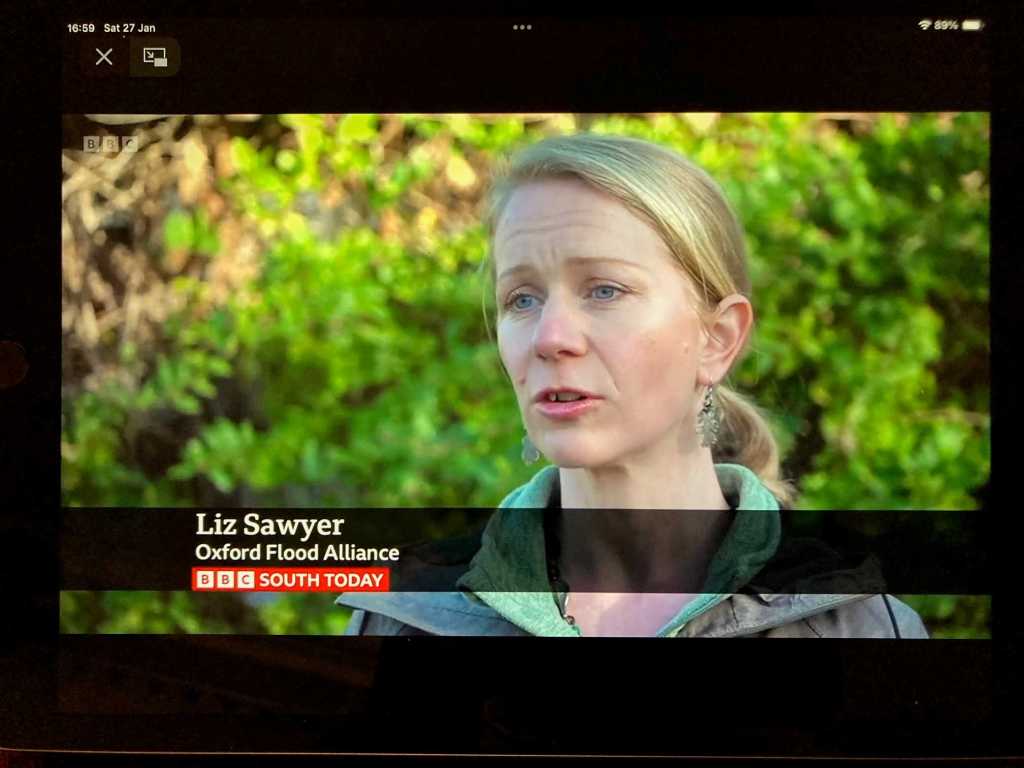
BBC South broadcast a brief report on the ending of the public inquiry on the evening of 6 January. Liz Sawyer of Oxford Flood Alliance was interviewed by the reporter.

What’s holding up the flood scheme?

The Oxford Mail today published an article in which OFA steering group member Simon Collings explains where the OFAS scheme has got to and what needs to happen now for it to be built. You can read the piece online here. Two processes are under way – planning consent and approval of a compulsory purchase order. Decisions on these are expected in the coming months. Agreement to proceed with constructing the scheme can’t come soon enough for many flood-affected Oxford residents.

Drone view of January 2024 floods

This short video shot using a drone provides a spectacular view of the current flooding in Oxford. It starts with the view north across the Botley Rd, then pans through 180 degrees to the right ending with a view of the floodplain down to Redbridge. The pictures were taken by Bas van Schaik, a resident of Earl Street, and are used here with his permission.

You may not know if neighbours are flooding

In many communities only a minority of properties are at risk of flooding, at least in relatively minor floods. Ground water rises in gardens and through the floor of the house, and floodwater infiltrates the gardens of house which back onto local water courses. This video, made by a resident of Osney Island, shows river water infiltrating an enclosed garden, and hoses spewing out water being pumped from under a floor. From the street it was not apparent that this house was at risk of flooding. Whatever community you live in please be sensitive to the fact that when river levels are high there may be people near you struggling to keep floodwater out of their house, even if the roads are dry.