Barriers deployed at South Hinksey and Bulstake Close

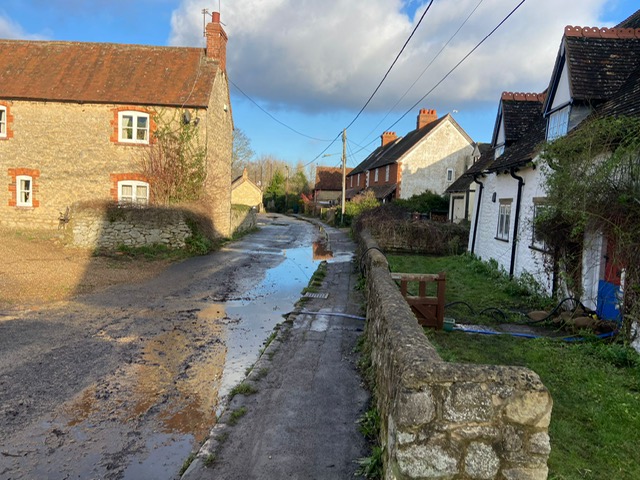
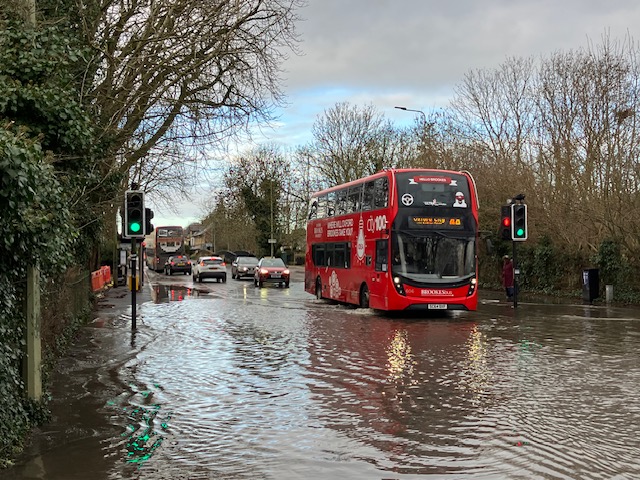
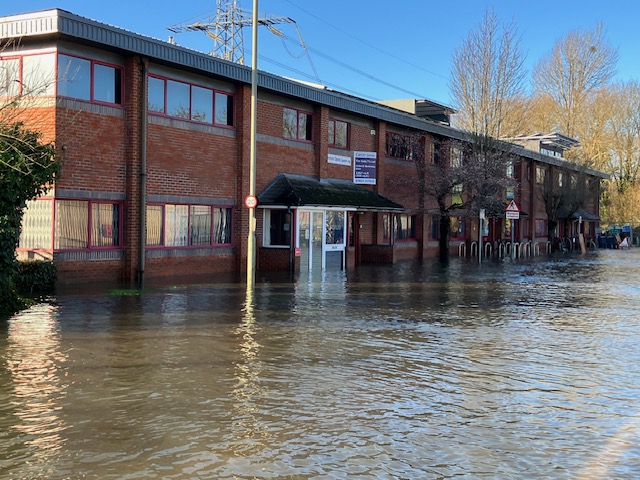
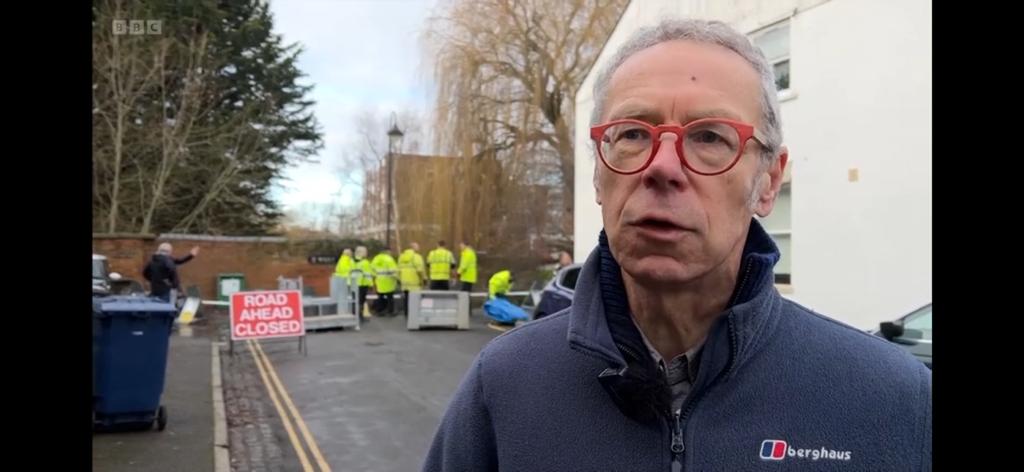
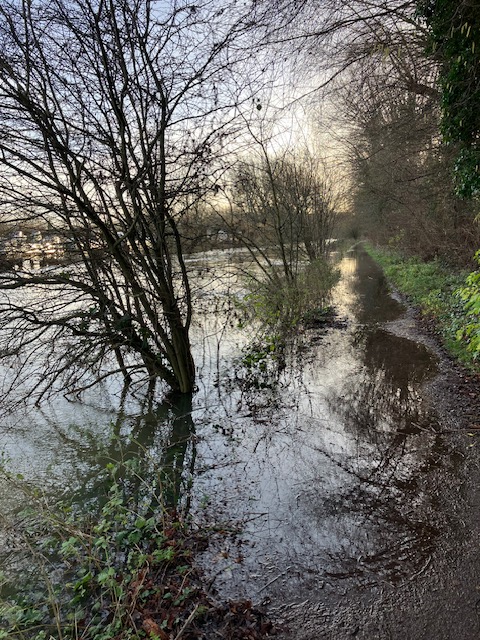
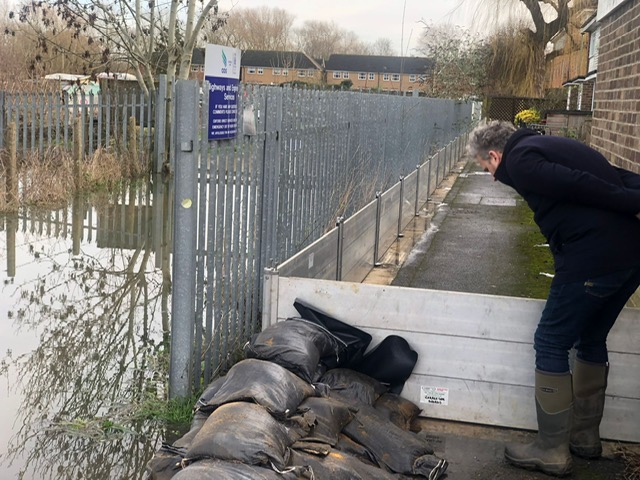
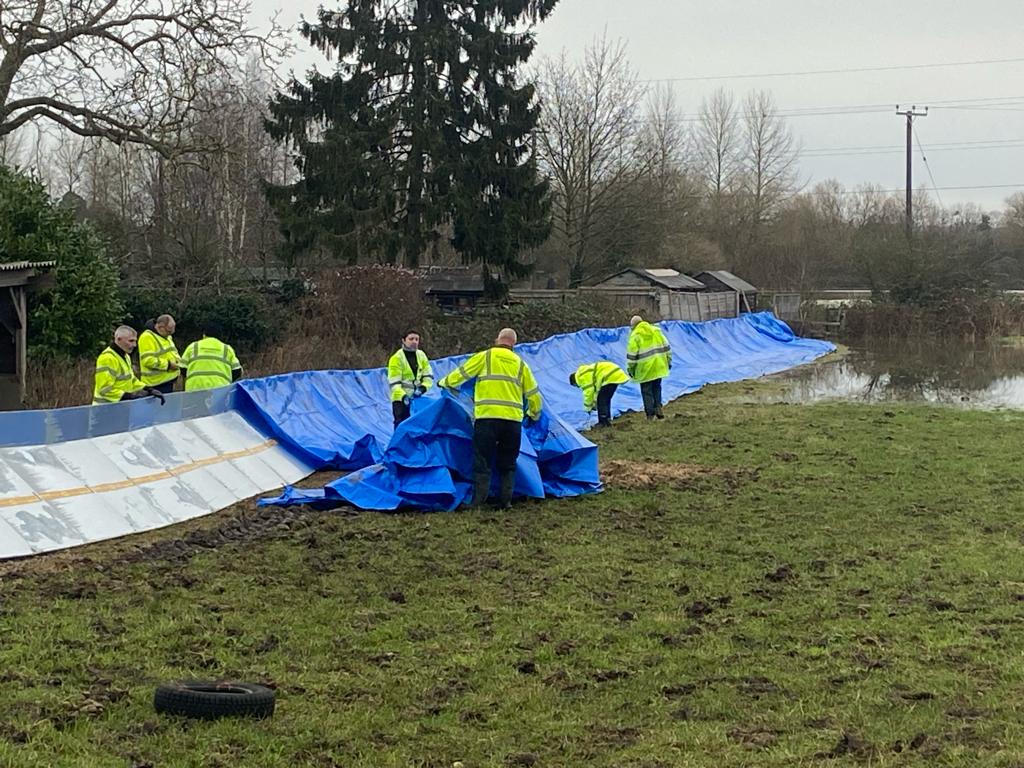
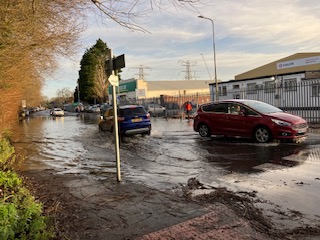
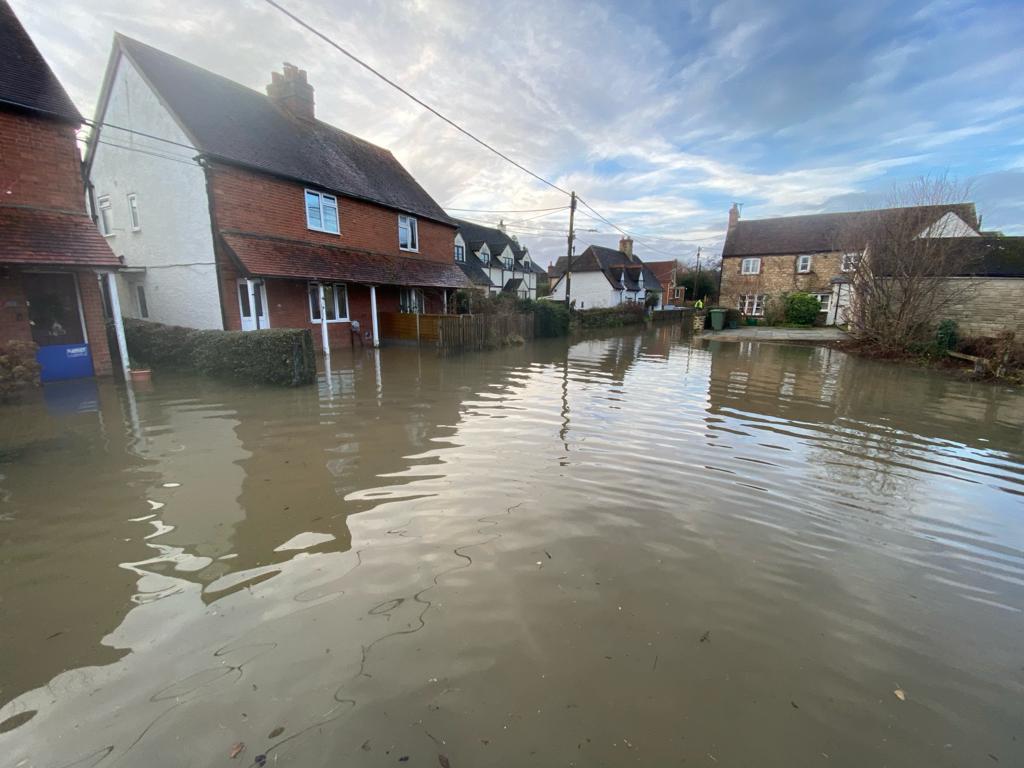
Defensive barriers were deployed earlier today at Bulstake Close (City Council) and in South Hinksey (Environment Agency). Barriers are expected to go up on West Street on Osney Island tomorrow. Below are pictures of some of the flooding and of the defences.

Flood warning for parts of Oxford

The Environment Agency issued a flood warning at 9.32am today for the River Thames and tributaries at New Botley, New Hinksey, North Hinksey, South Hinksey and Grandpont. The EA advise property flooding is expected. Their statement says: ‘River levels are rising on the River Thames and the watercourses around Oxford, including the Bulstake Stream as a result of heavy rainfall. Therefore, flooding of low lying land, roads and property is expected later this afternoon 04/01/2024, especially in the areas closest to the river in New Botley. Areas most at risk are properties on Botley Road, and the roads off Botley Road in New Botley.’

This is likely to be the most serious flooding we have seen since January 2014, the last big event. On 9 January 2014 the Thames south of Osney Lock peaked at 3.93m, the Bulstake Stream at 3.02m, and the Seacourt at 3.08. Current levels are around 30cms below those 2014 levels, but the river is sill rising with more heavy rain forecast. Current levels are higher than the Dec 2020 floods, and approaching the levels reached in February 2021, the previous worst flooding since 2014.

We understand that temporary defences will be erected at South Hinksey today and that the City Council is deploying defences behind Bulstake Close. The EA and local authorities are keeping the situation under close review and have teams ready to respond as need arises.

Everyone living in the affected areas should take the warnings seriously, monitor the evolving situation, and consider whether they need to take action to protect themselves and their property.

       Bottom of Ferry Hinksey Rd this morning. End of Willow Walk also flooded.

Park & Ride extension closed 101 days in 2023

The Seacourt Park & Ride extension is filling with water again as river levels in the area rise. Last year the facility was closed for a total on 101 days, much of this due to flooding or the risk of flooding, though towards the end of the year it remained shut even when not wet. In the planning application for the site, the City Council estimated that the extension would be closed on average 10 days a year due to flooding. The facility was called ‘essential infrastructure’ at the time of the planning application. OFA opposed the plans, which involved a small loss of floodplain capacity.

        Seacourt P&R extension today 2 Jan 2024 – large puddles on the left.

OFAS CPO inquiry fourth and final week

This was the final week of hearings in Oxford, with two short sessions Tuesday and Wednesday.

The proceedings on Tuesday wrapped up in less than an hour.

Ian Miles (Ox Uni + OUI) gave a brief update on the ongoing conversations with the Environment Agency, and said there is an expectation that an agreement will be reached. The problem is the status of Egrove Campus – whether it is ‘public open space’ or not. 

Mr Ian Beesley, a private objector,  then gave his evidence.  He has been represented by Carter Jonas with whom the EA have been in contact. He didn’t appear to like listening to Carter Jonas, however, and expressed the opinion that ‘there have been backhanders taken somewhere’. Richard Turney, for the EA, put it on record during cross-examination that the idea that there have been backhanders anywhere in the project is one that the EA do not accept and is not accurate.

Finally, Dr Sally Prime spoke about the importance of environmental heritage and the impossibility of offering compensation for something that is irreplaceable. Under cross-examination, she accepted that the EA are responsible for finding a way to alleviate flood risk in Oxford, but reiterated her opinion that the ‘no channel’ option had not been adequately considered.

The following day’s session lasted only 25 minutes. Councillor Martin Dowie, from North Hinksey Parish Council, was the only objector. He spoke not only as a councillor but also as an allotment holder. He emphasised that the Parish Council maintained its objection, as well as its concerns over the EA and the County Council ‘marking its own homework’ with regard to the future planning application. He adhered to the line that the alternatives had not been sufficiently investigated by the EA to convince him that the project was good value for money and that environmental damage had not been minimised.

Counsel for the EA cross-examined him on the issue that the scheme had been adequately tested by means of the inquiry itself, during which expert hydrologists for both sides had appeared and been cross-examined. Cllr Dowie could also not say that the alternatives would not also require the compulsory purchase of land. In the end, he agreed with Counsel not to call rebuttal witnesses but instead to refer the Inspector to the rebuttal statements made. 

Richer Sounds did not appear, nor did Ayse Ergenelli and Yvonne Hutchinson who had submitted written objections relating to equestrian activity.

DB Cargo appeared with legal representation, to report that negotiations with the EA are ongoing, that there is goodwill on both sides, and that there are no substantial issues that should concern the Inspector. It is likely they will be able to reach a deal with the EA.

The Inquiry will sit for 2 further days in January, but these will be virtual and not take place at the King’s Centre. Issues relating to open and exchange land will be considered on 19 January and closing submissions will take place on 26 January. There were some housekeeping announcements to the effect that the Inspector will not be  accepting further evidence or submissions from this point, and she urged the objectors to organise amongst themselves to keep their representations concise in January so as not to waste inquiry time. 

As a reminder, you can view all the inquiry documents and the most up-to-date inquiry programme on the programme officer’s website at Oxford Flood Alleviation Scheme CPO Inquiry | Helen Wilson Consultancy Limited (hwa.uk.com) This includes all the proofs of evidence, including a summary of the reasons why the EA rejects the alternatives proposed by objectors.

Oxford Flood Alliance appreciates the time and effort everyone put in attending the inquiry, preparing and presenting evidence, and for taking an interest in the proposal for the scheme. No matter what their opinion might be as to the merits or the disbenefits of this particular scheme, what brought everyone together in the inquiry was a shared love for Oxford and its green spaces, a desire that it be a sustainable place to live, and a driving sense of civic responsibility. Democracy doesn’t work if a multiplicity of views aren’t heard.

OFAS CPO inquiry week three

Week three of the CPO inquiry saw further detailed discussion of points raised by objectors to the scheme. It opened with evidence presented by Ferry Hinksey Trust/OFEG, starting with their hydrology expert, Clive Carpenter. He was followed by Patricia Murphy and Brian Durham.

Mr Carpenter had been asked by his client to review four ‘alternative options’: no channel, no channel with raised flood defences, an alternative road configuration at Old Abingdon Rd, and a pump and pipes option.  The main thrust of his argument was around no channel with raised defences, which he felt might be made to work if effort was put into finding engineering solutions to the additional flooding caused by removing the channel. He said he was trying to demonstrate that there were options the EA could have explored, not that he had all the answers. The EA response was that they do not believe the affects of removing the channel can be compensated for.

Patricia Murphy argued there had been no engagement from the EA on OFEG’s concerns. The EA barrister cross-questioning her took her through a detailed summary of all the community engagement since the scheme was first proposed, including all the topics discussed. Ms Murphy acknowledged she had participated in many of these events. The barrister pointed out that this was ‘engagement’ and that consulting people didn’t mean agreeing with all their arguments.

Mr Durham also asserted that the EA hadn’t engaged on the 4 ‘alternatives’ under discussion, but in cross-questioning accepted there had been extensive discussion and correspondence with him.  By ‘hadn’t engaged’ he meant the EA hadn’t taken up any of these ideas. Counsel for the EA explained through questioning the reasons for rejecting the four options which had previously been discussed with Mr Carpenter.  On the pump and pipe solution Mr Durham accepted the EA has an objection in principle to this approach and acknowledged that: ‘if one had an alternative one wouldn’t rely on pumping’.

The following day the EA presented their rebuttal evidence in response to the FHT/OFEG  proofs of evidence, and  EA witnesses were then cross questioned. Counsel for the opposition focused on two main points:  a) a discussion around the degree of uncertainty created by removing the channel versus the scheme as designed, and b) the idea that in a no channel scenario the EA could contract with landowners to make sure they manage their land in a way which facilitates conveyance of flood water. The EA said that if the channel were removed they would have to acquire rights over the entire floodplain, because it is not legal to increase flooding of other people’s land. The EA believes the predictability afforded by the channel is integral to the scheme and they would not support a scheme with no channel.

Thursday saw other objectors give their evidence. James Wynne, Chair of the Trustees of the 4th Oxford Scout Group, presented his  concerns about the future of the scout group which is looking for a new permanent base, one option being a site affected by OFAS.  The inquiry heard that the EA has been in communications with Mr Wynne around access to the site, and that the EA is happy to work with the Scouts once they have a licence to use the land. Access to the site for recreation and education is one of the EA’s goals for the scheme. 

Next Elizabeth Jukes, a resident of South Hinksey, outlined how her garden will host one of the scheme’s flood barrier walls. Her objection centred on the disruption to and mess in her garden over the period of the building of the scheme, and to having in her garden a permanent flood wall. The EA have been in discussion with this objector and understand the concern. They said that the disruption will be intermittent and with notice, and that following the completion of the scheme, the EA will ensure that the tree replanting is done according to homeowner’s wishes. 

The next objectors were Riki Therivel and Tim O’Hara. Dr Therivel’s objections centred on the potential safety risk of HGVs exiting South Hinksey onto the A34 over the course of the construction of the scheme, and the potential disruption that a 40mph speed limit could cause to other users of the A34. She argued this could have economic costs. In his rebuttal evidence Mr Lear, for the EA, explained that the number of trucks per hour was small and neither National Highways nor the local highways authority have concerns about the impact on traffic flows or safety.

Mr O’Hara’s evidence addressed the extent to which alternatives have been investigated, including a discussion about the weight which should be given to impacts which are not eligible for inclusion in the formal cost benefit analysis. Emma Formoy for the EA explained that although the financial calculations of flood impacts at a national level do not include local impacts, the team not only assess these economic impacts in their scheme appraisals, but consider them important because of the effect they have on Oxford’s local economy. 

The day finished with evidence from Dr Tim King, and a presentation by Jonathan Madden about the pump and pipe solution. The EA does not consider pumping a viable option, with reasons for this explored in cross-questioning.

A site visit to parts of the scheme took place on Friday 1 Dec and the rest of the scheme area will be visited on Monday 4 Dec. This is to enable the inspector to see the various locations which have been in discussion over the last three weeks.

The inquiry will sit again on Tuesday 12 December, where a small number of remaining objectors will make their arguments.

Oxford Flood Alleviation Scheme CPO inquiry week 2

The second week of the Inquiry was devoted to hearing the submissions of the first Statutory Objector to the scheme, the Oxford Preservation Trust. Their arguments focused on two major points. Firstly they claimed that the Environment Agency had been slow to realise the ecological importance of Hinksey Meadow and in consequence the impact of the scheme had not been studied in sufficient detail. The second claim was that the option of having no channel in the meadow, and therefore leaving the site untouched, had not been fully examined. OPT accept that conveyance of flood water has to pass through the meadow but want the channel removed.

The OPT’s fielded three expert witnesses, on hydrogeology, fluvial hydrology, and ecology. Ms Fraser’s evidence on hydrology cast doubt on the reliability of the EA’s understanding about how the gravel aquifers in the area work. Her evidence was extremely technical, and focused on interrogating the methodology used by the Environment Agency to model the way that water moves across the scheme. In her expert opinion, there remained uncertainty as to how the surface water and groundwater interact, including which direction the groundwater actually flows through the site. 

Additionally, the calibration of the model used by the EA resulted in scenarios that do not match the “real world” movement of water in the area (although she also explained in cross-examination that all models are different to reality to some extent, by the very nature of their being models). This led her to conclude that groundwater in the area could be lowered by the scheme at certain times of the year. The consequences of this, in her opinion, were that there was no evidence to conclude the mitigation sites would be suitable for MG4 grassland. As for mitigation, it was premature to start to consider mitigation while the hydrogeology of the site was still unclear.

In cross-examination, Ms Fraser clarified that her analysis was based purely on the impact of the scheme on the water levels on the OPT meadow, rather than at a regional level, and that she had not been asked to analyse what the impact on groundwater would be if there were a submerged twin pipe scheme going through the meadow.

The EA fielded three members of their team, covering modelling, ecology and scheme design, to rebut arguments advanced by the OPT. The EA argued that they were aware of the importance of the meadow in 2014 when it was decided to develop the scheme. The first botanical studies were undertaken in 2015. The EA accepted that the model used to assess impacts on groundwater at Hinksey Meadow has limitations – it was designed for a different purpose. They also accepted that some data had been entered incorrectly. Ground water in the meadow will be monitored going forward and mitigation for any change in the levels can be adjusted as required. The EA has had boreholes in the meadow since 2018 and now has sufficient data to be able to establish a robust baseline for tracking any future changes to groundwater levels. A more refined model would not fundamentally affect the need to route the channel along the side of the meadow. 

The EA also argued that they have reviewed the ‘no channel in the meadow’ option but conclude it would increase flood risk and make the performance of the scheme unpredictable. They do not see any viable way of mitigating these effects. This was the only alternative put forward by OPT to the scheme as designed.

The OPT and EA agreed a statement of common ground on a number of planning issues which OPT had intended to raise. The inquiry adjourned early at 2pm on Thursday and will recommence Tuesday 28 November.

Week one of CPO inquiry

The Public Inquiry into the Compulsory Purchase Order for the Oxford Flood Alleviation Scheme opened on Tuesday 14 November at the King’s Centre on Osney Mead. It will run for approximately five weeks, and is open to the public.

A Compulsory Purchase Order Inquiry is a normal part of many large developments that stretch over multiple parcels of land. The purpose of the process is to ensure that property owners’ rights are considered carefully. The case is determined by an independent Inspector, appointed from the Planning Inspectorate. In coming to their decision, the Inspector judges whether or not there is a compelling case in the public interest, and whether there has been enough engagement with landowners to show that the CPO is being used as a last resort.

The Inspector also considers whether there is any impediment to the scheme going ahead: this matters because, once a CPO has been confirmed, a scheme should be quickly implemented so that people who have been deprived of their land are not left ‘in limbo’ for a long (or even indefinite) period of time. For this reason, Compulsory Purchase Orders often take place in tandem with planning permission applications, even though the CPO Inquiry process is entirely separate to the planning application for OFAS, which will be determined by Oxfordshire County Council.

Day One saw the different parties making their opening statements: The Environment Agency (as proposer of the scheme), the Oxford Preservation Trust, and the Ferry Hinksey Trust and the Oxford Flood and Environment Group.

The first week of the Inquiry has seen the Environment Agency experts explain the scheme in minute detail, showing how it was designed, how it will work given the hydrology of the area, how it is being funded, and how discussions with landowners have progressed. The team also covered the benefits, the ongoing maintenance required, the impacts on highways, compliance with planning policy, the impacts on the environment, landscape, and public access, and all the ramifications of the construction of the scheme.

Members of the public are able to ask questions of each expert after hearing their evidence, and the Inspector also asks her own questions.

On Thursday, members of the public in support of the scheme were heard. These included Andrew Down and Cllr Bethia Thomas from the Vale of the White Horse District Council, Cllr Nigel Chapman from Oxford City Council, and Bob Price, former leader of Oxford City Council. These speakers pointed out the unique opportunity offered by the scheme to tackle an expensive and complicated problem affecting the entire region, and the high cost-benefit ratio.

Members of the Oxford Flood Alliance spoke about their experiences of flooding in their own areas of Oxford. Adrian Porter recounted his experiences of being flooded at night with a young family and spending 6 months in alternative accommodation. John Mastroddi, part of whose garden will be compulsorily purchased, gave the perspective from Kennington, where residents worked together to prevent floodwater from being washed into neighbouring houses. Simon Collings described the flooding of his own house and others on Osney Island, and the work that is ongoing with the EA and other organisations to ensure that the biodiversity impacts of the Scheme are mitigated. Finally, Nick Hills told the story of residents of Earl Street and how he had been called up on holiday by Cllr Susannah Pressell, the Lord Mayor at the time, to be told that the street, and his own house, was flooding. He then asked some neighbours to lift his furniture as best they could. Over the last two decades, he has led the residents of Earl Street in protecting themselves from flood risk, including working with the council to have a bund installed at the top of the street and securing investment for a community-owned pump.

The members of the Flood Alliance demonstrated their commitment to working together to reduce flood risk across Oxford, not just in their own neighbourhoods. They showed how they have engaged with an extremely large number of local authorities, statutory undertakers, regional partners, national organisations, and most of all the general public and Oxford’s residents over the years to achieve this goal.

Next week will see the submissions and witnesses on behalf of the Oxford Preservation Trust, opposing the scheme on environmental and planning grounds. The Inquiry will open on Tuesday at 9.30am.

OFA on BBC Radio Oxford

OFA member Simon Collings was interviewed on BBC Radio Oxford this morning about the Oxford Flood Alleviation Scheme and the public inquiry into the Compulsory Purchase Order which starts today. Simon talked about the misery of being flooded and the need to be pressing on urgently with implementing the scheme. He rejected claims that there are better options than the one proposed by the Environment Agency, and he welcomed the inquiry as a fair method for resolving challenges from opponents of the scheme.

There wasn’t time during the interview to deal with a claim by the spokesperson for the opposition that the scheme will ‘destroy Hinksey Meadow’. This is not true. The Environment Agency has worked very hard to minimise the impact of the scheme on the meadow and has worked closely with the Floodplain Meadows Partnership, the UK experts, in designing the scheme.

Jon Mansbridge from the Environment Agency was also interviewed later in the morning. He explained what the flood alleviation scheme will deliver, both in reducing flood risk and environmental benefits. If the scheme gets approval it is hoped construction will begin in late 2024. It will take five years to complete the scheme but benefits will begin to accrue as elements of the project are put in place.

You can catch recordings of the interviews on BBC Listen Live.https://www.bbc.co.uk/sounds/play/live:bbc_radio_oxford. Listen from 7.20am to hear Simon and from 8.20am for Jon Mansbridge.

Letters of support to CPO inquiry

Fifty-one letters supporting the flood alleviation scheme have been sent to the CPO inquiry, most of them by people in areas of Oxford at risk of flooding. Oxford Flood Alliance contacted a number of long term residents with experience of flooding and asked them to write. Many of the letters recount residents personal, often harrowing, experiences of floods and make a powerful case for why we need the Oxford Flood Alleviation Scheme. These voices are representative of the community the Oxford Flood Alliance was set up to serve and on whose behalf we speak.

The letters, along with written representations from OFA, proofs of evidence from the Environment Agency and evidence from objectors, can be read on the inquiry website https://www.hwa.uk.com/site/wp-content/uploads/2023/08/Inquiry-Documents-List-26-10-2023.pdf

The inquiry starts on 14 November and is being held at the King’s Centre, Osney Mead, Oxford.

Oxford Flood Alliance will speak at CPO inquiry

The public inquiry into objections to the compulsory purchase order, issued by the Environment Agency in connection with the flood alleviation scheme, will start on 14 November. Four members of the Oxford Flood Alliance Steering Group will be speaking at the inquiry in support of the scheme. We want the planning inspector who is hearing the objections to support the CPO.

The Environment Agency contacted around 400 landowners at the start of this year about more than 800 parcels of land which the agency needs to acquire to build the scheme. Some of these acquisitions will be temporary. There have been 27 objections from landowners, who are referred to as ‘statutory objectors’. The majority of these objections relate to specific land-related issues or to protection of infrastructure including railway assets and National Grid pylons. The Environment Agency expects to resolve many of these issues before the inquiry starts. Five of the statutory objectors oppose the flood scheme in principle or aspects of it.

There are also twenty-three ‘non-statutory objectors’, members of the public who do not own land subject to compulsory purchase. These objections range from concerns about future public access to the scheme area for recreation and dog walking through to environmental concerns about the scheme or aspects of the scheme.

OFA has been asking people in flood-affected communities in Oxford to write to the CPO inquiry in support of the flood scheme. It is important that the inspector hears the voices of people wanting the scheme to go ahead.

If you have not been approached by OFA but would like to write in support of the scheme you should send your comments in an email to the Programme Officer, Helen Wilson, who is supporting the Planning Inspector. Helen Wilson’s email is progofficer@aol.com. The deadline for letters is 5pm on 17 October.

The inquiry is being held at the King’s Centre, Osney Mead and is open to the public. Sessions run Tuesday-Thursday and in some weeks on a Friday. The hearings are scheduled to run for five weeks. OFA members expect to be speaking on the afternoon of 16 November. Information about the inquiry can be found here. All of the objections, with responses from the Environment Agency, are listed in Appendix 2 of the Statement of Case which is available from this link.