
-
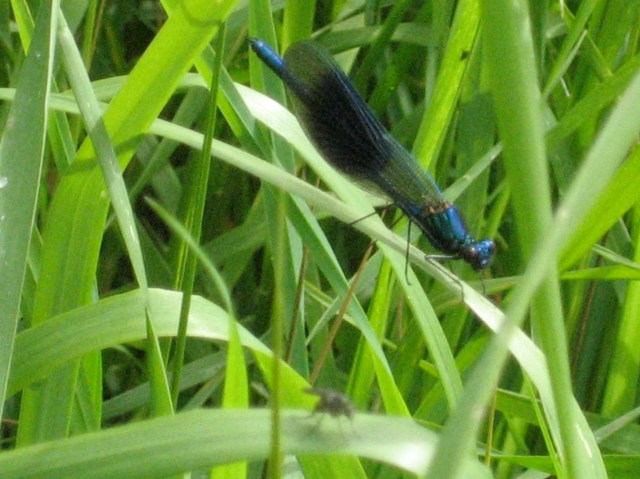
- Banded Demoiselle (damsefly) (Calopteryx splendens), male
-
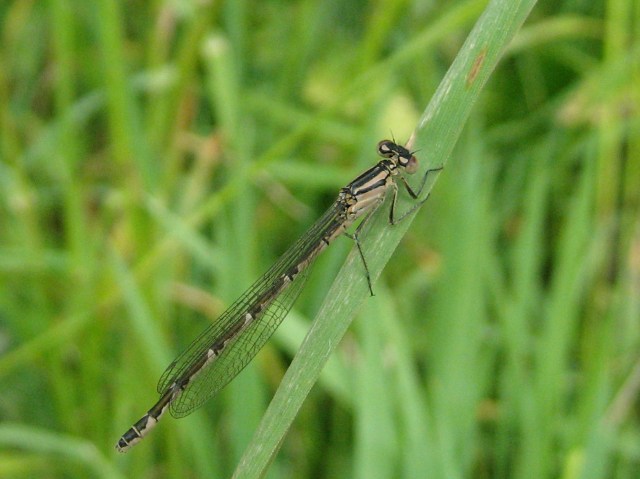
- Common Blue Damselfly (Enallagma cyathigerum), female.
Attended an environmental update meeting yesterday, organised by the EA with a number of local environmental stakeholders attending. A lot of thought is going into making the most of possible environmental enhancements that the Scheme can bring.
Led by Penny Burt of the Environment Agency we covered surveys, ecological trial areas, archaeology, low-flows and existing watercourses, fish passage, Hinksey Meadow, trees and bridges, habitat creation and access. Also mentioned was future maintenance – we felt that the plans were not nearly long-term enough and this was discussed.
For our part we are working closely with the Freshwater Habitats Trust. The Oxford area is rich in freshwater species, though there is, nevertheless, a long term decline: this Scheme could help reverse that trend. We’d like to give the public, including school children, a chance to be involved, including with data collection in the field – sometimes called ‘citizen science’.
The damselflies in the photographs are closely associated with the freshwater habitat.
 oxford flood alliance