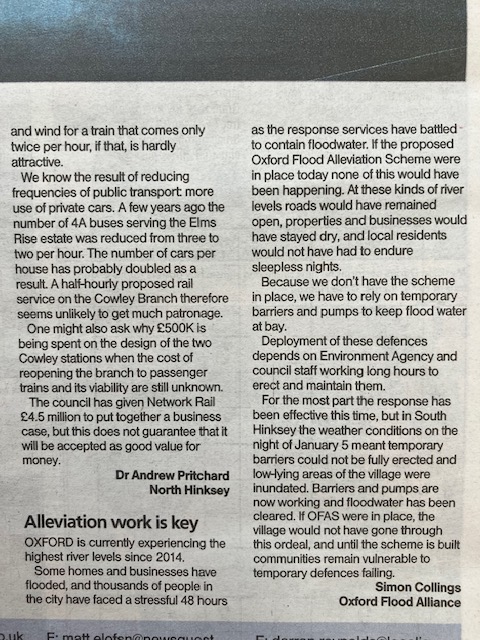
Oxford Flood Alliance has a letter in today’s Oxford Mail pointing out that had the flood alleviation scheme been in place none of the chaos we’ve seen over the last 5 days would have happened. Homes and businesses in the city would not have flooded, roads would have been dry, and we wouldn’t have been using up EA and Council staff time and budget deploying barriers, sandbags and pumps.
Even those who objected to aspects of the proposed Oxford Flood Alleviation Scheme at the recent public inquiry agree that we need a flood scheme of some sort. There’s even common ground about many aspects of the OFAS design, the engineering work at Redbridge, Kennington and Seacourt, and flood bunds, for example. The sticking point is the two stage channel.
We’ll never get concensus on these issues and choices have to be made by the County planners and DEFRA. That process needs to happen speedily now. OFA wants to see a decision for the scheme to go ahead. Flooding is going to get more frequent and severe. We cannot keep muddling through the way we are currently.
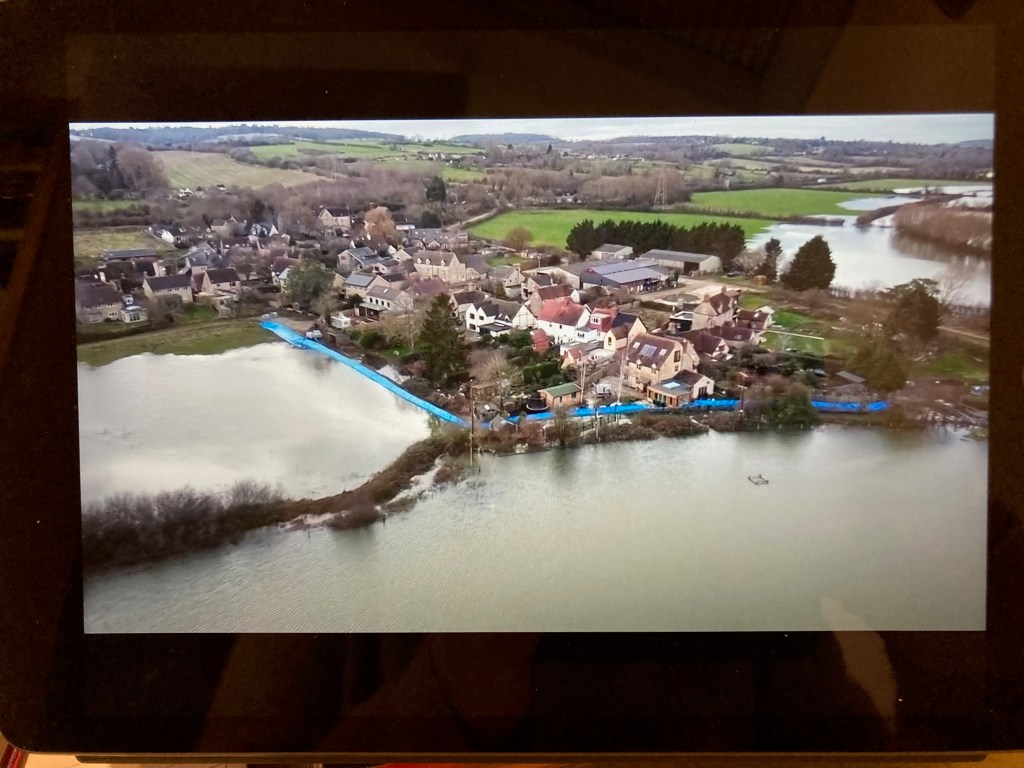
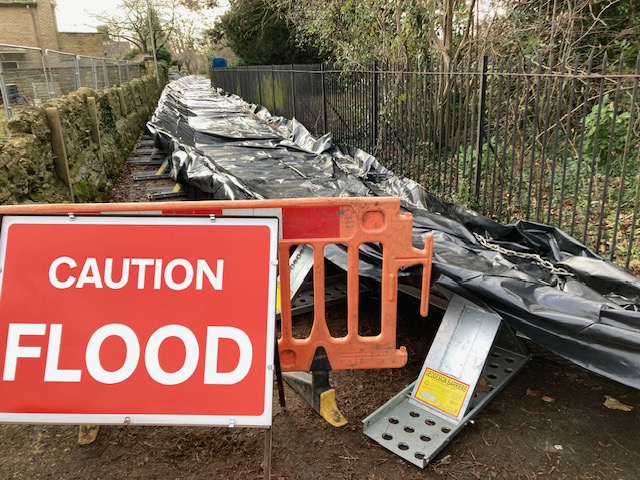
Here is a short video of the flood barrier and pumps in action in South Hinksey. This demonstrates that a permanent bund, as proposed by the Oxford Flood Alleviation Scheme, would be effective. This video of South Hinksey Floods January 2024 by Trevor A Garnham also shows the defences in action – link shared with Trevor’s permission.
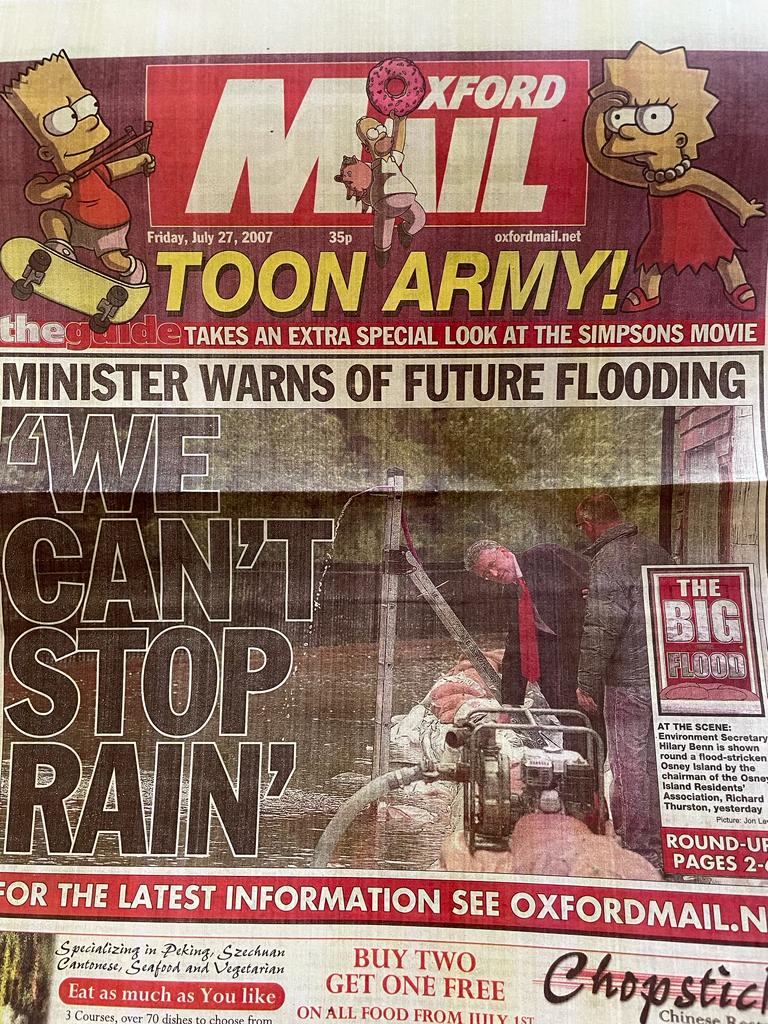
Oxford MP Anneliese Dodds has expressed frustration at the long wait for the delivery of a flood solution for Oxford. She told the BBC that such projects need to accelerated for the sake of those being repeatedly affected by flooding. The full story is here. We share her frustration. In 2007 the then Environment Secretary Hilary Benn came to view the flooding in Oxford, and was photographed at the same spot on Osney Island where Rishi Sunak was pictured yesterday. The Oxford Mail headline at the time read: ‘Minister Warns of Future Flooding’. Well he was right about that. The big question is when we’re finally going to do something about it.
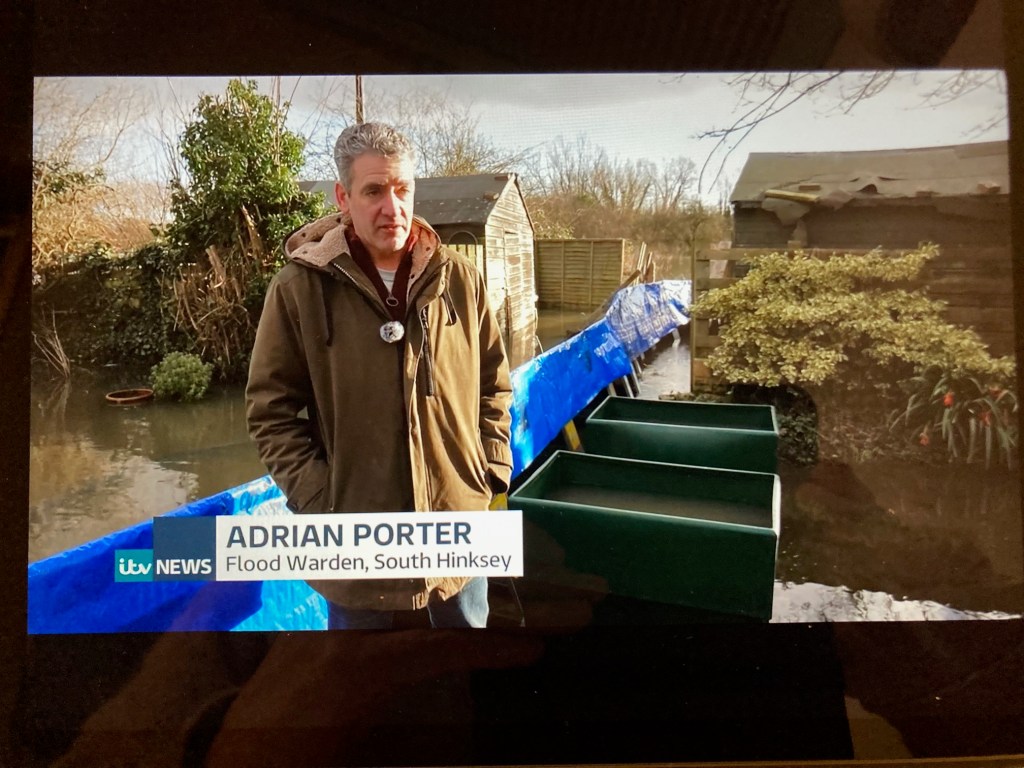
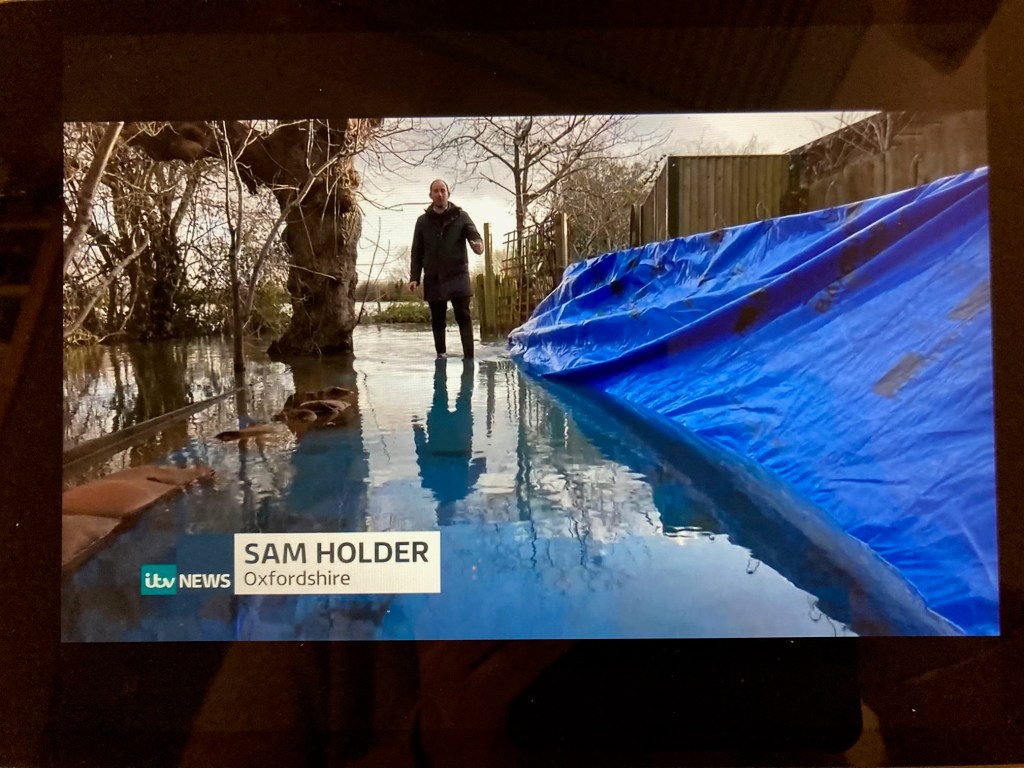
Adrian Porter from OFA was interviewed by ITV yesterday as part of a report on the flooding in South Hinksey. The news item focused on the failure of the Environment Agency to fully deploy defences around the village last Thursday, 4 January. After torrential rain on the Thursday evening, stream culverts in the village were overwhelmed, a large garden at the top of the village was under 1m of water and the sewers surcharged with enough pressure to lift the manhole covers. All that flow ended up in the lower part of the village and was prevented from flowing away by the flood water.
Without pumps and no effective barrier, residents had no alternative but to watch the water rise and do their best to protect their homes. Flood water, pluvial water and sewage water combining to create the worst flood event in ten years.
It took until Saturday evening for the barrier to be completed, pumps deployed and the water to be reduced to below-threshold levels throughout the community. But by then residents had endured serious flooding including within properties, and massive personal & emotional disruption for three days.
The defences are now functioning and floodwater has drained from the village. Sam Holder, the ITV reporter, made a forceful case for having permanent defences in place rather than relying on temporary measures. He asked why, after 10 years of development, the flood scheme is still stuck in planning? The problem he said is ‘bureaucracy’.
Built into the OFAS scheme is a permanent bund for South Hinksey, which would provide early benefit within the implementation of the scheme, and protect the community from all events up to and including 1% AEP (1 in 100 year event). The deployment decision would be reduced to that of pumping equipment and the risk of a delayed or incomplete barrier would be removed. The water seal from a bund would greatly exceed that provided by the temporary defences meaning fewer or smaller pumps would be needed and the barrier, personnel and pumps not needed here would be free to use elsewhere.
This event has proven that the village is defendable, but also that we need a permanent solution that provides the same or better benefit more reliably. That solution is the Oxford Flood Alleviation Scheme.
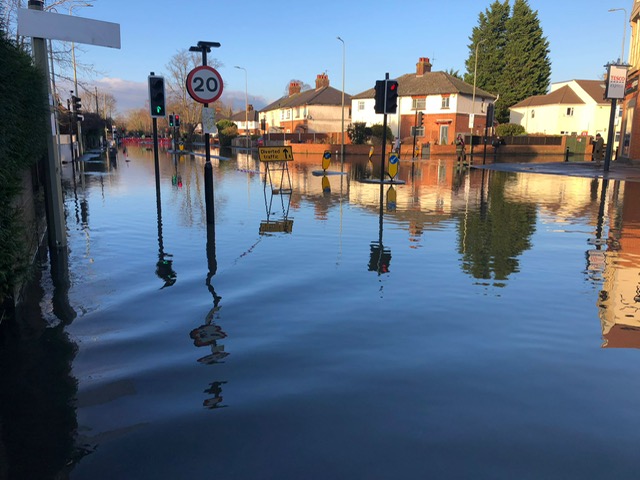
Abingdon Rd, still closed after 3 daysFire Service pumping at Weir’s LaneBarriers along New Hinksey LakePump in Vicarage LaneFlooding behind Marlborough RdKennington Rd under waterMunday’s bridge under the railway, KenningtonRoad flooded at North HinkseyTraffic negotiating deep floodwater at western end of Botley Rd
Prime Minister Rishi Sunak was in Oxford today reviewing the response to local flooding. Simon Collings from OFA met him with two other local residents on Osney Island and spoke to him about the current flooding and the response. This included the need for support from the government for the Environment Agency and flood relief more generally. The Prime Minister then went into the EA yard where he met members of the team who have been responding to the current emergency. There’s a brief report on Yahoo here. After the visit, OFA wrote to the Prime Minister urging him to use his influence to secure support for the Oxford Flood Alleviation Scheme.
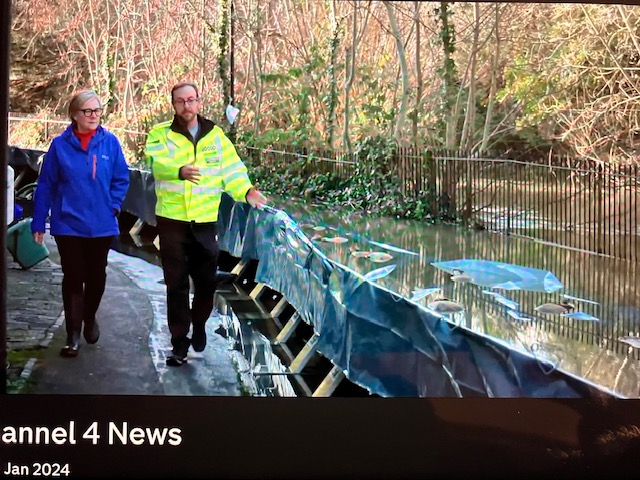
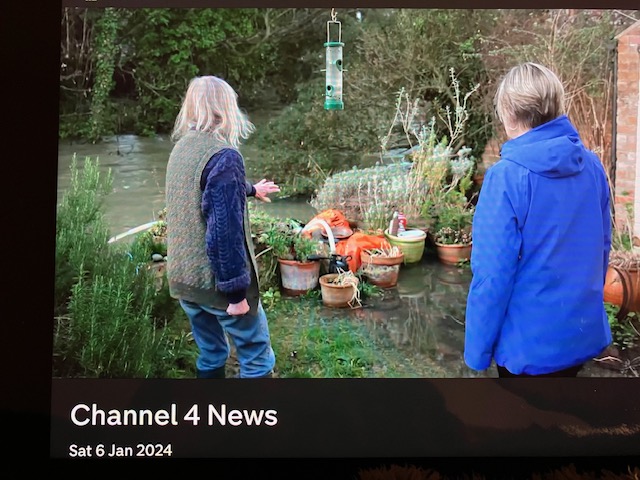
Channel 4 news ran a report of flooding in Oxford yesterday evening (6 January). The reporter, Jane Dodge, interviewed Joe Cuthbertson from the Environment Agency, and OFA introduced her to a local Osney Resident at risk of flooding who was interviewed. The news item also included footage of Bulstake Close, and mentioned the proposed Oxford Flood Alleviation Scheme and the public inquiry.
River levels in Oxford remain high this morning, but have now stabilised. Some homes and businesses have flooded in the last two days, and thousands more people in the city have faced a stressful 48hrs as the response services have battled to contain floodwater. If the proposed Oxford Flood Alleviation Scheme were in place today none of this would have been happening. At these kinds of river levels roads would have remained open, properties and businesses would have stayed dry, and local residents would not have had to endure sleepless nights.
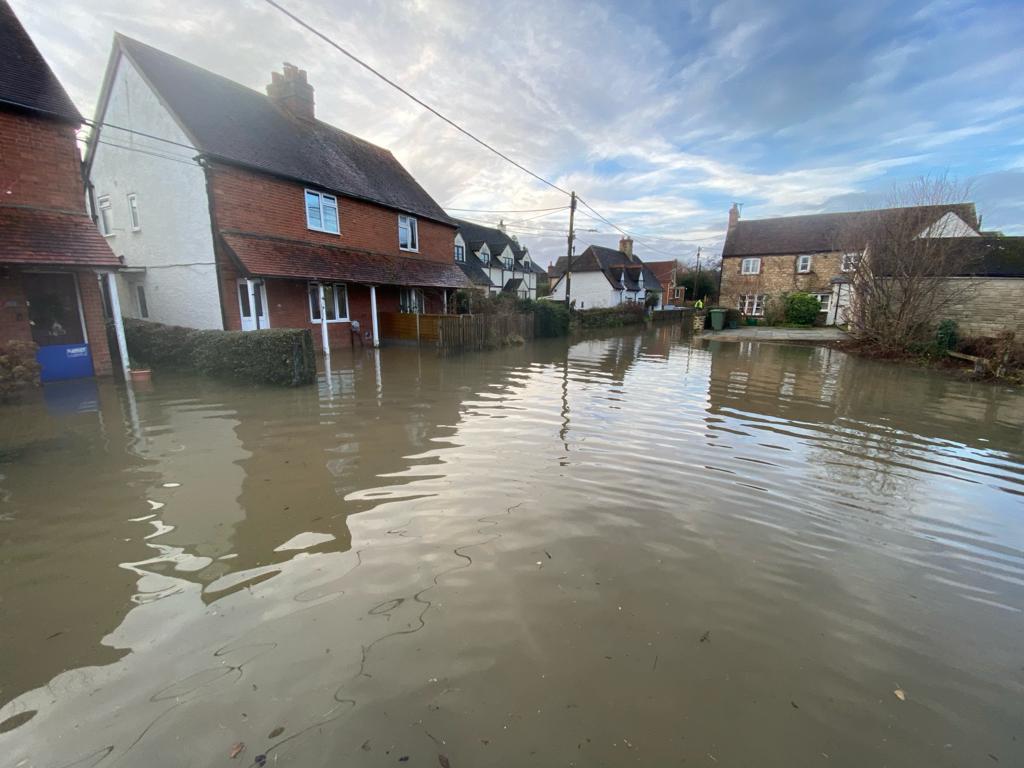
Because we don’t have the scheme in place we have to rely on temporary barriers and pumps to keep flood water at bay. Deployment of these defences depends on Environment Agency and Council staff working long hours to erect and maintain them, often in difficult circumstances. For the most part the response has been effective this time, but in South Hinksey the weather conditions on the night of 5 January meant temporary barriers could not be fully erected and low lying areas of the village were inundated. Barriers and pumps are now working and floodwater has been cleared. If OFAS were in place the village would not have gone through this ordeal, and until the scheme is built communities remain vulnerable to temporary defences failing.
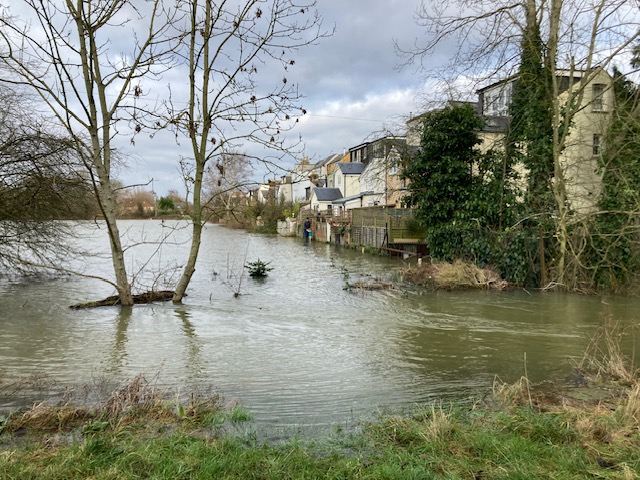
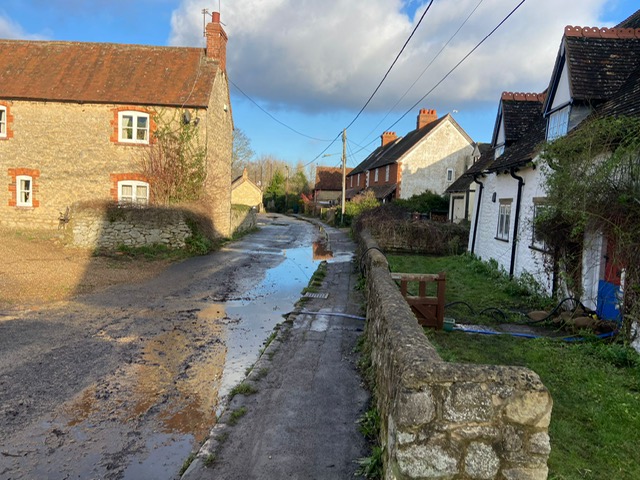
South Hinksey 5 Jan 2024South Hinksey 6 Jan 2024
Oxford is used to floods having the long slow buildup. This time river levels rose very fast. One question which will need to be looked at when the operational response is evaluated is whether defences were in place early enough in some locations.
OFA believes the big flood scheme is needed now. If proof were still needed of why the scheme is essential, the last few days have provided it.
River levels have stabilised over night and are expected to fall slowly over the coming days. The main Thames south of Osney Lock reached 3.84m at 2.30am and has now fallen to 3.82m. The Bulstake and Seacourt streams have fallen slightly from peaks overnight and are now stable. These are the highest levels we have seen since the 2014 floods, almost exactly 10 years ago.
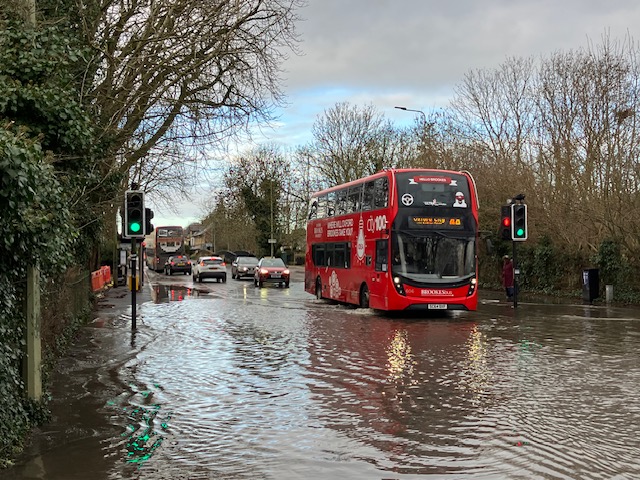
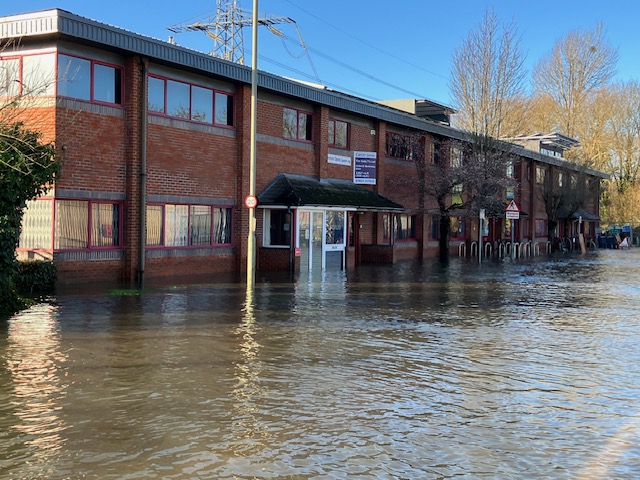
Abingdon and Botley Roads remain affected by flood water, with impact on buses, cyclists and predestrians. We’ve had a few reports of property flooding. Some businesses on Osney Mead have been flooded while others have had business disrupted by the high water levels.
Botley Rd 6 Jan 2024Offices on Osney Mead 6 Jan 2024
Residents in South Hinksey had a difficult time on 4 and 5 January, but with pumps and barriers now working water levels in the village are starting to fall.
Two members of OFA appeared in a BBC South Today broadcast yesterday evening, Richard Thurston and Simon Collings. You can watch the news item on BBC iPlayer.
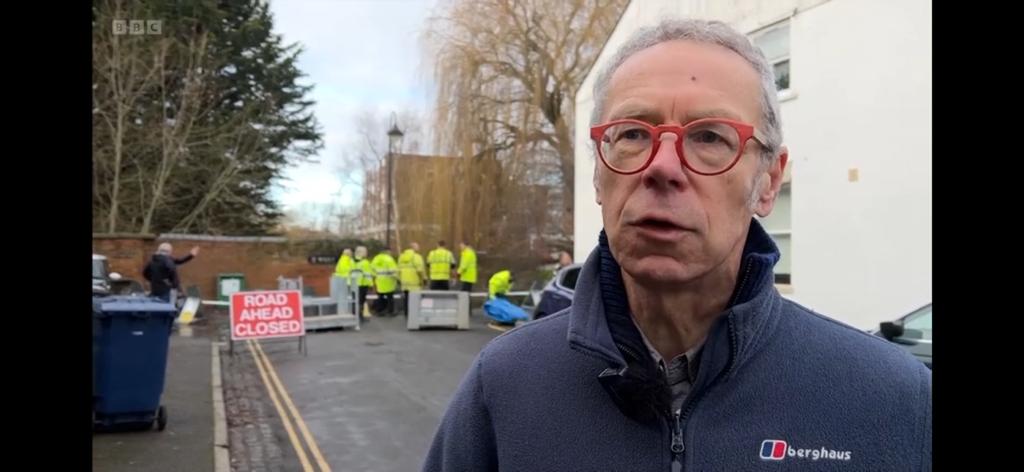
Simon Collings of OFA being interviewed by the BBC 5 January 2024
The flood warning for Oxford was extended yesterday to include Binsey, Osney and Osney Island. Water built up in the streets at the southern end of Osney Island at the end of the afternoon causing alarm to local residents. The water rose rapidly in part due to the heavy rain. OFA asked the Environment Agency to provide a pump which arrived a few hours later. This morning the roads are clear of water. Some properties on the island remain threatened by the stream which runs to the west of the island. The EA is expected to deploy temporary barriers in West St today which is flooded at the northern end.
Crossroads of South St and Bridge St, Osney IsalndLower end of Bridge St, Osney Island
River levels are now at the point where the February 2021 floods peaked, and the river is still rising. The 2021 event was the worst since the 2014 floods when 55 properties in Oxford were flooded.