
The Environment Agency has issued a report giving details of the exceptional rainfall in the Thames catchment in September and the consequences of this. It makes sobering reading. The capacity of soils to absorb more water has been reduced to virtually zero resulting in high river flows. The rising chalk groundwater aquifers are untypical for this time of year.
The report summary says:
Thames area received 193mm of rainfall in September, 317% of the long term average (LTA); making it the wettest month since records began in 1871. Following the high rainfall, soil moisture deficits (SMDs) were reduced to zero and this resulted in high effective rainfall of 50mm (LTA is 5mm). Monthly mean flows increased at all our sites and 4 measured their highest ever September flows since site records began. Due to the heavy rainfall, the seasonal declining trend of groundwater levels reversed at the majority of our indicator sites in September, which is earlier than normal.
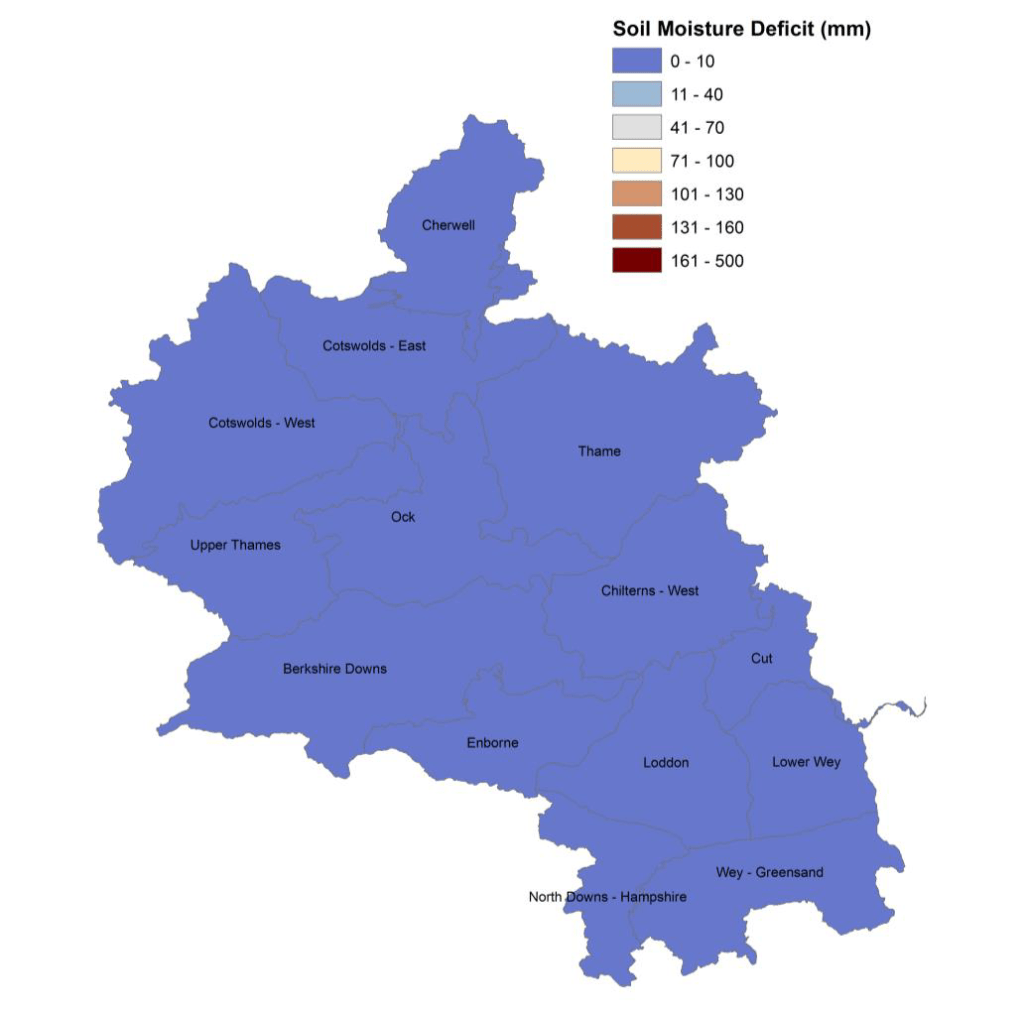
This map of soil water deficit (i.e. the available capacity in the soil to absorb more moisture) shows the situation graphically. The long term average is 88mm meaning we typically enter winter with some capacity in the system to absorb rainfall. Not this year,
This is Flood Awareness Week. If you’re concerned about potential flooding there is good advice on the government website about how to prepare for and protect against flooding. The EA report is the Monthly water situation report: Thames Area.






 oxford flood alliance