Letter in Oxford Times

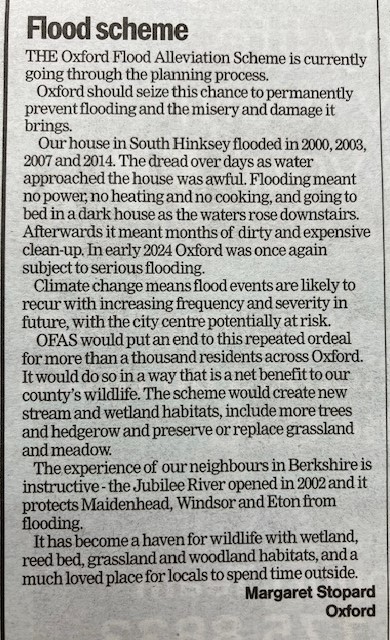
Today’s Oxford Times (8 February 2024) carries a letter supporting the flood alleviation scheme from Maggie Stoppard, the widow of Dr Peter Rawcliffe. Peter was one of the founders of the Oxford Flood Alliance. The letter describes Maggie’s personal experience of floods in South Hinksey, where she and Peter lived, and goes on to say:

‘In early 2024 Oxford was once again subject to serious flooding. Climate change means flood events are likely to recur with increasing frequency and severity in future, with the city centre potentially at risk.

OFAS would put an end to this repeated ordeal for more than a thousand residents across Oxford. It would do so in a way that is a net benefit to our county’s wildlife. The scheme would create new stream and wetland habitats, include more trees and hedgerow and preserve or replace grassland and meadow.’
Maggie’s letter appears alongside an Oxford Times editorial about the flooding in January of a number of sites across the county which are earmarked for housing development. Planning professionals are now calling for a rethink of housing plans, and their comments have attracted support from across the political spectrum. ‘Flood risk needs to be taken seriously by the planning authorities,’ says the editorial.

OFA fully endorses this view. One of the reasons we have problems with flooding in areas like Earl St and Duke St is because of bad planning decisions in prior decades. Building on the floodplain has to stop.
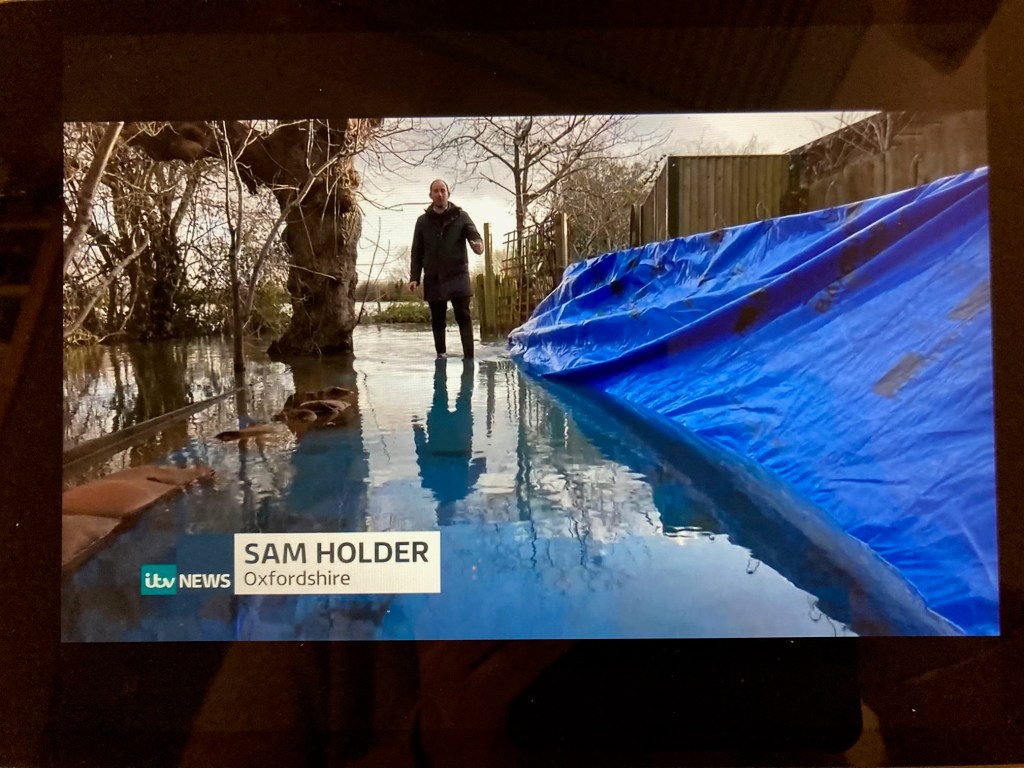
ITV news in South Hinksey

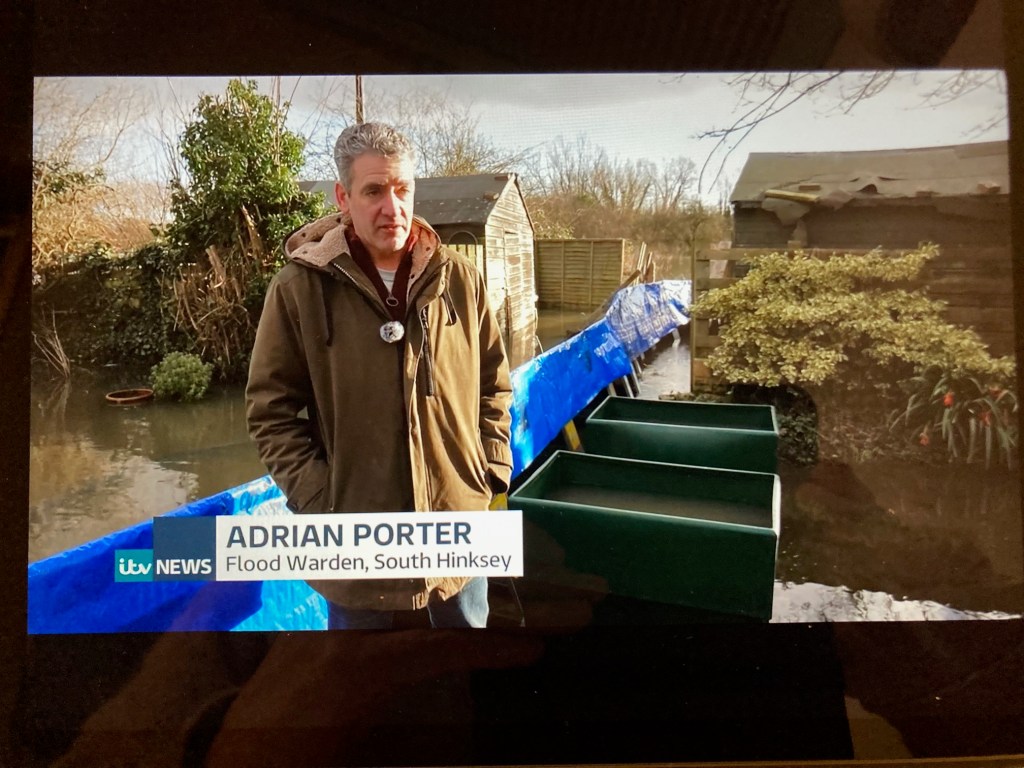
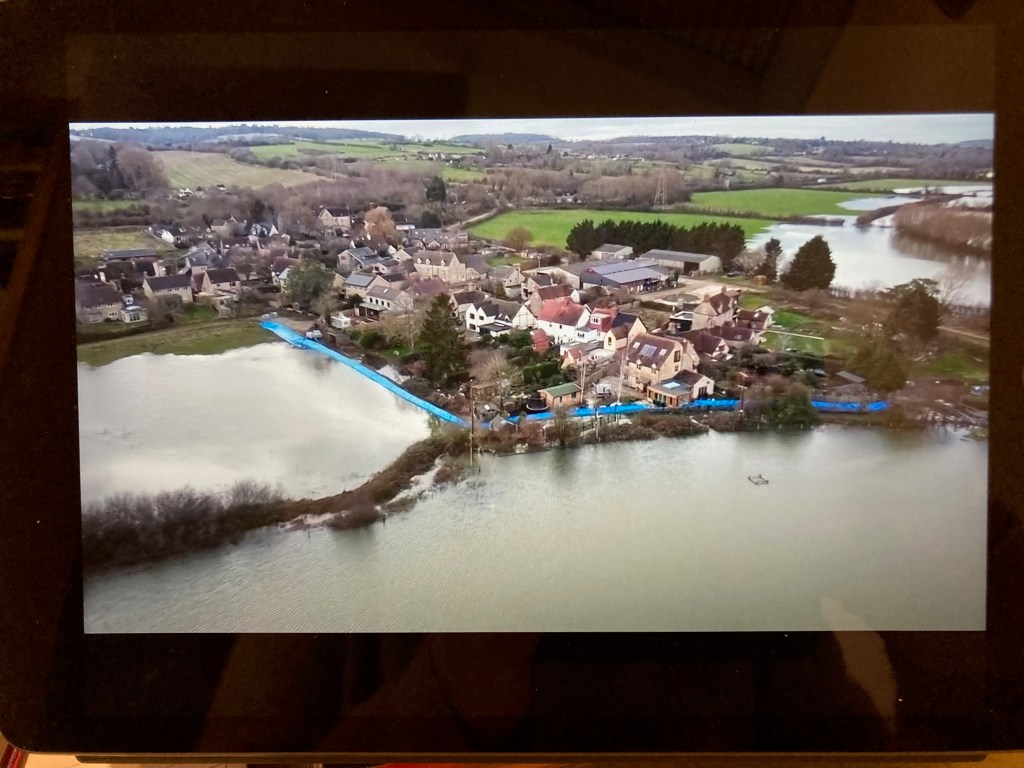
Adrian Porter from OFA was interviewed by ITV yesterday as part of a report on the flooding in South Hinksey. The news item focused on the failure of the Environment Agency to fully deploy defences around the village last Thursday, 4 January. After torrential rain on the Thursday evening, stream culverts in the village were overwhelmed, a large garden at the top of the village was under 1m of water and the sewers surcharged with enough pressure to lift the manhole covers. All that flow ended up in the lower part of the village and was prevented from flowing away by the flood water.

Without pumps and no effective barrier, residents had no alternative but to watch the water rise and do their best to protect their homes. Flood water, pluvial water and sewage water combining to create the worst flood event in ten years.

It took until Saturday evening for the barrier to be completed, pumps deployed and the water to be reduced to below-threshold levels throughout the community. But by then residents had endured serious flooding including within properties, and massive personal & emotional disruption for three days.

The defences are now functioning and floodwater has drained from the village. Sam Holder, the ITV reporter, made a forceful case for having permanent defences in place rather than relying on temporary measures. He asked why, after 10 years of development, the flood scheme is still stuck in planning? The problem he said is ‘bureaucracy’.

Built into the OFAS scheme is a permanent bund for South Hinksey, which would provide early benefit within the implementation of the scheme, and protect the community from all events up to and including 1% AEP (1 in 100 year event). The deployment decision would be reduced to that of pumping equipment and the risk of a delayed or incomplete barrier would be removed. The water seal from a bund would greatly exceed that provided by the temporary defences meaning fewer or smaller pumps would be needed and the barrier, personnel and pumps not needed here would be free to use elsewhere.

This event has proven that the village is defendable, but also that we need a permanent solution that provides the same or better benefit more reliably. That solution is the Oxford Flood Alleviation Scheme.