New group aims to improve Oxfordshire’s response to flooding

A new group will help Oxfordshire improve its readiness and response to flooding by bringing together many of the key organisations responsible for tackling it, Oxfordshire County Council has announced.

The Oxfordshire strategic flood risk group has been formed as a direct result of a flooding summit held by Oxfordshire County Council last month. It will be chaired from the new year by Prof Robert Van de Noort CBE, Vice Chancellor of Reading University and former Chair of the Thames Valley Flood and Costal Committee.

Councillor Dr Pete Sudbury, Deputy Leader of Oxfordshire County Council with Responsibility for Climate Change, Environment and Future Generations, said: “It is a real privilege and wonderful news for Oxfordshire to have Robert agree to contribute in this way. He is a real heavyweight in the sector, widely acknowledged as having led innovative approaches to flooding as chair of the Thames Valley Flood and Costal Committee for eight years.

“The rapid acceleration in extreme rainfall events means the traditional approaches focused around high-risk areas are no longer enough, and we need to shift very rapidly to a whole landscape approach. Having Robert on board really adds impetus to achieving that at the pace and scale necessary.”

The group will include representatives from the city and district councils, Thames Water, the Environment Agency, the Northeast Cotswold Farmer Cluster, landowners and community flood resilience groups.

Prof Van de Noort said: “I look forward to working alongside people representing all parts of the community across Oxfordshire. Flooding is an issue that can affect anyone and requires everyone to play their part to keep people safe from its worst impacts.

“I am fortunate to work alongside some of the world’s most eminent weather, climate and flood scientists at Reading, who advise world leaders and the UK government on how to manage flood risks. Floods will always occur, but the difference between a flood hazard and a flood disaster is in how we prepare for them and respond to them.”

The aim is to take a collective strategic overview of the management of flood risk in the county. It will support coordination of these matters with wider economic growth and water resource management initiatives.

It will also improve integration of flood risk planning and response at a strategic level in the county, and will be the central point of liaison between local, regional and national flooding policy developments.

November’s summit, which was prompted by the floods that affected Oxfordshire in January due to Storm Henk, was held while parts of the county were recovering from more recent flooding incidents. Oxford Flood Alliance attended the event,

It provided an opportunity for stakeholders to discuss a shared approach to flood response and resilience in Oxfordshire; to understand the future trajectories of flooding in Oxfordshire; and to deepen shared understanding of the range of potential solutions to increase flood resilience, sharing best practice to help others develop their own plans.

It asked questions such as what a joined-up response from multiple organisations looks like during the immediate aftermath of a flood, and what could be improved or changed.

Cllr Sudbury added: “We need to try to get ahead of the game, or the economic and social losses from flooding are likely to spiral to an uncontrollable level.

“Surface water flooding can probably affect almost anywhere, if the rain is as intense as we experienced in September. We’re moving from sporadic floods, every few years, to multiple sequential clusters of them.

“The next ratchet up is continuous flooding over an extended period and so we need to look to pre-empt that. That will take time, effort, collaborative cross-agency work and widespread citizen activation.”

Upstream storage hits a roadblock

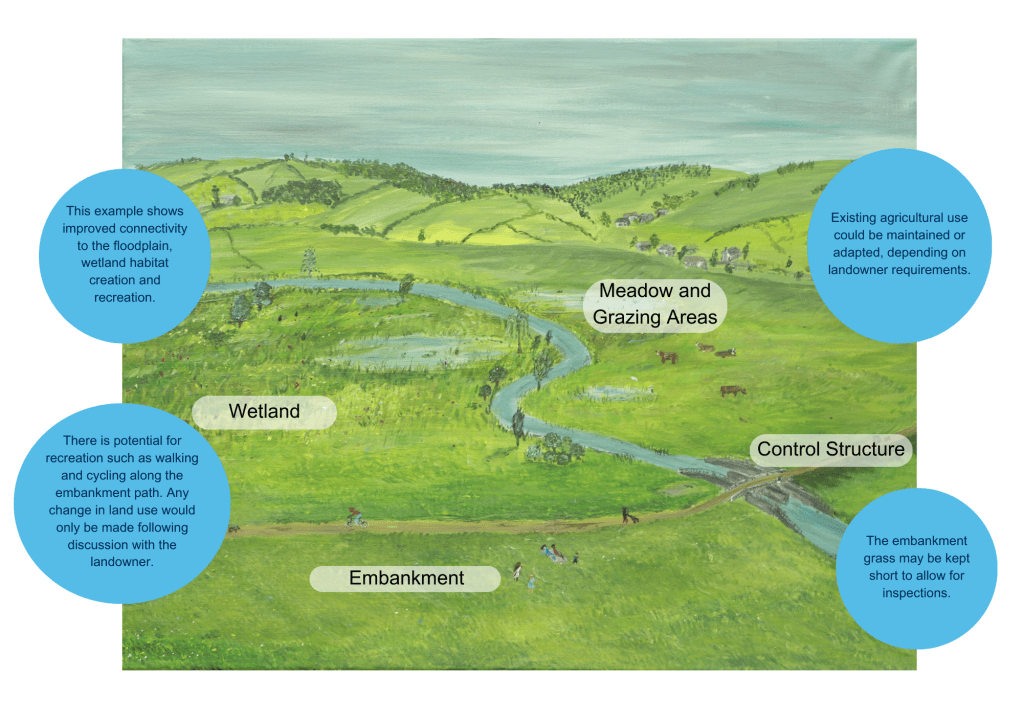
An investigation by the Environment Agency into the potential to store flood water upstream in the catchment has concluded that the benefits are only marginally greater than the costs. Without changes to the methodology mandated by government for calculating cost-benefit ratios the proposal will not qualify for funding. The agency looked at more than 700 potential sites, narrowing these down to 17 viable sites with sufficient volume.

Upstream strorage is one of two approaches the Environment Agency has been exploring as part of the Thames Valley Flood Scheme launched in March 2021. The other approach is natural flood management. These are not alternatives to the Oxford Flood Alleviation Scheme, but additional measures which are likely to be needed because of global warming.

The conclusions of the flood storage study are clearly disappointing, but we understand that discussions have started with DEFRA about the methodology. Any change in policy will take time.

Meanwhile, the natural flood management projects continue. There is a lot of interesting work going on here, see for example the North East Cotswold Farm Cluster, which is part of the Evenlode Catchment Partnership.

Oxford Flood Alliance is a strong supporter of these nature-based initiatives which bring multiple benefits, not just flood-risk reduction.

What a flood storage area might look like (Environment Agency image)

Oxfordshire Under Water

The County Council hosted a flood summit, Oxfordshire Under Water, on 29 November – good timing given the recent emergency. Because of climate change we’re experiencing rainfall events unlike anything we’ve seen before. So how do we improve our resilience to flooding?

The event was led by Cllr Pete Sudbury, with representatives from the various local authorities (staff and councillors), the Environment Agency, Thames Water, the farming community, environmentalists, and several flood groups.

In the breakout session five groups spent 30 mins each on two questions: how do we improve resilience, and what does an effective response to a flood event look like? This was a rich discussion with many common threads emerging in the feedback. One theme was the role local flood groups can play in spreading reliable information to neighbours and feeding back on issues to the various response agencies. There was general recognition this isn’t as organised as it should be.

Making the link between flooding and climate change, and the need for behaviour changes in society (dietary, travel, consumption) if we’re to contain global warming was also discussed. Local flood groups can help raise these issues. Social inequalities and the impact of flooding on disadvantaged households was also highlighted.

There is much we can do to improve on current ways of working, with more joined-up thinking, and collaboration to make the best use of scarce resources. Flood-risk reduction, nature conservation, sustainable food production and reducing carbon emissions are inter-related.

We need to move away from a society where people see themselves as ‘consumers’, expecting ‘service’, to one were we see ourselves as ‘citizens’ asking what we can do to contribute.

Flood Action Week 2024

Next week, 14-20 October, is Flood Action Week when the government will be raising awareness of flood risk and what we can do about it. Being prepared for flooding will reduce the impact, even if you only do a few basic things. Making your home flood resilient can, the government says, reduce the costs of repairs by up to 73%. Advice about what to do if you are at risk of flooding is available here.

Apart from protecting homes and businesses look out for flooding on roads and don’t drive through flood water. Most of those who die as a result of flooding in the UK do so because they tried to drive through a flood. Don’t chance it.

Take steps now to make sure you are as prepared and protected as possible.

OFA featured in podcast about flood resilience

Project Groundwater has just released the first of a new series of podcasts looking at different aspects of groundwater flooding. Episode 1 focuses on ‘resilience’ and features interviews with two academic experts on the topics, Dr Karen Potter and Dr Sarah Fitton, plus Simon Collings from Oxford Flood Alliance.

The term ‘resilience’ appears with increasing frequency in the literature about flooding, but what precisely is understood by this word is far from clear. It can mean a number of different things, and is often used to denote what is in fact a complex topic. Without being clear what we mean in any given context evaluating the success of actions to improve resilience could be difficult, and well-meaning interventions may in fact bring no benefit. There is also a risk that an emphasis on ‘community resilience’ in government policy could shift the burden of responding to floods onto communities, and away from the state. Getting he balance right will be critical.

There are things which those directly affected by flooding can do to protect their businesses and homes, and ensure they can recover quickly from a flood. But such measures need to be complemented by actions from the Environment Agency, local authorities and others, both at times of flooding and in modifying the built environment to reduce risk of property flooding.

The degree to which a group of residents has the ability, time and resources to improve their personal resilience as well as influence their wider environment, will vary from one location to another. There are risks of less well-off communities being left behind, and the degree to which ‘capacity’ can be built in vulnerable communities remains little understood.

The podcast, hosted by Katie Hargrave-Smith, lasts 40 mins and can be accessed here.

(OFA is working with Project Groundwater to try to establish a flood action group in South Oxford, an area of the city which has particular issues with groundwater.)

End to flooding in South Hinksey within reach

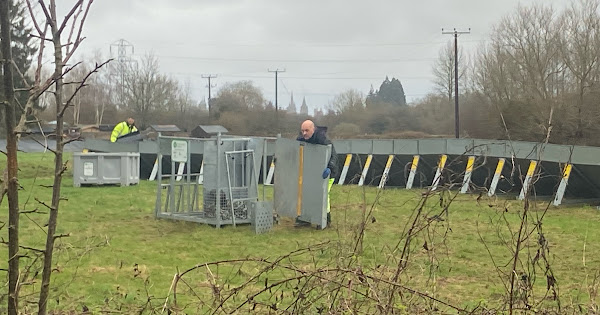
South Hinksey could have a permanent flood bund in place by the end of 2025 if the Oxford Flood Alleviation Scheme gets the go ahead in the coming months. The Environment Agency has said the permanent bund would be ‘upfront in the build programme’, so if spades went in the ground this year South Hinksey would start to benefit immediately.

Adrian Porter of OFA, who lives in the village, said. ‘By winter 2025 we’d likely be protected. With a bit of good luck later this year, this really could be our last flood.’

Demountable barriers are currently in place in South Hinksey because of the high floodwater levels. It is the second time this year the defences have been deployed. In January the barriers went up too late to stop some property flooding, so this time the EA have acted quickly to have equipment in place in case it’s needed.

The deployment of temporary defences, Adrian says, has become ‘depressingly normal’. There was a barrier deployment in 2021, a near deployment in 2022, and now two deployments in 2024.  

‘Each time the disruption for the community is significant,’ Adrian explains, ‘with the farm yard and car-park occupied, horses displaced, gardens churned up and rotas of people to keep an eye on things overnight as the EA don’t have the staff to do it themselves.’

The decision to deploy is made by an over-stretched agency with input from advisors, flood modelling data, on-the-ground photographs and other ground-truthing evidence. It is inevitably a balance of strategy, finance, operations and infrastructure. In January the EA got the timing wrong, an awful 48 hours ensued and several properties flooded as a result.

This is totally avoidable. OFAS, which is awaiting planning consent, would mean the village wouldn’t need to rely on the vagaries of human decision-making and temporary barriers. Protection would be there every day of every year.  

‘We are a beautifully diverse community of young and old,’ Adrian says, ‘who thrive despite the lack of pub and shop. We work so hard to make this the perfect place for children to grow up and for everyone to enjoy, but with flooding an ever-present threat it is hard to feel completely safe. There is a solution. Let’s get on and deliver the Oxford Flood Alleviation Scheme.’

The Oxford Mail picked up on this story. You can read their version online here.

Residents off Botley Rd call for flood scheme to be built

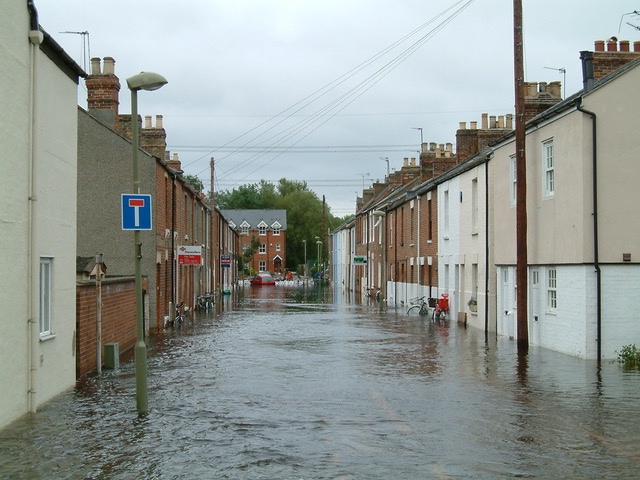
Fifty-seven residents from Earl St, Duke, St and Marlborough Court have written to the Leader of Oxfordshire County Council calling for construction work on the Oxford Flood Alleviation Scheme to begin urgently. They are frustrated that the scheme has been 10 years in design but there is still no firm date for when construction will start. These streets are some of the most vulnerable in Oxford and this January many residents relived the nightmare of past floods.

The letter, organsied by Earl St resident Dr Sebastiaan van Schaik, says:

Re: floods in West Oxford and the urgency of the Oxford Flood Alleviation Scheme 

Dear Cllr Leffman,

I’m writing to you on behalf of 57 residents of Earl Street, Duke Street, and Marlborough Court in West Oxford. As I’m sure you are aware, West Oxford and the Abingdon Road areas were severely affected by the floods in early January. We’re grateful to the people from the EA and ODS who worked 24/7 to redirect water and reduce damage to the best of their abilities. Most floors have now dried, pumps are gone, and the electricity is back on, but the streets are still littered with sewage and road surfaces remain in urgent need of repair. 

Needless to say, these floods come at a huge emotional and financial cost. For some of us, these were the first or most serious floods we’ve experienced; others still remember the trail of destruction left by the water back in 2000, 2003, 2007 and 2014. On top of that, the impact on local businesses is substantial, at a time many are already struggling. And all of us know: these floods could have been prevented. 

In 2015, the Environment Agency first consulted with local residents and organisations on draft designs of Oxford’s Flood Alleviation Scheme (OFAS). Of all the different options to reduce flood risks, the proposed natural channel has been shown by detailed modelling to be the most effective, and residents cannot wait for the work to commence. With this channel, our streets and homes wouldn’t have flooded. But instead, 10 years on from the 2014 floods, not a single spade has touched soil. And we all know that climate change will only result in more frequent and more severe floods. We need action now.

It is profoundly disappointing that we are still waiting for work to start. And to West Oxford residents, there is a deep added irony: badly planned railway works have cut us off from the city we live in. Meanwhile, the Botley Interchange can apparently be closed at the drop of a hat, effectively cutting us off from both sides. Private companies like Thames Water are allowed to flood our streets with sewage, and are permitted to maintain a semi-permanent bike lane closure on Osney Bridge. And big, tall biotech labs can be designed, approved, and built in the area within only a few years.

Yet our local and central governments and agencies are somehow unable to commence work on a carefully-designed natural flood channel through empty grassland, in order to provide West Oxford residents with the most basic of comforts: a safe and dry home. We all understand the need for due diligence, careful planning application processes, and procedures around compulsory purchase orders, but at the current rate it is likely that some of us will not live to see the completion of this scheme. We feel deeply let down.

Therefore, on behalf of 57 residents of our streets, I urge you and the County Council you lead to please collaborate closely with central government and the Environment Agency in order to cut red tape and expedite the building of the Oxford Flood Alleviation Scheme. 

At the same time, I urge our local City Councillors Pressel and Muddiman (both CC) to work with the County Council and EA to have the new flood channel completed as soon as possible. There are local elections coming up in 2024 (City) and 2025 (County), and it should not come as a surprise to anyone that this topic is high on the list of concerns of local residents.

Earl St in July 2007

Dr van Schaik was interviewed on BBC Radio Oxford on Monday 5 Feb, and the story was also picked up by the Oxford Mail, and the Oxford Clarion.

Oxford Mail 7 Feb 2024

Flood warning for parts of Oxford

The Environment Agency issued a flood warning at 9.32am today for the River Thames and tributaries at New Botley, New Hinksey, North Hinksey, South Hinksey and Grandpont. The EA advise property flooding is expected. Their statement says: ‘River levels are rising on the River Thames and the watercourses around Oxford, including the Bulstake Stream as a result of heavy rainfall. Therefore, flooding of low lying land, roads and property is expected later this afternoon 04/01/2024, especially in the areas closest to the river in New Botley. Areas most at risk are properties on Botley Road, and the roads off Botley Road in New Botley.’

This is likely to be the most serious flooding we have seen since January 2014, the last big event. On 9 January 2014 the Thames south of Osney Lock peaked at 3.93m, the Bulstake Stream at 3.02m, and the Seacourt at 3.08. Current levels are around 30cms below those 2014 levels, but the river is sill rising with more heavy rain forecast. Current levels are higher than the Dec 2020 floods, and approaching the levels reached in February 2021, the previous worst flooding since 2014.

We understand that temporary defences will be erected at South Hinksey today and that the City Council is deploying defences behind Bulstake Close. The EA and local authorities are keeping the situation under close review and have teams ready to respond as need arises.

Everyone living in the affected areas should take the warnings seriously, monitor the evolving situation, and consider whether they need to take action to protect themselves and their property.

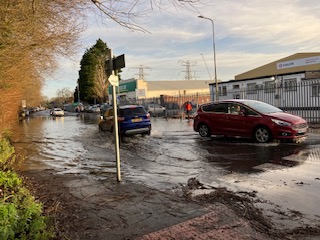
       Bottom of Ferry Hinksey Rd this morning. End of Willow Walk also flooded.