
In our previous post we highlighted a concern about the Supplementary Planning Documents for Osney Mead, which envisages ‘activating’ the riverbank south of Osney Lock and down to Grandpont nature reserve. The illustrations of what this might look like show a heavily urbanised and landscaped river frontage with paths and building all at the same level. We don’t believe this is consistent with the Thames towpath clearly being in flood zone 3b – functional floodplain.
The image below is taken from the Flood Risk Assessment: Appendix B Modelling Report which forms part of the 2022 planning application for the Oxford Flood Alleviation Scheme. This figure shows flood risk for a 1 in 5 year scale event. Areas which flood when the scheme is in place are shown in blue. Areas protected from flooding by the scheme are shaded pink. The Osney Mead area is just south of the word ‘Osney’ (partly obscured by white squares) on the map. Note the wide blue area east of Osney Mead. This is the Thames south of Osney Lock, The river corridor floods even in these frequent, low-level events.
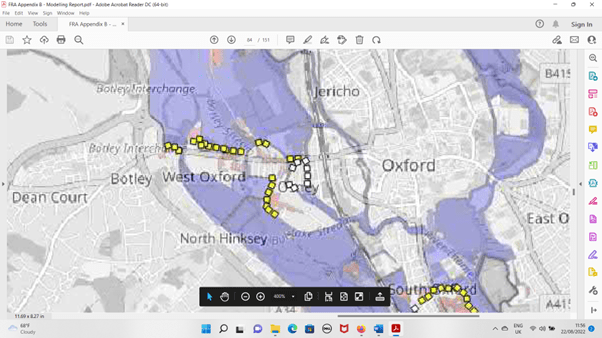
Any development proposal for Osney Mead will need to allow for a 1 in 100 year event, i.e. for much more severe flooding than shown above. The image below shows the extent of flooding expected in such an event. Significant areas of Osney Mead will be flooded. One of the challenges developers will have to overcome is ensuring safe exit routes for residents and people working in a redeveloped Osney Mead. Exit via the proposed new cycle bridge just south of the railway on the Thames will not be accessible as the towpath under the railway will be flooded. The streets at the southern end of Osney Island are likely to flood in such an event so will not provide a safe escape route either. The only way out by road, along Ferry Hinksey Rd, will also flood, as it does currently. The need to erect temporary flood barriers – the white squares on the map – also presents a challenge for any proposal to create new pedestrian and cycle routes through Osney Island. These issues have not been addressed in the Supplementary Planning Document.

 oxford flood alliance