Seacourt P&R in the Oxford Mail; smart signs, plus risk to life

This article in the Oxford Mail talks about the possibility of  ‘smart signs’ – electronic boards – on the ring road, to alert drivers to where there are empty park and ride spaces around Oxford. This could obviate the (claimed) need to increase the number of spaces at Seacourt, instead pointing drivers to (say) nearby Redbridge. According to an earlier report in the Oxford Mail there is apparently so much spare capacity at Redbridge that the City Council proposes to remove 270 parking spaces, and is quoted in the newspaper as saying that the loss of these spaces would be ‘marginal’.

It seems to us to be inconsistent for the City Council to argue that removing 270 spaces at Redbridge is perfectly ok, while at the same time arguing a burning need to build new spaces at Seacourt – in the floodplain, on Green Belt land, contrary to local and national planning guidance and, as far as the present application goes, creating a potential risk to life (see towards the end of the first newspaper article and our previous post). Never mind the cost, which has already risen from about £2million to over £4 million.


Seacourt P&R extension proposal: potential risk to life

Liz Sawyer, who recently joined the OFA Steering Group, addressed Oxford City’s Full Council on 6 February 2017, about the potential risk to life posed by the proposed extension to Seacourt P&R.

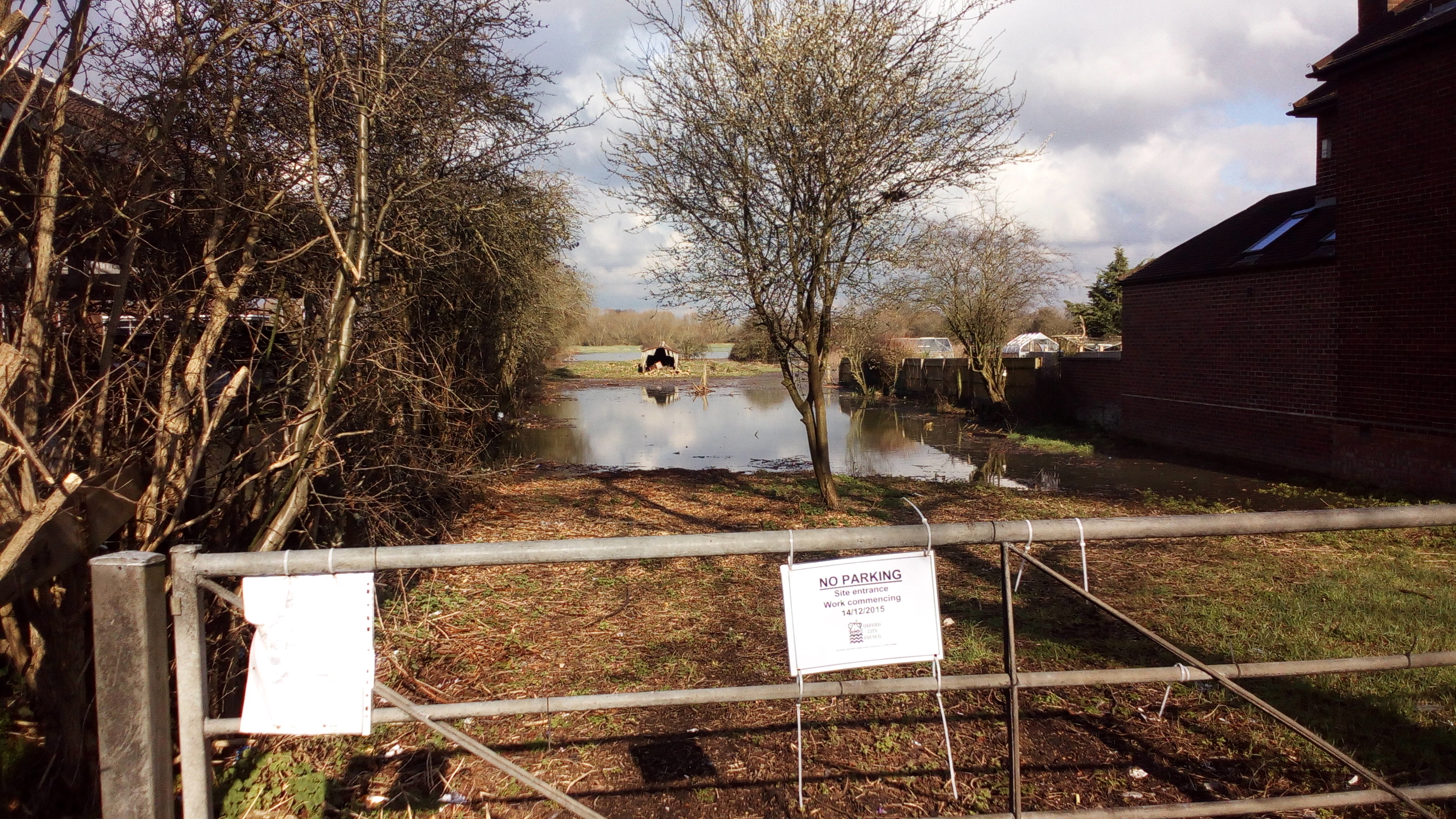
There is also, as the photograph above shows so vividly, the potential for damage to the car park itself – and of course to vehicles. The Automobile Association’s ‘Flood Facts’ quoted in Liz’s address set out the risks of floodwaters very clearly.

Liz’s address can be downloaded here (pdf).

Seacourt P&R – Key Point 5: Green Belt

The proposal is inconsistent with both national and local Green Belt policy:

  • The site is in the Oxford Green Belt where the presumption is that development is inappropriate. Preservation of ‘openness’ is a key objective of Green Belt policy, The NPPF places great emphasis on it. Attempting to hide the development from view by landscaping does not constitute preserving openness.
  • The proposal will also clearly breach Oxford City’s own Core Strategy key policy CS4 for the protection of Green Belt land.


Seacourt P&R – Key Point 4: Oxford City’s Planning Strategy

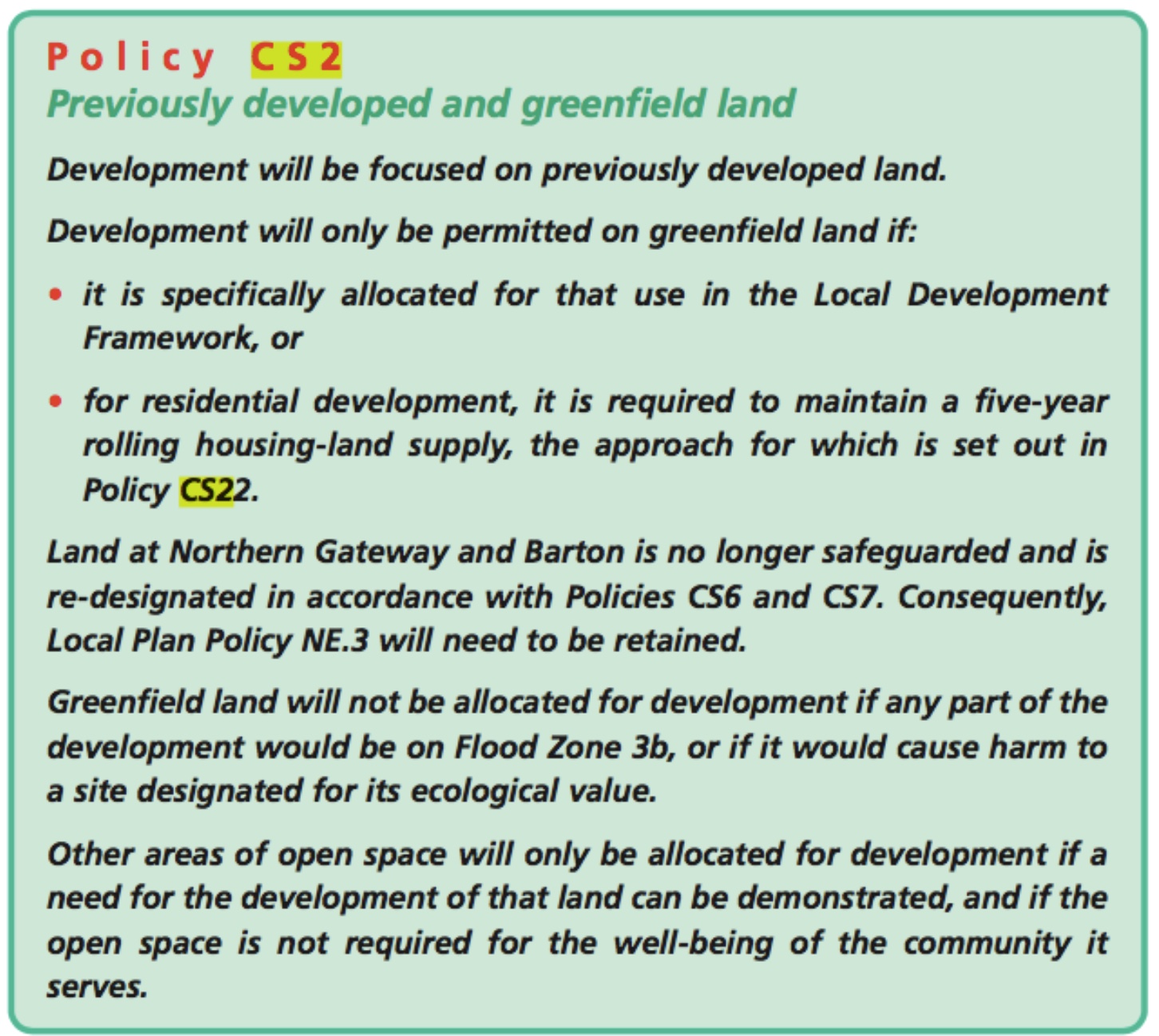
cs2

Within Oxford City Council’s main strategic planning document, the Core Strategy, Core Strategy 2 (CS2, see above) states:

‘Greenfield land will not be allocated for development if any part of the development would be on Flood Zone 3b.’ 

Our comment: The proposed site for the new car park is greenfield, and in functional Flood Zone 3b.

CS2 also says that ‘development will only be permitted on greenfield land if it is specifically allocated for that use in the [Oxford City Council’s] Local Development Framework’.

Our comment: This site is not so allocated.

Core Strategy 11 (CS11) says:

‘Planning permission will not be granted for any development in the functional flood plain (Flood Zone 3b) except water-compatible uses and essential infrastructure.’

Our comment: The proposed site is neither ‘water-compatible’ (a category intended for developments such as marinas), nor ‘essential infrastructure’ (which includes projects such as water treatment works, or roads which have to pass through a floodplain).

In our view the position could not be clearer – this proposal is, in fact, precisely the kind of development that the Council’s own strategic planning policy is there to prevent.

Seacourt P&R – Key Point 3: NPPF


National planning policy framework (NPPF) guidelines strongly recommend against the positioning of developments that are categorised (in this case according to the Environment Agency) as ‘less vulnerable’, in Flood Zone 3b, functional floodplain.

Sir Michael Pitt’s report on the severe and widespread summer floods of 2007 said there should be ‘a presumption against building in high flood risk areas in accordance with PPS25’ [now NPPF]  (Pitt Review; ‘Implementation and Delivery Guide, 2008: Final Recommendation 7). The guidance should be ‘kept under review and strengthened if and when necessary’ (Final Recommendation 8).

The title of Sir Michael Pitt’s report is ‘Learning Lessons from the 2007 Floods’. This development is far from being essential and NPPF should be adhered to. To do otherwise would set a very dangerous precedent.

See Key Point 1 and Key Point 2

Seacourt P&R – Key Point 2: Covenant, what covenant?

The Planning Statement for the application to extend Seacourt P&R states (para. 6.74):

” Consideration was given at an early stage in the design development to provision of a decked car park on the existing P&R site. This is not feasible because the existing P&R site is not within the Applicant’s freehold ownership and there is a legal covenant on the land which prohibits the construction of any buildings…”

That is to say, the rationale for an extension being needed, as opposed to raised decking on the existing car park, is that there is a covenant on the existing car park land which prevents the latter. We have asked the applicant if we can see the reported covenant but no such has been produced. Nor can we find one on searching the Land Registry. What we have been shown is an extract of what seems to be a form of lease agreement (not a covenant) on the existing car park. Such an agreement could potentially be varied by negotiation with the landlord.

See Key Point 1 and Key Point 3

Letter to the Oxford Times (8 Dec)

Letter from us published in the Oxford Times of 8 December 2016

The proposed extension to Seacourt Park & Ride is one of the worst planning proposals we’ve seen for some time. In 2013, after much public consultation, the City Council adopted a Core Strategy to guide development in the city over the next period. Core Strategy 2 includes the statement: “Greenfield land will not be allocated for development if any part of the development would be on Flood Zone 3b.” The proposed extension to the Park & Ride is a greenfield site in Flood Zone 3b, the functional flood plain. How can this be? The planning documents don’t explain. Although the documents include a review of relevant local policies, Core Strategy 2 mysteriously doesn’t get a mention. What’s driving the application is a worry about short-term problems with traffic congestion on the Botley Rd pending completion of new Park & Rides at Eynsham and Cumnor. How does this short-term need justify departing from core strategy? National planning policy is designed to encourage local authorities to take a strategic approach to planning, thereby avoiding the need for this kind of last minute quick-fix nibbling away at the floodplain.

Apart from the obvious conflict with planning policy, the application is riddled with errors. The Flood Risk Assessment says that the most recent flooding event at the site was 2008, ignoring the major disruption in the winter of 2012/13, and the serious floods in early 2014. The FRA completely fails to take account of the fact that the site floods frequently, and proposes a design which will quickly degrade as a results of flood damage and silting. There is serious risk in the event of a major flood of large sections of the car park breaking up and washing into the flood channel. It’s a nonsense and needs to be stopped.

Seacourt P&R – Key Point 1: a clash with OFAS?


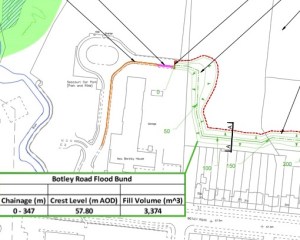
The first image is a part of a plan, from the Environment Agency, of the proposed Oxford Flood Alleviation Scheme (OFAS) north of the Botley Road. This shows (as at 16 September 2016) that a key flood defence bund is planned for that scheme, running through the area where the car park extension is proposed.

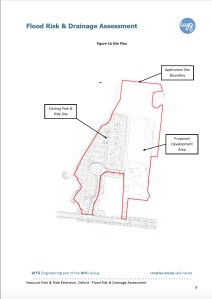
The second image shows the area for the proposed extension to the Seacourt P&R.

It is not clear that the bund and the car park extension could co-exist. OFAS will reduce the risk of flooding in Oxford, vital for people and the future prosperity of the city, not least in the face of climate change. The car park extension proposal is flawed in many ways;  the plan should be dropped.

See Key Point 2 and Key Point 3

Seacourt P&R planning application vs. proposals for Redbridge P&R – comment

We have made further comments (our fourth) on the Seacourt P&R planning application to the Planning Officer today, 19 December 2016:

Planning Application 16/02745/CT3

We wrote to you earlier with regard to the validity of the so called ‘sequential test’ carried out for the Seacourt P&R extension. In addition to our previous argument about the existence of an option of negotiating with the landlord to erect decking on the current site, we have further grounds for objection to the ‘sequential test’.

The City Council Executive Board papers for 15 December 2016 include proposals for removing 270 parking spaces at Redbridge to accommodate a new waste transfer facility. It appears there is excess capacity at Redbridge P&R. The analysis of occupancy of Redbridge and Seacourt P&Rs included in the Executive Board papers, show that there is existing spare capacity at Redbridge, and but for the planned waste facility this could relieve Seacourt during the week. There is also capacity at both car parks sufficient to adsorb expected increases in weekend traffic once the Westend development completes.

The Planning Statement for the Seacourt extension makes no mention of the surplus capacity available at Redbridge. The review of Redbridge in the ‘sequential test’ simple says that there is limited scope to ‘expand’ Redbridge. This is deeply misleading. There is clearly scope to redirect surplus traffic from Seacourt to Redbridge, which might be achieved at no cost simply by use of differential pricing – i.e. making Seacourt more expensive. In the Seacourt application we’re told Seacourt has to expand because there isn’t an option at Redbridge. But the Redbridge proposal is using the possible expansion of Seacourt to justify closing parts of Redbridge. So the need to expand Seacourt is at least in part being created by the Council’s wish to re-purpose part of the Redbridge site. This is clearly an unacceptable justification for the Seacourt extending into the floodplain on Green Belt land.

Given the existence of sufficient capacity to deal with any increased weekend traffic related to the Westend, the arguments for the extension, contained in 3.20 of the Planning Statement, appear extremely general. Is this really the best justification the Council can offer for breaching its own core strategy, national policy on Green Belt, and guidance on development in the floodplain? The justification for this move appears to rely wholly on longer term projections about potential increases in traffic resulting from a growth in the city and county during the next 15 years. Such needs should be addressed through a strategic planning process.

We understand that the Council has to increasingly rely on the revenue it earns, and perhaps the real, unstated reason why this proposal has come forward is financial. But even this doesn’t make sense. The capital cost has now doubled from the original budget to £4.1m. Extra income from the extension, assuming rates increase from £2 to £3 a day, is projected at £160,000 a year according to the Executive Board papers. Even assuming this revenue is achievable the investment would take more than 26 years to pay back, and that is without discounting for the cost of capital. If, as we believe is likely, the site floods regularly, has to be closed part of the year, and faces significant maintenance costs, the payback period will be much longer.

This scheme is a nonsense and should not proceed.

Seacourt P&R – further comment, on porous paving

We have submitted a further comment (our third), this time on the proposed porous paving,  to the planning authority today. You can download it here.