Latest news on Oxford Flood Alleviation scheme

The Environment Agency recently submitted further information on its main planning application for the Oxford Flood Alleviation Scheme to Oxfordshire County Council. This was requested following a public consultation on the application last year. The council is expected to hold a consultation on the Environment Agency’s response shortly, after which it will determine the scheme application.

The Environment Agency will also be making a Compulsory Purchase Order (CPO) to acquire the land necessary to build and operate the scheme. We will share more information on the CPO process when it becomes available.

The scheme’s newsletter provides an update on these and other developments. You can read it below:

We are working with 9 partners on a major new flood scheme for Oxford, which will reduce flood risk to homes, businesses and vital transport routes into the city. The scheme will provide a long term solution to flooding in Oxford, helping protect the city in coming decades as flood risk increases with climate change.

The scheme will run through the existing floodplain west of Oxford. It will be formed of a new stream surrounded by a sloping floodplain of new wetland habitat and grazing meadow, to create more space for water away from built-up areas.

Scheme update

We submitted our planning application for the scheme to Oxfordshire County Council in 2022 and a consultation on our proposals was held. The council subsequently asked us to provide some further information, which is quite normal for a project of this size and complexity. We have now submitted our response to the request for further information and the council will organise a public consultation on our response. You will be able to find more details on the Oxfordshire County Council ePlanning system. The planning reference is MW.0027/22.

Our Compulsory Purchase Order (CPO) for the scheme has been finalised. We will issue notices to landowners shortly and the documents will then be submitted to the Secretary of State for Environment, Food and Rural Affairs. A CPO will ensure that all the land necessary to construct the scheme is available. The Secretary of State will determine the process for deciding the CPO and will set out the timetable for this in due course. We have engaged with landowners and will continue to do so throughout the planning and CPO process.

We will also be submitting a separate planning application to construct a temporary access track to the Hinksey Rail Sidings. We expect to submit this by May 2023. If this application is approved, the temporary access track will allow us to remove some of the material excavated during construction by rail. Use of the railway will depend on us gaining permission to access the sidings, their availability, and agreements with the operator of the sidings.

Protecting the City’s infrastructure

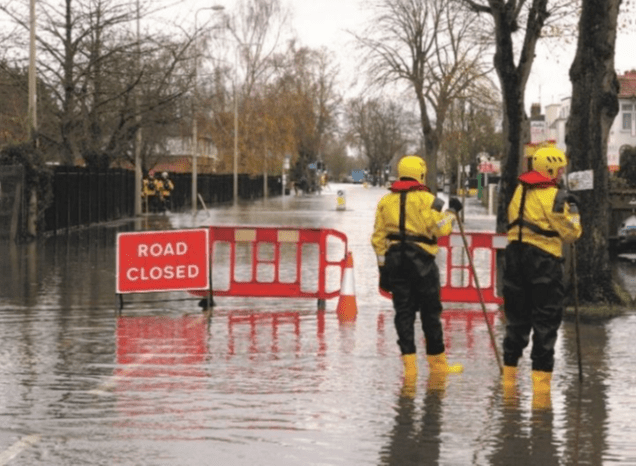
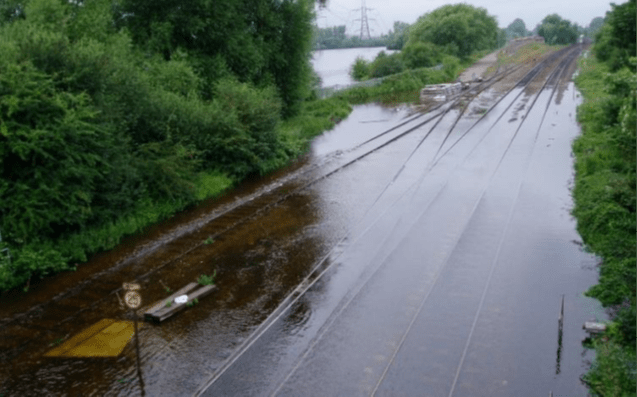
Significant floods in past decades have not only caused property damage to homes and businesses in Oxford, they have also closed the railway and major roads, bringing the city to a standstill. This level of disruption will be specifically memorable for people who experienced the floods of 2003, 2007 or 2013/2014. Floodwater cut off Botley and Abingdon Roads, closed the railway line and caused devastation to many homes and businesses.

Flooding and road closure on Abingdon Road in November 2012

The Oxford Flood Alleviation Scheme will help keep the main railway line, Abingdon Road, Botley Road and local roads open in floods. There will also be fewer flood related interruptions to utility services, including water, electricity, phone and internet, and less likelihood of schools and essential community services needing to close.

Flooded railway tracks in Oxford in 2007

Oxford relies on functioning and resilient infrastructure in order to stay open for business and to support its vibrant tourist economy. Oxford is known as a thriving centre of commerce. It is home to around 4,700 businesses and provides 135,000 jobs. Road closures, diversions and longer journey times due to flooding would impact the tens of thousands of people who commute into or travel through Oxford by bus or car every day. The scheme will significantly reduce the chance of this disruption due to flooding.

The scheme will also bring wellbeing benefits to communities in and around Oxford. Thousands of residents who are currently affected when the city floods will be able to enjoy improved peace of mind without the worry of flooding and the green spaces of the scheme will enhance the enjoyment of recreation in the local area for generations to come.

Keep safe from flooding

Polls as part of the Environment Agency Public Flood Survey in March 2021 suggest nearly 2 in 3 households at risk from flooding do not believe their homes could flood. But just because flooding hasn’t happened to you in the past, it doesn’t mean it won’t happen in the future.

In England there are over 5 million properties at risk of flooding. With climate change already causing more frequent, intense flooding and rising sea levels, we all need to know what to do should the worst happen.

Taking steps to prepare for flooding and knowing what to do in a flood can significantly reduce the risks to individuals and damages to homes and possessions.

Follow us to keep updated on the scheme – and please share this newsletter

www.facebook.com/oxfordscheme

twitter.com/OxfordFAS

oxfordscheme@environment-agency.gov.uk

www.gov.uk/government/publications/oxford-flood-scheme/oxford-flood-scheme

Oxpens redevelopment flood compensation

OFA is pleased to note the approach being taken in the Flood Risk Assessment which forms part of the OXWED planning application. At the insistence of the Environment Agency the developers have  adopted a ‘level for level’ approach to flood compensation, meaning that any reduction in floodplain capacity at a given level has to be compensated for by an increase in capacity at that same level. This is the standard we would expect to see applied.

The development will also allow flood water to enter voids beneath some of the built structures.

Up to date flood modelling has been used in the assessment, and allowance has been included for the proposed new bridge over the Thames (which will be part of a separate planning application).

Calculations in the FRA show an overall net gain in flood plain capacity for all levels of flooding. This will help to reduce flood risk in the city. The EA is now reviewing these proposals and will provide its comments to the planning authority. OFA welcomes the robust approach being taken.

During 2021 OFA took part in several meetings between the OXWED developers and members of St Ebbe’s New Development Residents Association (SENDRA) where flood risk was being discussed. Community members highlighted concerns about continuing erosion of the riverbank at Oxpens Meadow. These concerns are acknowledged in the planning documents with provisions included to address them.

Some SENDRA members were also interested in the potential to improve the biodiversity of the meadow, an interest OFA shares. The planning application includes proposals for a net gain in biodiversity which is assessed to be in excess of 10%. This is achieved through additions to hedgerows, numbers of ecologically valuable trees, and sowing of the meadow with a richer mix of grasses.

Going forward we expect to see similarly robust approaches on flood risk being applied to other planned development in this area, especially Osney Mead. We also want to see areas set aside for biodiversity being linked so that green corridors continue to serve wildlife in the area. Protecting and enhancing the diverse habitat provided by the main river and its margins will be critical.

Seacourt Park & Ride extension open again

The extension to Seacourt Park & Ride reopened on Wednesday 8 February after being closed on 5 January due to flooding. The City Council acted promptly to prevent access to the extension once flooding became likely. The facility, which is designed to flood, was closed for a total of 35 days. In the planning application the City Council estimated that the car park would be out of use because of flooding for an average of 10 days a year. We argued at the time that this was an under-estimation. Construction of the facility, which OFA opposed, resulted in a net loss of floodplain capacity.

Seacourt P&R extension closed on 5 January 2023

River levels falling

River levels are now falling in Oxford and we expect to see floodwater begin to drain away over the coming weeks. The flood peaked yesterday, 18 January, when the Thames south of Osney Lock reached 3.58m, the Bulstake at New Botley recorded 2.64m, and the Seacourt at Minns estate was at 2.68m.

These levels are below those recorded two years ago, on 3 February 2021, when the Thames at Osney reached 3.73m, the Bulstake 2.80m and the Seacourt 2.90m.

The 2021 event was the most serious flooding since the floods of January and February 2014. On 9 January that year the Thames downstream of Osney lock recorded 3.93m, the Bulstake 3.02m and the Seacourt 3.08m. Some properties were affected by the 2014 flooding. A second wave of flooding in February reached similar levels, though not quite as high.

We’ve been pleased with the level of preparedness and response from the various agencies involved this year. We have been sharing photographs of this year’s flooding with the Environment Agency to assist them in checking assumptions in the flood model used to manage response to high rainfall and river levels.

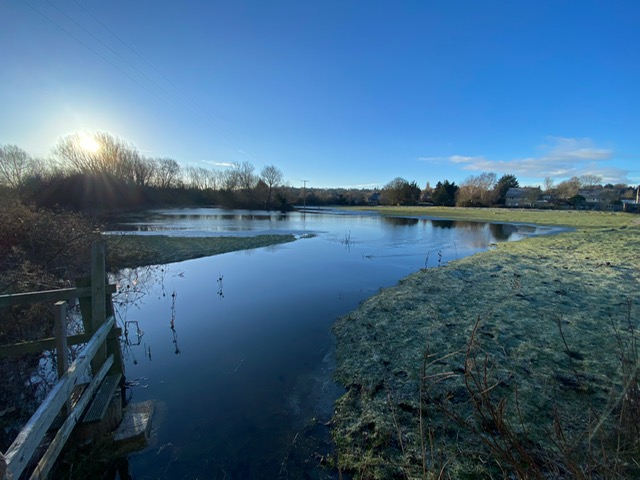
Fields near South Hinksey, 18 January

Willow Walk improvement works

Willow Walk will be closed for the next three months to enable replacement of the existing bridge over the Bulstake Stream, repair of a small culvert next to the bridge, and the resurfacing of the track. This work is being undertaken by the County Council, and is not part of the Oxford Flood Alleviation Scheme. Information on the planned work can be found here.

As there has been limited information about the work being undertaken OFA checked with the County Council and the Environment Agency to make sure that no increase in flood risk would result from the work. We have been assured that the planned work does not pose an issue and we’re satisfied that the work has received appropriate scrutiny.

January 2023 floods

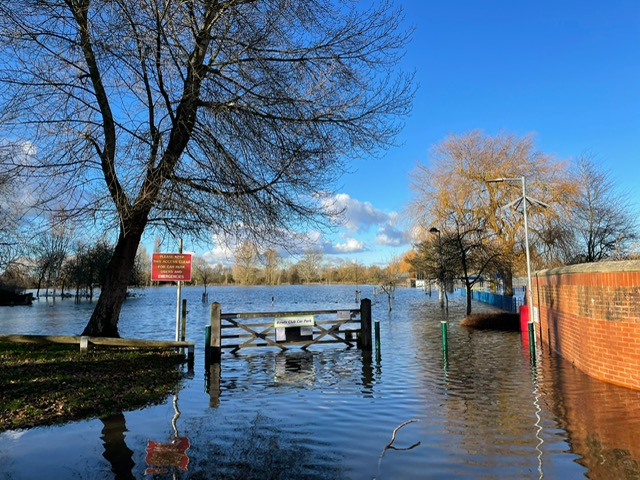
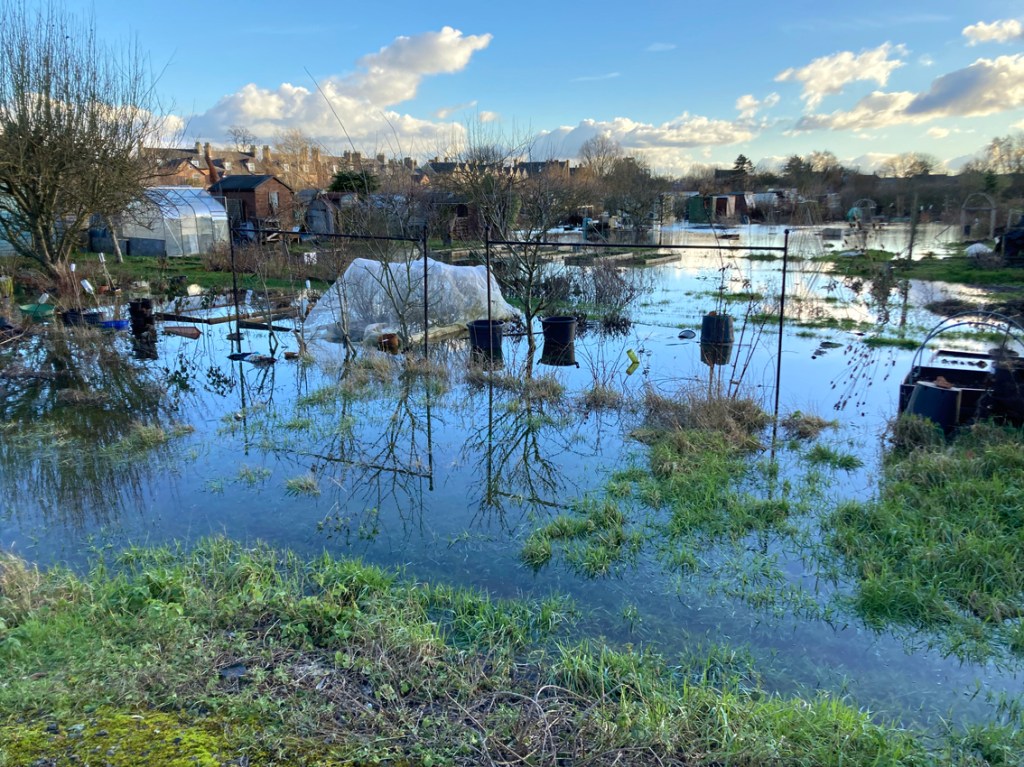
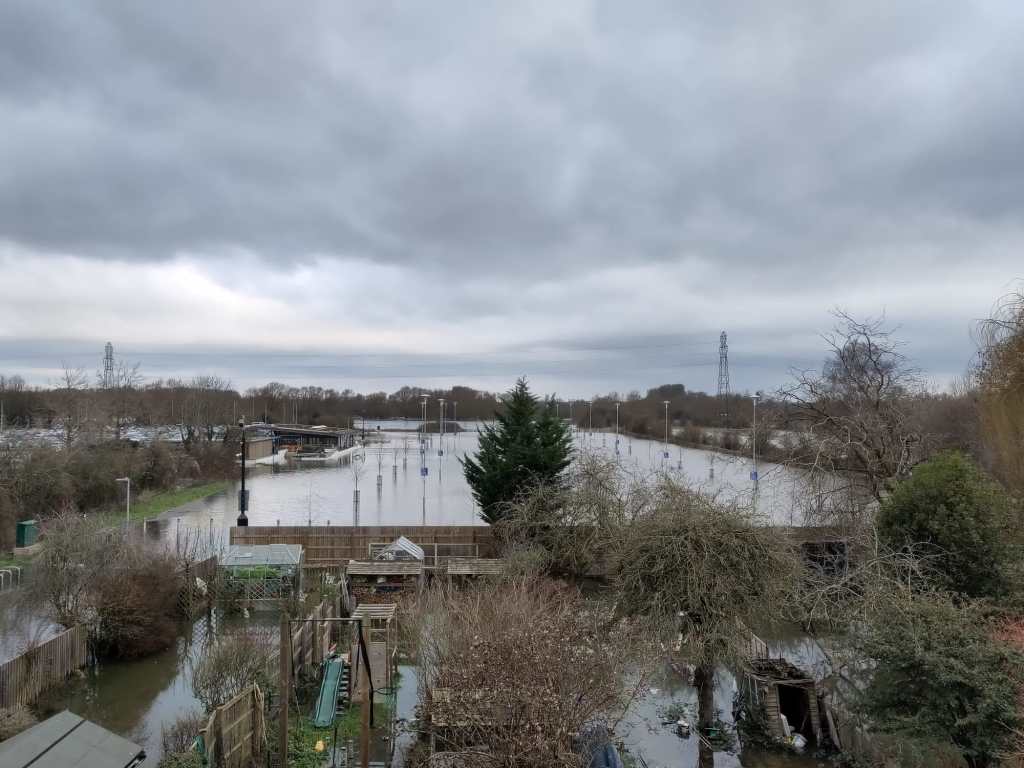
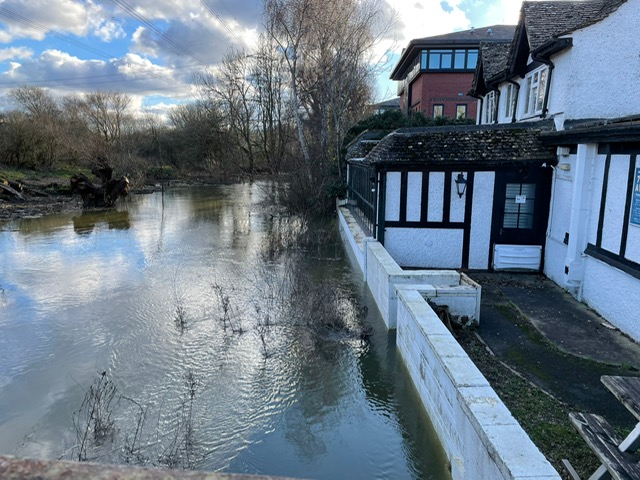
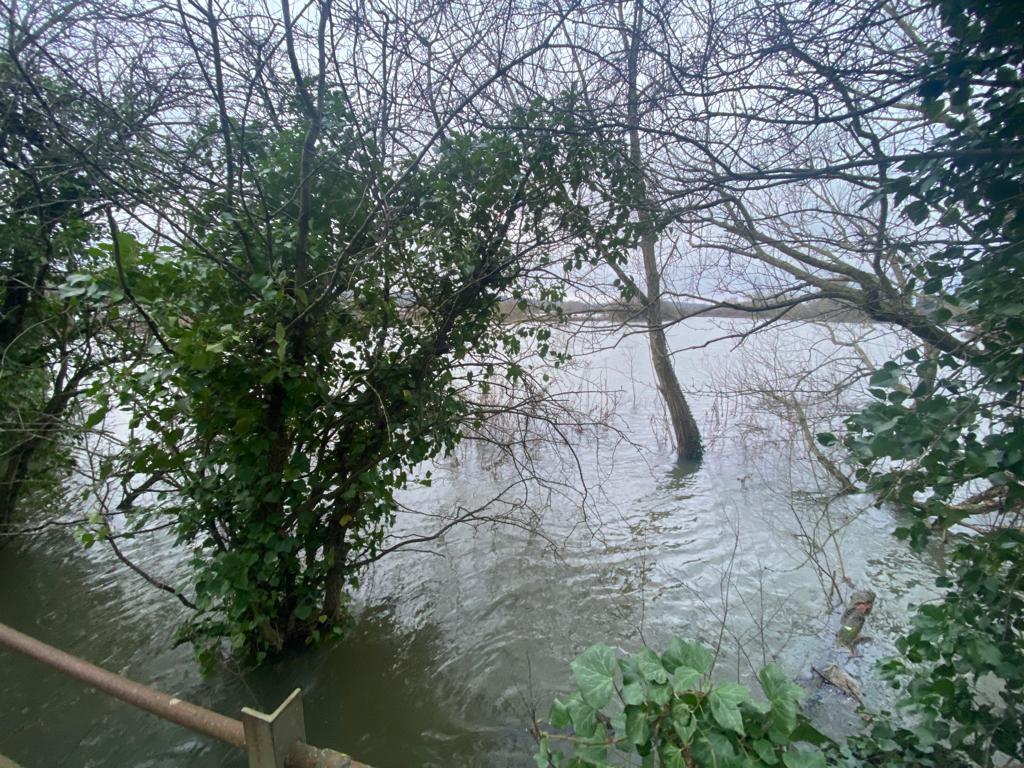
Following heavy rain last week, river levels in west Oxford have risen sharply and water has spilled out across the floodplain. Fields, parks, playgrounds, allotments and some paths are now under water, but properties and streets have so far stayed dry. Levels have not yet reached those seen in early February 2021 but are still going up.

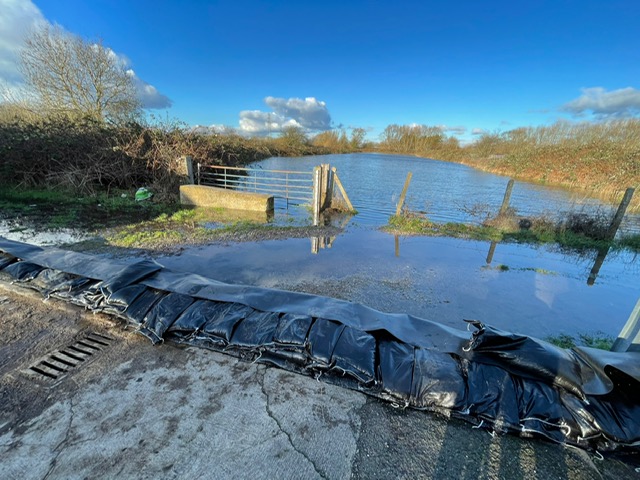
Well-rehearsed responses from the Environment Agency and the local authorities have kicked in. Demountable barriers were transported to South Hinksey on Sunday 15 January and are ready to be deployed. Sandbag defences were put in place this afternoon at Bulstake Close off Botley Rd. Barriers are not currently expected on Osney Island but are available if required.

Seacourt Park and Ride extension was closed by the City Council on 5 January when groundwater began to appear there. The car park is now completely flooded.

River levels upstream in the Thames catchment and on the Cherwell are starting to fall, and we hope levels in Oxford will soon peak. Environment Agency staff are monitoring the situation closely and are ready to ramp up the response if needed.  OFA steering group members are also keeping a close eye on the situation and are in contact with the EA.

These pictures, all taken on 16 January, show the extent of the current flooding.

Flood Action Week 2022

This year’s national Flood Action Week takes place from 7 to 13 November. The Environment Agency has issued the following press statement as part of its annual awareness raising campaign. The EA says:.

Don’t get caught out – flooding can happen to you.

Recent polling suggests nearly two in three households at risk from flooding do not believe their homes could flood[i]. But just because flooding hasn’t happened to you in the past, it doesn’t mean it won’t happen in the future.

In England there are over 5 million properties at risk of flooding[ii]. The research shows that people who haven’t taken action to prepare for flooding are in the clear minority (30%), but this still means that as many as 1.5 million households who are at risk are yet to prepare. With climate change already causing more frequent, intense flooding and sea level rise, we all need to know what to do, should the worst happen.

The risks of not taking action

According to the Environment Agency, the average cost of flooding to a home is around £30,000. Flooding also brings a significant risk to life. The mental health impacts of flooding can last for 2 years or more after flooding has happened. Depression, anxiety and PTSD can affect up to a third of people who have been flooded.

But, crucially, taking steps to prepare for flooding, and knowing what to do in a flood can significantly reduce the damages to a home and possessions (by around 40%)[iii], reduce risk to life, and reduce the likelihood of suffering from mental health impacts in the future. 

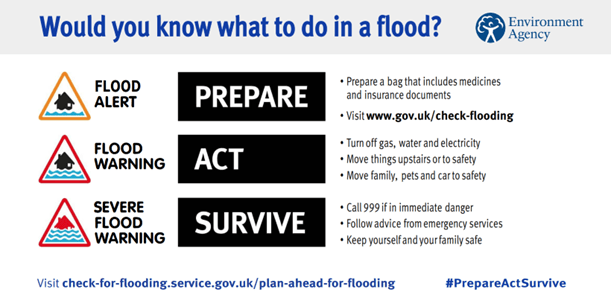
Know how to Prepare. Act. Survive.

The good news is that there are some simple things you can do to prepare for flooding, which could help keep you and your family safe, and save you thousands of pounds in damages and disruption. The below infographic sets out the steps you can take.

For more information and to find out if you are at risk, visit the how to plan ahead for flooding page on GOV.UK to get prepared.

Caroline Douglass, Executive Director Flood and Coastal Risk Management at the Environment Agency, said, “Climate change is happening now. We’re seeing more extreme weather – in this year alone with three named storms in a week, record-breaking temperatures and drought declared across large parts of the country. 

“That is why it is vital that people take the necessary preparations as early as possible to prepare for the worst. Our recent investment programme has better protected 314,000 homes from flooding and we’re investing millions into keeping communities safe, but we can’t stop all flooding.  

“The message is clear – households risk ignoring the danger of flooding at their own peril. Anyone can go online to check if they are at risk, sign up for Environment Agency warnings, and, most importantly, know what you need to do if flooding hits.” 

Twitter: @envagency
Facebook: facebook.com/environmentagency
Instagram: @EnvAgency


[i] Environment Agency Public Flood Survey, March 2021

[ii] Environment Agency National Flood and Coastal Erosion Risk Management Strategy, July 2020

[iii] Flood and Coastal Erosion Risk Management: Quantifying the Benefits, February 2021

A423 bridge replacement

Oxfordshire County Council has published details of the replacement bridge on the southern bypass near Kennington. The existing bridge needs to be replaced because of structural weaknesses. The new bridge has been designed in partnership with the Oxford Flood Alleviation Scheme and will increase capacity of the Hinskey streams to help reduce flood risk. The new design also includes improved traffic layouts. Anyone wishing to comment can do so using the form provide

Earth Trust’s River of Life II wetland

The local environmental charity Earth Trust is one of several organisations providing advice to the Environment Agency about the biodiversity aspects of the Oxford Flood Alleviation Scheme. Their experience of introducing new wetland habitat on the Thames is an invaluable source of learning. This recent post on their website gives details of some of the early progress in their River of Life initiative, including data about carbon emissions.

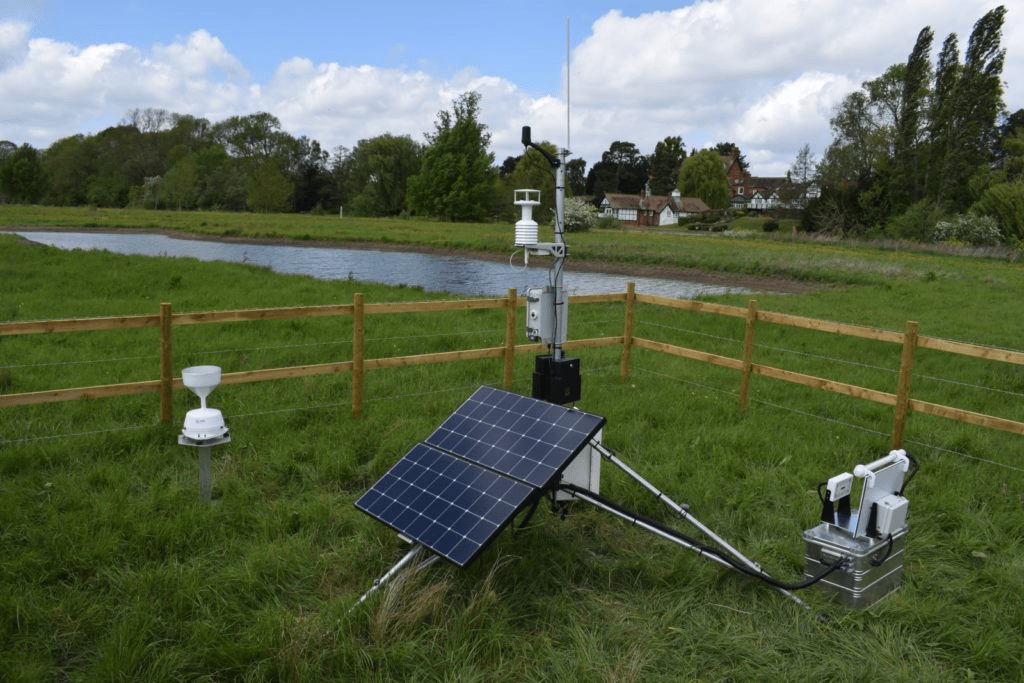
This earlier post, from June, describes an innovative remote monitoring station (see photo below) which enables the Trust to gather data about the presence of various species in the project area – bats, water voles, birds, moths. Lessons from this initiative will be beneficial to the implementation of the Oxford Flood Alleviation Scheme and may help inform the way biodiversity gain is monitored.

Latest update on Flood Alleviation Scheme

The Environment Agency has circulated its latest newsletter with updates about the Oxford Flood Alleviation Scheme. The text of the newsletter is reproduced below:

Scheme update

Since our last newsletter we have submitted the planning application for the Oxford Flood Alleviation Scheme to Oxfordshire County Council and they have held a consultation on the proposals. We have received a request for further information from them, which is quite normal for a project of this size. Once we have submitted this additional information the council will run a 30-day consultation on the newly submitted information, before considering it alongside the rest of the application.

We expect to make a Compulsory Purchase Order (CPO) for the land needed to build the scheme later this year.

Movement of material by rail

Construction of the scheme requires removing material from the floodplain offsite. We will reuse as much material as possible on site, for example to create earth embankments. Excess material will be taken to sites which already have planning permission for environmental restoration, such as former quarry sites.

We are looking to transport some of the excavated material by rail. We will be submitting a planning application to construct a temporary access track to the Hinksey Rail Sidings. Use of rail will depend on gaining planning permission to access the sidings, their availability and trains at the time of construction, and agreements with the operator of the sidings.

Once the work is finished, the temporary access track, alongside a temporary bridge crossing Hinksey Stream and pedestrian diversion, will all be removed and reinstated to their current use.

Maintaining the scheme for decades to come

We have a detailed programme in place to maintain the scheme operationally and to establish and manage habitats for at least the next 100 years.

In order to secure the potential benefits the scheme can bring for future generations, once we have all the necessary approvals and are nearing construction of the scheme, we will appoint an environmental partner who will be responsible for looking after the wildlife and landscapes of the scheme area in the long-term. 

They will work alongside our operational team to bring additional environmental enhancements, involve local people and community groups, establish opportunities for scientific research and visit schools to teach children about the work we do to protect and enhance the environment.

Earth Trust is helping us set the foundations for this approach. They are advising us on the development of plans for how the eventual land management of the completed scheme could/should function to deliver the long term environmental, climate and human health and wellbeing benefits of the scheme.

Scheme design

We have received lots of helpful feedback on the design of the scheme during our consultations and conversations with local communities over many years. The planning application we have submitted will ensure that the scheme provides Oxford with robust and reliable flood protection, that will also enhance the local environment.

The new stream with lowered floodplain is integral to the working of the flood scheme so that flood risk is reduced adequately and not transferred elsewhere. The lowered ground alongside the new stream does not store static water but provides additional space and a defined route for it to flow through the floodplain, away from communities, properties and businesses. Absence of a defined route for the water could lead to an unintended increase in flood risk elsewhere.

Crucially, the design will also enable us to create valuable new environmental features within and around the whole area of the scheme. This will include wetland habitat, new floodplain meadow, and backwaters and ponds.

Next steps

Before we can start building the scheme, we need to have all approvals, including planning permission and our compulsory purchase order, in place. Subject to approvals, we currently anticipate construction to begin in 2024.

Construction projects are currently experiencing cost increases due to wider inflation and the price and availability of materials and labour. The scheme’s budget takes inflation into consideration and its costs are reviewed regularly.

Until the scheme is completed, the Environment Agency has well tested flood-protection plans in place for Oxford, working with others, including the fire service and county council, to help those at greatest risk in the city. We encourage people to check their own flood risk and sign up for Environment Agency flood alerts.