Oxford’s floods and climate change: our article in Oxford Civic Society’s newsletter

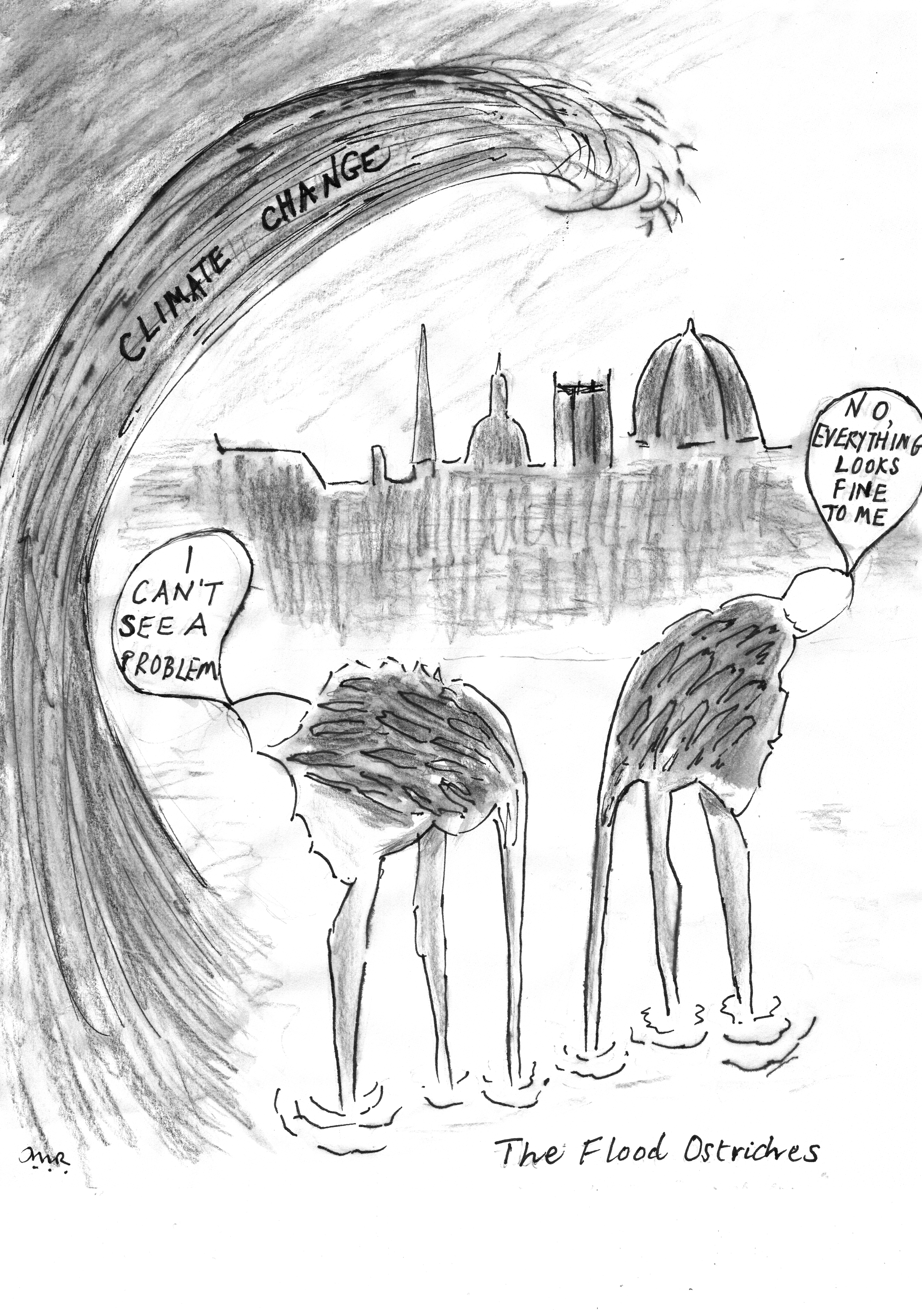
The Flood Ostriches and climate change

We’ve an article in July 2015 edition of ‘Visions’, the newsletter of the Oxford Civic Society.

It sets out our views on the threat posed to Oxford by flooding, with emphasis on the possible effects of climate change, and the relative merits of the possible options for combating that threat.

Working to reduce sewer flooding

Simon Collings represented OFA at the second meeting of Oxford City Council Scrutiny Panel on sewer flooding. Thames Water (TW) gave an update on where they are with a) Grandpont and b) the Oxford Catchment Study:

At Grandpont they have identified the most likely causes of sewer flooding and TW will now work with the City Council and residents to improve things. Local resident Brian Durham of OFA and SOFAG has been closely involved in this work.

On the Catchment Study they are engaged in two parallel processes:

  • a physical inspection of assets across the city – with any issues they identify being fixed as they go along (where the business case is obvious). This includes an inspection of both main trunk sewers.
  • customer surveys to help them understand where problems arise during a flood and how these manifest themselves.

So far they haven’t encountered anything which would suggest they need major capital investments, though they do plan to upgrade the pumps at Littlemore.

TW are talking to the Environment Agency (EA) team working on the Oxford Flood Alleviation Scheme, and the two modelling teams are going to share data and work together. By good luck the option development phases of both projects are working to similar timetables. EA will help TW understand how the river flooding affects the sewers, and TW will contribute to that work.

There will be one more meeting of the Scrutiny Panel in November/December but from then on formal reports will be given through the Oxford Area Flood Partnership, to avoid duplication of meetings.

ICE President David Balmforth visits Oxford

David Balmforth, newly elected President of the Institute of Civil Engineers, visited Oxford on 12 June to learn for himself about the Oxford Flood Alleviation Scheme (OFAS). The event began at the Environment Agency offices at Osney with a presentation by Peter Collins of the Environment Agency, followed by a Q&A session. David asked about the ongoing maintenance of the proposed scheme (see the Oxford Mail article): it was made clear that the lifetime maintenance of the scheme was a critical part of the planning process and that Treasury approval would not be sought without it.
Peter Collins pointed out that of the total project duration, half was likely to be spent on consultation, planning and approval; the earliest that work on the ground would begin would be April 2018.

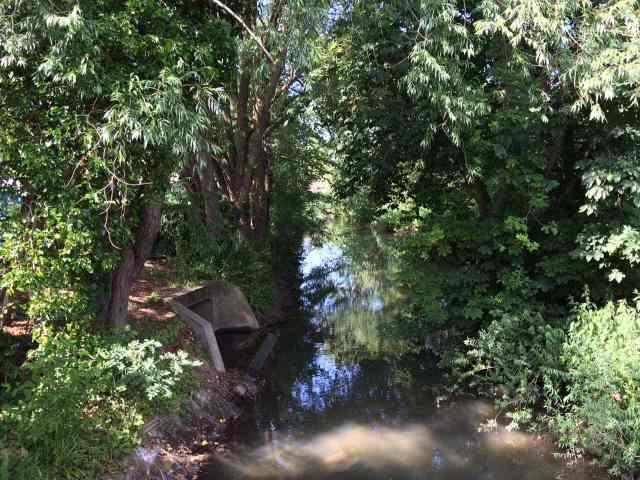
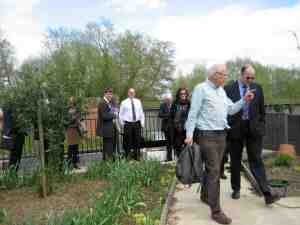
The entourage then went to the Seacourt Stream on the Botley Road for a site visit. Here Oxford Flood Alliance’s Adrian Porter talked to David Balmforth about some of the key challenges caused by flooding in the Oxford area, including:

  • How properties, families and communities are affected
  • The increasing frequency of flood events due to changing weather patterns
  • The importance of ongoing maintenance of existing watercourses.

David was particularly interested in property-level defence and how the insurance industry needs to change to properly support affected homes and business premises.

The visit was well received and hopefully David Balmforth left Oxford with a good understanding of OFAS and how it fits into the wider strategy for protecting Oxford from flooding.

Public consultation events continue

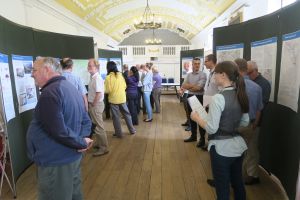
Following on from the first meeting in Kennington, there have been meetings in Abingdon and the West Oxford Community Centre. Partners in the schemes, including OFA, have listened to concerns and suggestions from members of the public and explained, as far as is known at this stage, what the Oxford and Abingdon Flood Alleviation Schemes aim to achieve and what they may consist of. Generally those attending have been very positive about the schemes.

Oxford Mail report on the meeting at WOCC

The final two events are this afternoon, 30 June, at Oxford Town Hall and on Friday, 3 July, at South Oxford Community Centre, both 2.30-7.30 pm.

Public drop-in meetings for Oxford and Abingdon Flood Alleviation Schemes

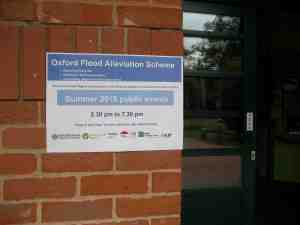
Public drop-in sessions are now arranged for the Oxford Flood Alleviation Scheme (OFAS). These sessions are for people to find out about the scheme, ask questions and make suggestions. All are from 2:30 pm to 7:30 pm – come when you like.

  • Tuesday June 23       Kennington Village Hall OX1 5PG
  • Thursday June 25     Abingdon Guildhall OX14 3HL (both Oxford and Abingdon schemes)
  • Friday June 26           West Oxford Community Centre OX2 0BT
  • Tuesday June 30       Oxford Town Hall OX1 1BX
  • Friday July 3               South Oxford Community Centre OX1 4RP.

Oxford’s MPs

Congratulations to Nicola Blackwood (Oxford West and Abingdon) and Andrew Smith (Oxford East) who have both retained their parliamentary seats in yesterday’s general election.

Flooding presents a real threat to the welfare of the people and city of Oxford. Climate change is likely to increase that risk in future. Both our MPs have already expressed their support for the Oxford Flood Alleviation Scheme. We look forward to continuing to work with them and others on this so-important multi-partner project.

The scheme could become a reality within this next parliament: that would be fantastic for the city we are so lucky to live in, helping to ensure it continues to thrive.

Thames Regional Flood & Coastal Committee visit Oxford

The Thames Regional Flood & Coastal Committee (RFCC) met in Oxford yesterday. Following the meeting, members visited sites in Oxford related to OFAS. Members of our steering group were on hand to welcome them and, with staff from the Environment Agency, showed the visitors some of the problems which need to be surmounted to alleviate Oxford’s recurrent flooding.

Flooding which, unchecked, is likely to threaten further the proper functioning, and the reputation, of the city in the future if (as a consensus of scientists predicts) climate change makes extreme weather more common. OFAS offers the only practicable way towards reducing this all too real danger in time.

Thames Water’s Oxford (sewer) Catchment Study – meeting

Two of us met with two people from Thames Water today. Thames Water are getting on with the first stages of their Oxford Catchment Study, designed to find out why we get sewer flooding in many parts of Oxford. Some technical studies have already been done, house to house interviews with residents in affected areas will begin quite soon. A dedicated website should be up and running shortly, possibly as early as next week.

We are delighted that this study is happening – Oxford is one of only five places in Thames Water’s area to be having such a detailed study. This is a necessary first stage in, hopefully, getting action to remedy the problems. We are helping in any way we can.

This study will be used, along with other evidence, to guide Thames Water when they consider how much the proposed Oxford Flood Alleviation Scheme would help solve sewer problems – and hence, presumably, how much they could consider contributing to that multi-partner scheme.

Thames Water agree how important it is that when new building is proposed that there is adequate prior consideration given, i.e. at the planning stage, to whether the sewer system will be able to cope.

Prime Minister visits Oxford

PM visiting Oxford_Dec2014

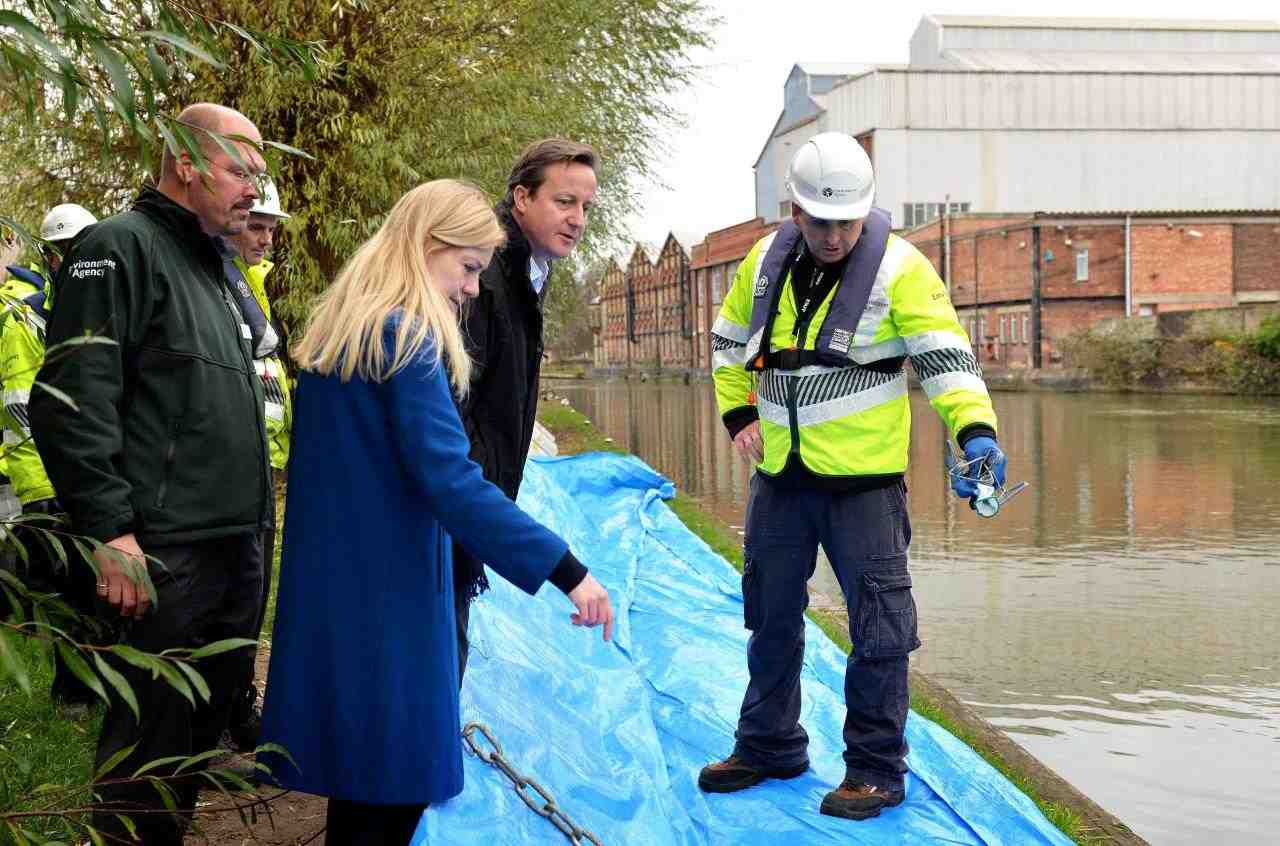
From L: Barry Russell (EA); Nicola Blackwood, MP; David Cameron, Prime Minister.

The Prime Minister, Mr David Cameron, visited Oxford today. This was related to an announcement that £42 million should be available to the Oxford FAS. While this was anticipated, as Flood Defence Grant in Aid money allowable for the proposed project, to have it announced in this public way is very welcome as it adds impetus and weight to the proposal.

It does not imply though that the Scheme is a done deal: there is a rigorous assessment procedure and further public consultation to be gone through before the Treasury finally decides whether the project should go ahead.

It is also the case that no specific scheme, formally proposed, exists yet: that is still being worked on.

It was good to meet the new Chairman of the Environment Agency, Philip Dilley.