Seacourt P&R extension proposal: potential risk to life

Liz Sawyer, who recently joined the OFA Steering Group, addressed Oxford City’s Full Council on 6 February 2017, about the potential risk to life posed by the proposed extension to Seacourt P&R.

There is also, as the photograph above shows so vividly, the potential for damage to the car park itself – and of course to vehicles. The Automobile Association’s ‘Flood Facts’ quoted in Liz’s address set out the risks of floodwaters very clearly.

Liz’s address can be downloaded here (pdf).

New flood advice website

Oxfordshire County Council, our Lead Local Flood Authority (LLFA), have just launched a new flood website which should be very useful, providing a single place where people can go for advice. The link is https://www.oxfordshirefloodtoolkit.com.

The Oxford Mail has an article on it http://www.oxfordmail.co.uk/news/14942940.FLOOD_victim_who_fortified_his_home_urges_others_to_use_new_council_online___39_toolkit__39_/

Storm Desmond, flooding and climate change

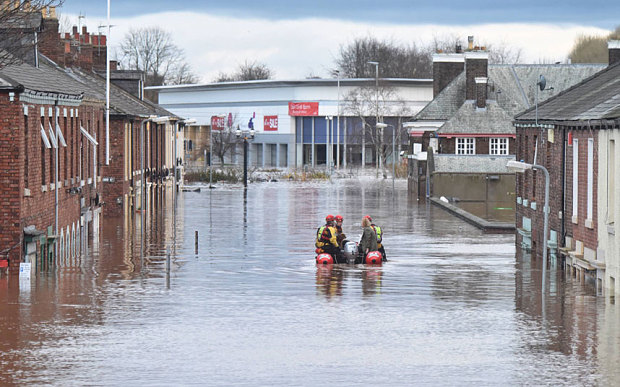
corporation road carlisleCorporation Road, Carlisle (Photo: North News)

There has been widespread and severe flooding in Lancashire and Cumbria due to unprecedentedly heavy rainfall in a short period from Storm Desmond. One feels for the people affected, many not for the first time.

‘The 405mm of rain that fell in Thirlmere in the 38 hours to 8am on Sunday marked a record amount of rain ever to fall in a 48-hour period while the 341.4mm recorded at Honister Pass on Saturday broke the highest rainfall record for any 24-hour period.’

‘Dame Julia Slingo, the Met Office’s chief scientist, said the “extraordinary” conditions were likely the result of climate change. Her comments were echoed by Liz Truss, the Environment Secretary, who told MPs: “Climate change is factored into all the modelling work the Environment Agency does but clearly in the light of this extreme weather we are going to have a look at that modelling and make sure it’s fit for purpose.” ‘http://www.telegraph.co.uk/news/weather/12038356/Floods-caught-ministers-by-surprise.html

‘Prof Hall [Professor Jim Hall, director of the Environmental Change Institute at the University of Oxford] said there was always a trade off between costs and risks. Nevertheless, he added that the latest floods “should be a trigger for a revaluation of protection standards”.’ http://www.ft.com/cms/s/0/57b91e9c-9cf1-11e5-8ce1-f6219b685d74.html#axzz3tiucxtde

There is more on the relation between flooding and climate change here http://www.belfasttelegraph.co.uk/news/uk/heavy-rain-and-flooding-fit-with-climate-change-predictions-34268682.html

Extreme weather events associated with climate change are already more common: we need to make sure the assumptions used in the modelling of the Oxford Flood Alleviation Scheme (Oxford FAS) sufficiently take into account the effects of climate change.

Natural flood management, climate change and Oxford: a symposium

Oxford Flood Alliance are hosting their Second Flood Symposium this week, in collaboration with the Environmental Change Institute, University of Oxford. The meeting is fully subscribed.

The topic is Natural flood management, climate change and Oxford.
We will publish a summary of the proceedings on this website.

Flooding and farmland

An interesting article (in December) in the Oxford Mail from Andrew Ingram of the CLA

http://www.oxfordmail.co.uk/yoursay/columns/11639864.OPINION__Sacrificing_farmland_to_save__towns_no_way_to_fight_floods/?ref=arc

MPs visit flooded areas

30 November 2012

Our MPs, Andrew Smith and Nicola Blackwood, have visited flooded areas to see the problems and how defences were working.

Oxford East MP Andrew Smith said: ‘The Environment Agency, City Council and Emergency Services have done a good job.  I saw for myself the effectiveness of the barrier by Hinksey Lake and the pumping operation in Vicarage Road, where we had 3 feet of water in 2007. The measures pressed for by the Oxford Flood Alliance and put in place have made a big difference; but it is all still on a knife-edge, and we must all keep up the pressure for more works to reduce the risks still further’.

Nicola Blackwood, MP for Oxford West and Abingdon, visited areas on the Botley Road and in South Hinksey before moving on  to Abingdon. She saw flood defences working well at Bullstake Close, Botley Road. In sharp contrast, in South Hinksey there was flooding of seven houses, with water which seems very likely to have been contaminated by overflowing sewers. Ms Blackwood is taking up this and other issues on behalf of residents.
Sewers and/or surface water systems appear to have been overloaded too in the Grandpont area, and parts at least of the Botley Road area. This is of great concern and demands urgent investigation and remedy.

Photos of the present floods

29 November 2012

Floods have arrived in Oxford again, for the fourth time in 12 years. About the only good thing about floods is that they make excellent subjects for photos – here are some great ones.
https://picasaweb.google.com/lh/sredir?uname=100616118436869252453&target=ALBUM&id=5815596623655746721&authkey=Gv1sRgCLiB19a95JOprwE&feat=email

Flooding on the way AGAIN? – government funding sorely needed

24 November 2012

Today we’re watching river levels rise and fields flooding; it‘s still raining and more is forecast. Will properties flood again?

The Oxford Flood Strategy flood prevention scheme, produced by the Environment Agency after years of work, was going to cost £150 million. The government’s new partnership funding scheme, introduced subsequently, would provide 7% of the money required. 93%, about £140 million, would have to come from the County, the City, the Vale, businesses, and residents. That’s totally unrealistic.

Every flood costs a huge amount. Only government has sufficient capital to invest to stop this recurring problem. But the government doesn’t seem to appreciate that money spent on flood defences is money exceedingly well spent. In economic terms alone it’s TEN TIMES better value than the controversial HS2 rail scheme.

Changing weather patterns look set to make flooding more and more common. Throughout Holland defences are designed to limit flooding to once in 1000 years or better. The Oxford Flood Strategy offered 1 in 75-100 year protection; at present we have almost none.

This country could afford adequate flood defences if the political will were there. The government must grasp the issue, supplement the present funding scheme, and invest serious money. Failure to do so will cost far, far more. And that’s not counting the human misery.