Oxpens redevelopment flood compensation

OFA is pleased to note the approach being taken in the Flood Risk Assessment which forms part of the OXWED planning application. At the insistence of the Environment Agency the developers have  adopted a ‘level for level’ approach to flood compensation, meaning that any reduction in floodplain capacity at a given level has to be compensated for by an increase in capacity at that same level. This is the standard we would expect to see applied.

The development will also allow flood water to enter voids beneath some of the built structures.

Up to date flood modelling has been used in the assessment, and allowance has been included for the proposed new bridge over the Thames (which will be part of a separate planning application).

Calculations in the FRA show an overall net gain in flood plain capacity for all levels of flooding. This will help to reduce flood risk in the city. The EA is now reviewing these proposals and will provide its comments to the planning authority. OFA welcomes the robust approach being taken.

During 2021 OFA took part in several meetings between the OXWED developers and members of St Ebbe’s New Development Residents Association (SENDRA) where flood risk was being discussed. Community members highlighted concerns about continuing erosion of the riverbank at Oxpens Meadow. These concerns are acknowledged in the planning documents with provisions included to address them.

Some SENDRA members were also interested in the potential to improve the biodiversity of the meadow, an interest OFA shares. The planning application includes proposals for a net gain in biodiversity which is assessed to be in excess of 10%. This is achieved through additions to hedgerows, numbers of ecologically valuable trees, and sowing of the meadow with a richer mix of grasses.

Going forward we expect to see similarly robust approaches on flood risk being applied to other planned development in this area, especially Osney Mead. We also want to see areas set aside for biodiversity being linked so that green corridors continue to serve wildlife in the area. Protecting and enhancing the diverse habitat provided by the main river and its margins will be critical.

Seacourt Park & Ride extension open again

The extension to Seacourt Park & Ride reopened on Wednesday 8 February after being closed on 5 January due to flooding. The City Council acted promptly to prevent access to the extension once flooding became likely. The facility, which is designed to flood, was closed for a total of 35 days. In the planning application the City Council estimated that the car park would be out of use because of flooding for an average of 10 days a year. We argued at the time that this was an under-estimation. Construction of the facility, which OFA opposed, resulted in a net loss of floodplain capacity.

Seacourt P&R extension closed on 5 January 2023

River levels falling

River levels are now falling in Oxford and we expect to see floodwater begin to drain away over the coming weeks. The flood peaked yesterday, 18 January, when the Thames south of Osney Lock reached 3.58m, the Bulstake at New Botley recorded 2.64m, and the Seacourt at Minns estate was at 2.68m.

These levels are below those recorded two years ago, on 3 February 2021, when the Thames at Osney reached 3.73m, the Bulstake 2.80m and the Seacourt 2.90m.

The 2021 event was the most serious flooding since the floods of January and February 2014. On 9 January that year the Thames downstream of Osney lock recorded 3.93m, the Bulstake 3.02m and the Seacourt 3.08m. Some properties were affected by the 2014 flooding. A second wave of flooding in February reached similar levels, though not quite as high.

We’ve been pleased with the level of preparedness and response from the various agencies involved this year. We have been sharing photographs of this year’s flooding with the Environment Agency to assist them in checking assumptions in the flood model used to manage response to high rainfall and river levels.

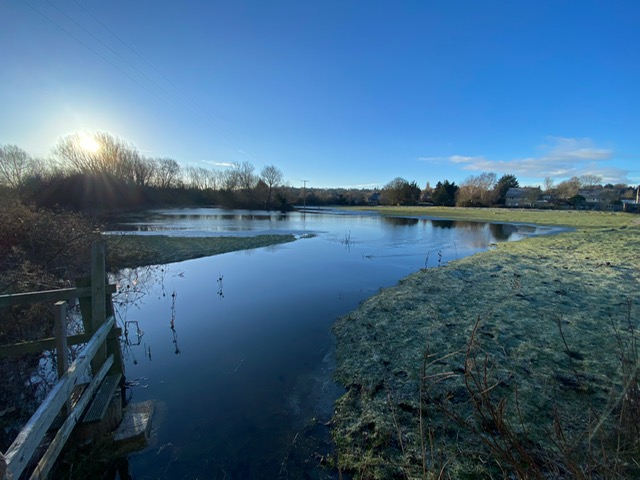
Fields near South Hinksey, 18 January

Willow Walk improvement works

Willow Walk will be closed for the next three months to enable replacement of the existing bridge over the Bulstake Stream, repair of a small culvert next to the bridge, and the resurfacing of the track. This work is being undertaken by the County Council, and is not part of the Oxford Flood Alleviation Scheme. Information on the planned work can be found here.

As there has been limited information about the work being undertaken OFA checked with the County Council and the Environment Agency to make sure that no increase in flood risk would result from the work. We have been assured that the planned work does not pose an issue and we’re satisfied that the work has received appropriate scrutiny.

January 2023 floods

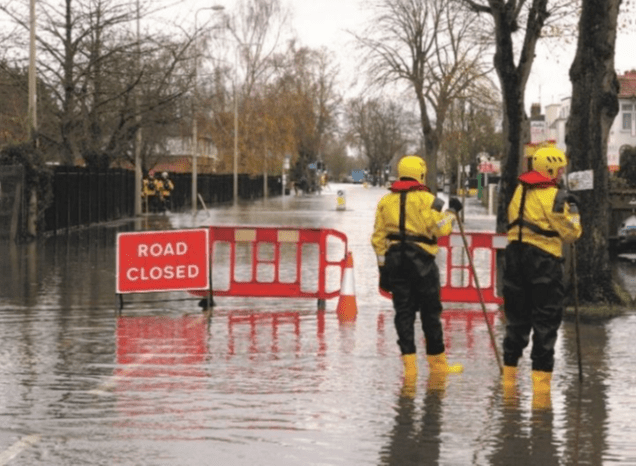
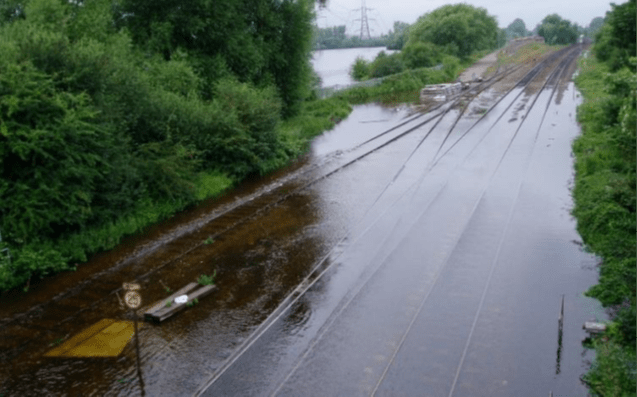
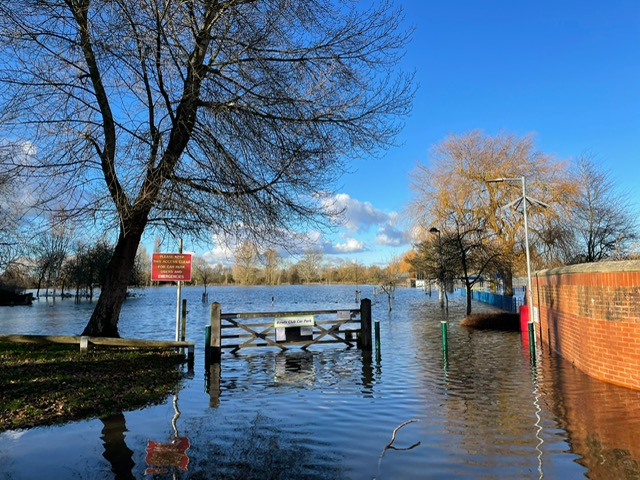
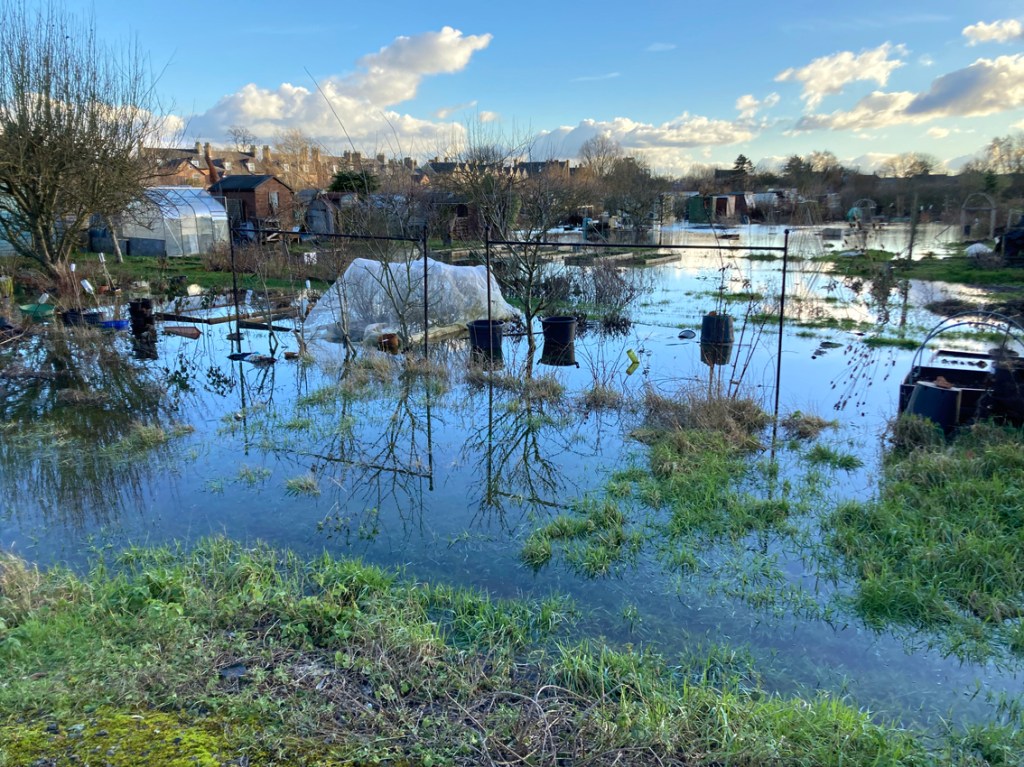
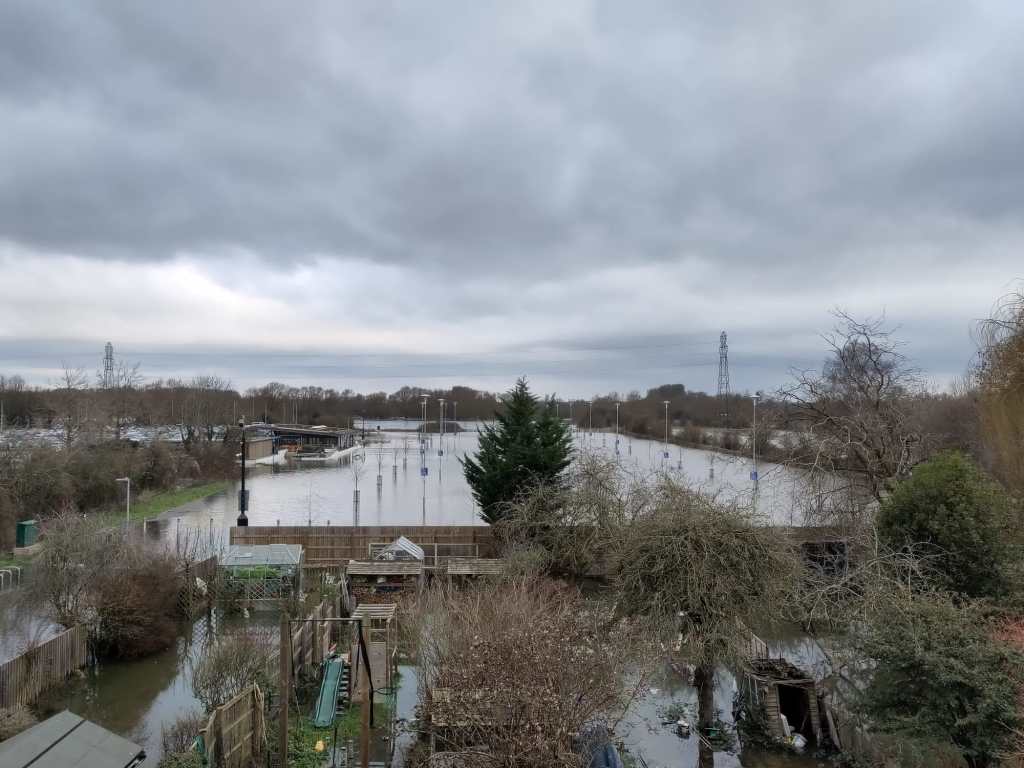
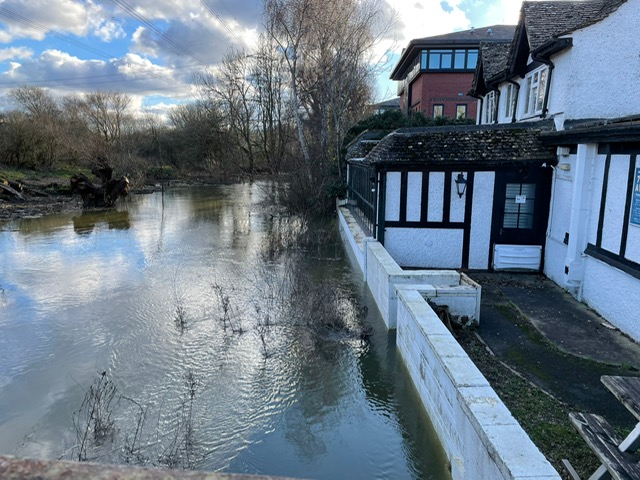
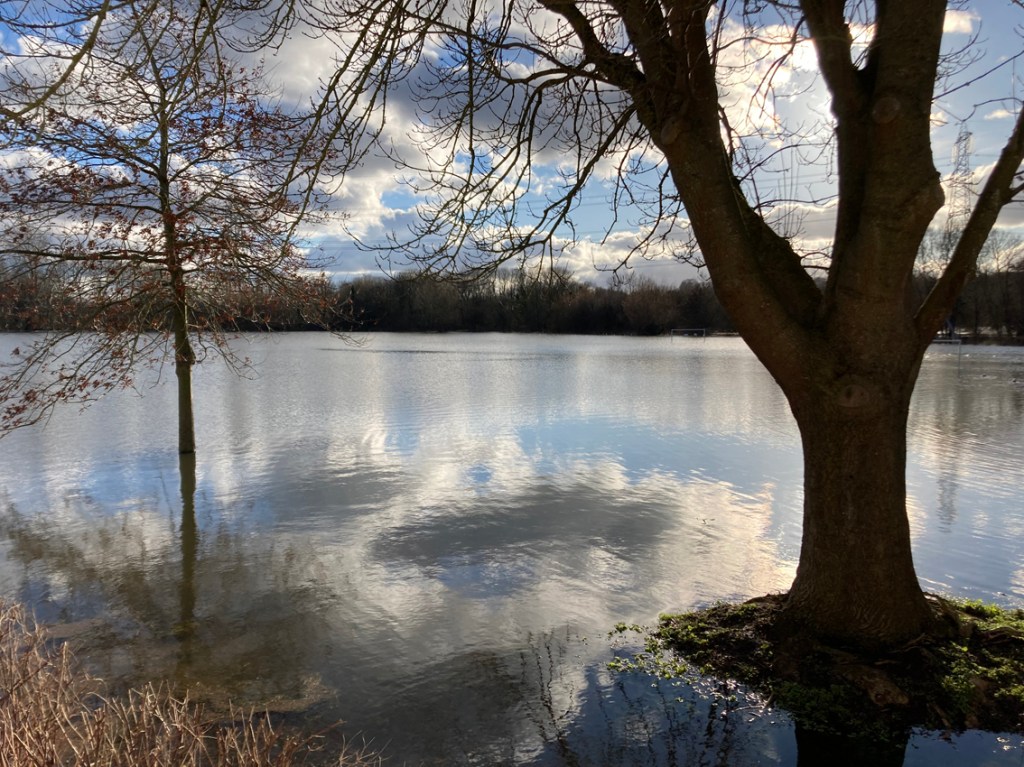
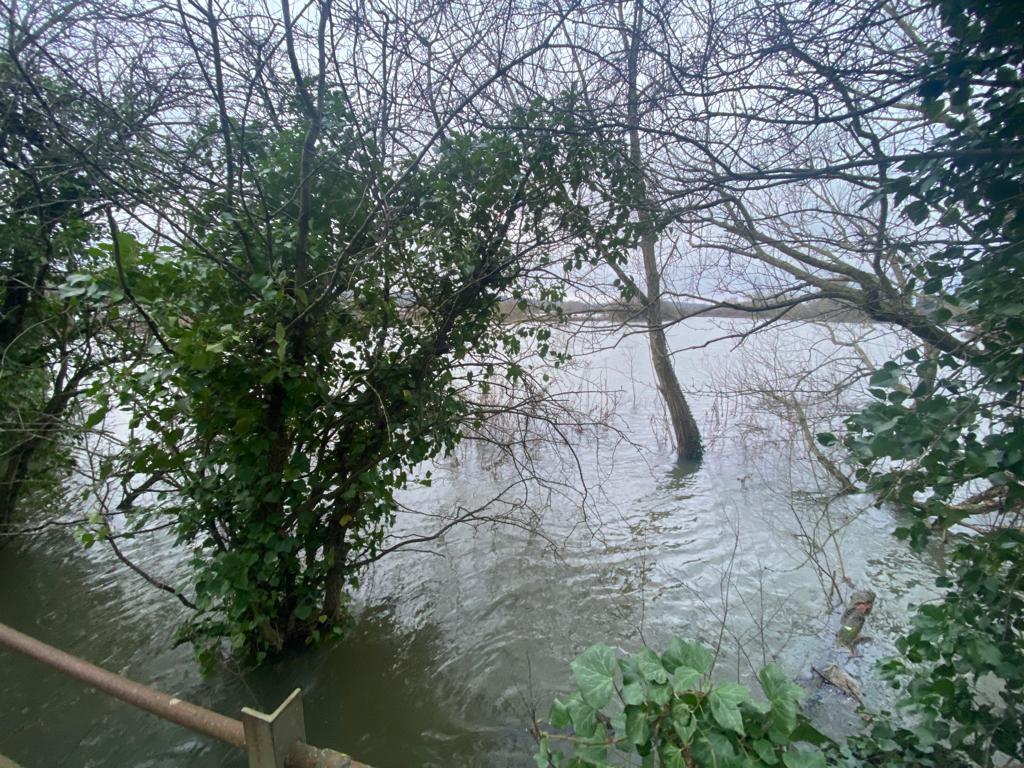
Following heavy rain last week, river levels in west Oxford have risen sharply and water has spilled out across the floodplain. Fields, parks, playgrounds, allotments and some paths are now under water, but properties and streets have so far stayed dry. Levels have not yet reached those seen in early February 2021 but are still going up.

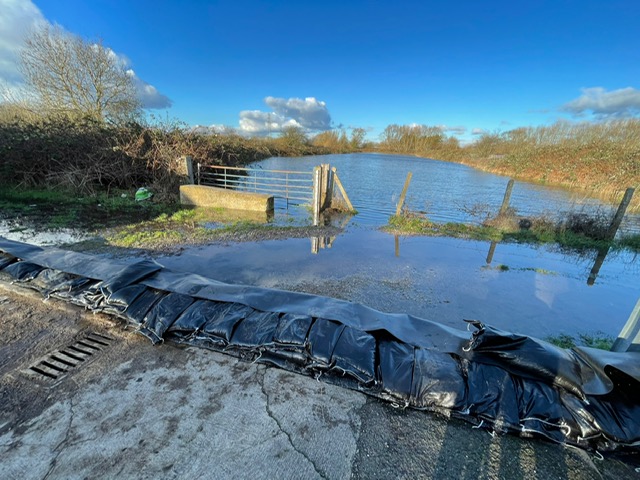
Well-rehearsed responses from the Environment Agency and the local authorities have kicked in. Demountable barriers were transported to South Hinksey on Sunday 15 January and are ready to be deployed. Sandbag defences were put in place this afternoon at Bulstake Close off Botley Rd. Barriers are not currently expected on Osney Island but are available if required.

Seacourt Park and Ride extension was closed by the City Council on 5 January when groundwater began to appear there. The car park is now completely flooded.

River levels upstream in the Thames catchment and on the Cherwell are starting to fall, and we hope levels in Oxford will soon peak. Environment Agency staff are monitoring the situation closely and are ready to ramp up the response if needed.  OFA steering group members are also keeping a close eye on the situation and are in contact with the EA.

These pictures, all taken on 16 January, show the extent of the current flooding.

Comments on City Council plans for Osney Mead

Oxford City Council has issued a draft Supplementary Planning Document for the development of the western end of the city centre, an area which includes Osney Mead. The council is inviting comment. The relevant documents can be found here: https://www.oxford.gov.uk/news/article/2217/council_invites_views_on_latest_stage_of_major_transformation_of_oxford_west_end_and_osney_mead.

Osney Mead floods and will continue to do so even after the Oxford Flood Alleviation Scheme is built. How flood risk will be managed as plans come forward will need very close scrutiny. OFA believes the SPD should be strengthened in a number of areas to set an appropriate framework for managing potential future flood risk, including from sewers. We also believe the approach to biodiversity needs strengthening in line with the approaches adopted by the Oxford Flood Alleviation Scheme. OFA has submitted the following comments to the City Council:

a) Flooding and flood risk – the documents acknowledge that Osney Mead floods and will continue to do so after the completion of the Oxford Flood Alleviation Scheme, and that any development there needs to create capacity to contain and manage flood water. This can only be done, the documents say, if the whole Osney Mead site is developed in a joined-up way. The documents also recommend the creation of the appropriate infrastructure before any other development. We strongly support this view. Management of flood risk needs to be taken very seriously in any plans which come forward, not just for Osney Mead itself but also for adjoining areas. There is a risk that piecemeal re-development of the site could increase flooding locally and it would be challenging to monitor and manage.

While we welcome the general statements made about flood risk we do not see how some of the descriptions and images of proposed redevelopment on Osney Mead are consistent with flooding of the area. We therefore have serious questions about how well flood risk has been understood by the authors of these documents. In particular, the documents talk about ‘activating’ the riverbank south of Osney Lock and down to Grandpont. The proposals envisage a new, wider cycle and pedestrian route along here, river-facing buildings (apartments, offices) and new spaces for people to sit. The illustrations of what this might look like show a heavily urbanised and landscaped river frontage with paths and building all at the same level. But the towpath floods most years and is often impassable. This is flood zone 3b, part of the natural flood plain, and the types of development permitted in such an area by the National Planning Policy Framework are very restricted.

How can the envisaged ‘activated’ frontage as illustrated in these documents possibly be realised in these circumstances? Will the bank be raised to create the kind of structures shown in the SPD? If so what happens to flood water which currently overtops the Thames banks and inundates adjacent areas? Canalising the Thames at this point would create significant flood risk for existing communities both up and downstream of the area. Or will the riverside path remain at existing levels and be allowed to flood? This is very unclear in the documents. We would like to see explicit statements in the SPD and design guidelines about the challenge of ‘activating’ the riverbank given that it is in flood zone 3b. Illustrations in the documents should also present a more realistic view of what the redevelopment might look like.

The design guidelines talk about new bridges connecting the towpath by the Punter to Barret St on the other side of the Thames, and one at the eastern end of South St crossing the Osney Stream to connect to Osney Mead. In both of these locations temporary flood barriers are currently deployed when river levels are high. These barriers are critical to preventing houses on Osney Island from flooding. At the end of South St there is a large wall where the proposed new bridge would come across. This wall helps to contain flood water in Osney Stream. The demountable flood defences for the island  are stored in the EA’s Osney depot. If this depot is to close and move we need to understand how flood defences will be deployed during a flood emergency. A large pump located on EA land behind the houses on the eastern end of South St is also a critical part of the local flood defence system. This pump evacuates flood water from the island and pumps it into the weir pool. Even after the completion of OFAS houses on Osney will continue to be vulnerable to flooding and temporary defences will still be required. We would like to see the SPD/design guidelines explicitly state that any developments must not compromise flood defences for Osney Island.

A holistic approach to redeveloping Osney Mead potentially creates an opportunity to help reduce flood risk to Osney Island as well as addressing the challenges of the Osney Mead site itself. We would like to see the SPD flag up this opportunity as something to be explored. We have a rare opportunity to reduce risk for vulnerable Osney residents and this should not be missed.

Redevelopment of the Castle Mill area could potentially affect streams and weirs in that section of the city. Any plans coming forward should ensure there is no reduction in the capacity of these streams to help move flood water through the city. Could the performance of these water courses be improved to help alleviate flood risk in the city? Has this been considered?

b) Sewers – the current sewer system on Osney Mead does not cope with floods and is quickly infiltrated by flood water. Sewage is pumped from Osney Mead up Bridge St on Osney Island to join the main sewer on Botley Rd. In a flood the pressure in the system means sewage bubbles out of the sewer covers and has to be pumped into the river. Some people on Osney Island cannot use their toilets during a flood. We raised this issue in a previous consultation but there is no mention of sewer infrastructure in the Supplementary Planning Document or the Design Guidelines issued for consultation.

We need assurances that adequate sewer infrastructure will be put in place and this must be a prerequisite for any redevelopment of Osney Mead. The increased density of proposed redevelopment will greatly increase pressure on the sewer system. Failure to address this infrastructure requirement could be disastrous for some Osney residents and would mean regular discharges of sewage into the local wate ways to the detriment of the wildlife. When we have tried to raise these issues with Thames Water in the past they simply say ‘it’s caused by fluvial flooding which is nothing to do with us’. We know what an appalling track record the water companies have on river pollution. A holistic approach to the redevelopment of Osney Mead must include addressing the sewerage problems, including using flood mitigation measures to reduce risk of sewers being infiltrated.

c) Biodiversity – throughout the development of the Oxford Flood Alleviation Scheme we have been strong supporters of the ‘environmental vision’ of the scheme and the idea of making the new stream as natural as possible. This helps reduce long-term maintenance of the assets being created and is far more sustainable than a more engineered approach. We believe a similar approach should be adopted for Osney Mead. The design document talks about ‘sensitivity to habitat’ and of retaining ‘existing trees where possible, especially those of good ecological and amenity value.’ A glance at Google Earth shows the two main areas of tree cover on Osney Mead are along the bank of Osney Stream opposite the houses in Bridge Street extension, and along the towpath south of Osney Lock down to the railway bridge. The SPD seems to envisage the elimination of all of these trees. This is a major contradiction in the documents. Removing them would take out most of the existing habitat. There is a considerable difference between the carefully thought through strategies in OFAS for how biodiversity will be enhanced through the project, and the vague reliance on street trees and green roofs in the SPD design document. Green roofs need regular maintenance including irrigation and addition of fertiliser. There are some positive words in the design guideline but protecting and enhancing existing biodiversity in the area, including incorporating wild, unmanaged space into the design, hasn’t been adequately thought through. Continuing to allow the river frontage to operate as natural floodplain as it does currently, with the trees and other wild vegetation retained, would be less environmentally destructive and cheaper to maintain. We would like to see approaches here better aligned with OFAS’s approach to enhancing biodiversity. The SPD should include explicit references to OFAS and its environmental vision, and alignment with this should be a requirement of any developments coming forward. The OFAS project covers an area which borders Osney Mead and includes important targets for new wild flower meadows in the area. Opening access into the greenbelt from Osney Mead must not compromise the biodiversity targets OFAS is committed to delivering.

What we’re hearing from people

Over the last five days we’ve had more than 150 visitors to the OFA website, and recorded 260 page views.  Here’s some of the feedback we’ve been getting in response to recent blog posts and emails about the Oxford Flood Alleviation Scheme.

I am trying now to filter all the various things I have read and heard thus far but also to explore the whole plan in more detail so that I can reach a fuller understanding of what is being proposed (and what isn’t).

A point which I think is also well made [is] the clear good faith of the Environment Agency.

Thank you so much for your myth-busting email. Truth to tell, I had got very confused by all the flood relief information, so this helps considerably.

It’s good to see some pushback against the (very small?) resistance group.

The EA’s responsibilities cover a wide range: from nuclear regulation to river navigation. It is all rather too easy to take a pop at the Agency for its perceived shortcomings, which may have little – or indeed nothing – to do with the completion of OFAS.

I am full of admiration at the detailed way in which you have explained and defended this scheme. It must go ahead.

I’m quite concerned that people aren’t accessing a range of information about the flood scheme. I’ve written a supportive comment on the planning website.

I’ve read bits and pieces of the planning application and had been generally supportive, but it’s easy to be swayed when you only hear the negative impacts. You’re totally right, we need to think of the bigger picture. A few years of disruption is worth it in my mind to have a scheme in place that protects people’s homes and hopefully generates an even lovelier area across the fields.

Thank you for sending that information through.  I’d seen some of the claims you mentioned and was sceptical of them but didn’t have the information to back up my scepticism (or the time to do the research) so having it laid out like this is really helpful.

I think those involved in getting this project right are doing their best to make us all understand what exactly the plan involves.

We strongly encouraged people interested in the scheme to read what the planning documents say. These can be accessed here: Planning Register | Oxfordshire County Council A good place to start is the ES non-technical summary which provides an overview of the scheme. The deadline for submitting comments on the planning application is 9 May.

Why we should trust the Environment Agency on OFAS

Public trust in politicians and government bodies is low for reasons we all understand. But not all government backed initiatives are bad. Here are eight reasons why OFA trusts the Environment Agency on the Oxford flood scheme design:

  • We’ve been working with the agency since 2007 on flood relief measures, and since 2013 on the large flood relief scheme. We know them well. We developed trust in their professionalism through the implementation of a series of highly effective short-term measures after the 2007 floods.
  • The EA is very responsive to flood events when they occur and have helped to keep us dry on many occasions. The people charged with developing and implementing the OFAS scheme are the same people who have come out to our communities to help during flood events – they want the solution to work as much as we do.
  • The EA, a government agency, is not seeking to make a profit from the scheme, nor are its employees financially rewarded for its implementation (beyond their normal salaries). Staff who work for the EA are instead motivated by the desire to improve the environment in which we live and work.
  • From a very early stage OFA wanted the flood scheme to have environmental goals and not just be about flood relief. The EA and scheme partners responded readily to this proposal. We recommended that the EA engage a local charity as an advisor and Earth Trust was appointed. Planning regulations now require that infrastructure projects show a 10% biodiversity gain, which this project does.
  • This is a very large and complex project, one of the biggest flood schemes in the country. Designing an effective scheme is a highly technical matter and we’re reliant on the expertise of EA staff and the consultants they use to get this right. That doesn’t mean we can’t challenge and ask questions but at some point we have to trust those with technical knowledge.
  • A large infrastructure project like OFAS has to meet standards laid down by central government. The project has developed in stages, each one becoming more detailed, and each requiring sign off by central government departments, including the Treasury. Elements of the scheme design, such as the modelling, have to be verified by external third parties. The scheme has been subject to a great deal of independent professional scrutiny during its development.
  • Public consultation on the scheme began in 2015 and there have been several rounds of public engagement, and many meetings with groups and individuals concerned about aspects of the scheme up to the present. Many modifications to the design have been made in light of feedback.
  • It’s OK to have reservations and still support the scheme. Only after planning is approved can the next level of conversations take place to agree e.g. traffic management plans. This is the same for any large infrastructure project, but unlike some other large projects the EA have already committed to ongoing discussions, to listen, and to work with communities. 

As a society we have to have mechanisms for making and acting on decisions if we’re going to respond effectively to the climate emergency. OFA believes we need to get on with constructing the scheme before another major flood hits us. If we allow this scheme to be rejected we risk there never being a scheme for Oxford. As a minimum there would be many years of delay and during that period we would be at the whim of changing governments, changing legislation and changing priorities. We also risk losing the existing team who are invested in the current proposal, know the area well and have fought hard on our behalf to get the project this far. 

Busting a few myths about OFAS

Here’s a fact check on some of the more exotic claims being made about the proposed Oxford Flood Alleviation Scheme. Many of these issues have been around for some time – but misinformation continues to circulate about them.

Myth 1: The two-stage channel provides very little benefit and the scheme would work without it

The key document to look at on the County Council Planning Portal is ES App Q Modelling Review of No Channel. This compares modelling data for the scheme as designed with options of having no two- stage channel at all or no channel in Hinksey Meadow. The report goes on to discuss the impact of having no channel on the performance of various elements of the scheme, and likely consequences.

With the channel all but 367 houses and 151 businesses are protected against a one in a hundred year flood event. With no channel at all 524 houses and 210 businesses would be unprotected. That means an additional 157 houses and 59 businesses would be at risk of flooding in a one in one hundred- year event. Over and above this, protective earth bunds and walls, a key part of the scheme, would need to be higher and longer, and in some places this would not be achievable putting properties and infrastructure at risk.

App Q also says:

In addition, the freeboard below bridge soffits would also need to be increased to meet the agreed consenting requirements for this scheme. This would make the raised bridges more visually intrusive in the landscape and increase the length of approach ramps to bridges which then creates additional restrictions across the floodplain.

Removing the two-stage channel just in Hinksey Meadow obviously has a less severe impact on the effectiveness of the scheme. The modelling for this option shows 438 houses unprotected (an increase of 71 compared to the scheme as designed) and 172 businesses (21 more).

The scheme is not just about individual homes and businesses but also roads, cycle routes, utilities, other infrastructure, disruption to city life. The channel provides a defined route for the additional floodwater to pass through the western floodplain – it brings certainty and reliability. Without the channel floodwaters are dispersed, increasing flood risk in some areas. When all factors are weighed up the scheme as designed offers the best option according to the review.

Myth 2: The ‘Hinskey Meadows’ will be ‘destroyed’

Hinksey Meadow, north of Willow Walk near North Hinksey (owned by Oxford Preservation Trust) is home to rare grassland. Most of the rest of the scheme area is agricultural land with relatively poor biodiversity. The scheme proposes taking up to 1.3ha of Hinksey Meadow for the two-stage channel, the rest of the meadow (11.7ha) will be preserved, and considerable attention has been given to ensuring the hydrology in the area is not affected by the scheme.

In the rest of the scheme area 17.8 ha of additional flower rich meadows will be created. This will obviously not have the diversity of Hinksey Meadow but over the life of the scheme these meadows will increase significantly in complexity. Wetland areas will also be created along the course of the new stream, and the whole scheme area will be actively managed for biodiversity. None of this will happen if we maintain the status quo.

Myth 3: Maintenance has only been budgeted for 15 years

All costs, including maintenance for 100 years, are costed and form part of the overall economic analysis, and specific funding sources have been identified for the first 10 years. No construction project is required to specify exactly where maintenance costs will be met from fifty or a hundred years from now. That’s impossible. Any alternative proposal would face the same issue. 

Myth 4: Construction means 114 HGV vehicle movements a day on and off the A34 for 3-5 years

Construction of the channel is expected to take 3 years. Movement of soil from the site will take place mainly in a 15 month period spread over two summers. The EA is proposing to bring forward a separate planning application to use rail to move a significant amounts of material which will substantially reduce road use.

Myth 5: Construction will result in a big increase in carbon emissions

The ES Non-technical summary for the scheme says:

The whole life carbon dioxide emissions over the project life are estimated at 19,558 tonnes and the operational carbon is 4.65% of this (i.e. 909 tonnes) based on the proposed maintenance regime. To put this into context, a 2019 Oxford City Council report stated that carbon dioxide emissions from the city in 2017-2018 were 718,362 tonnes per year. The emissions due to the Scheme including operation for 100 years would be equivalent to the direct emissions from the city for less than 10 days.

The planning documents referred to above can be found here: https://myeplanning.oxfordshire.gov.uk/Planning/Display/MW.0027/22#undefined Look under ‘Documents’ and use the search bar to locate the document you are looking for. A full description of all design options considered for the scheme is set out in the Environmental Statement, section 2.3.