Clean Water for Wildlife


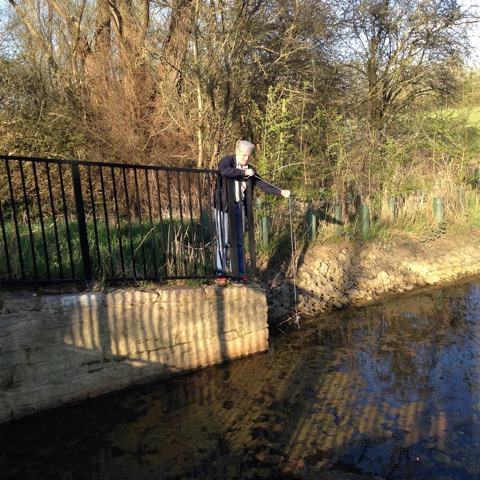
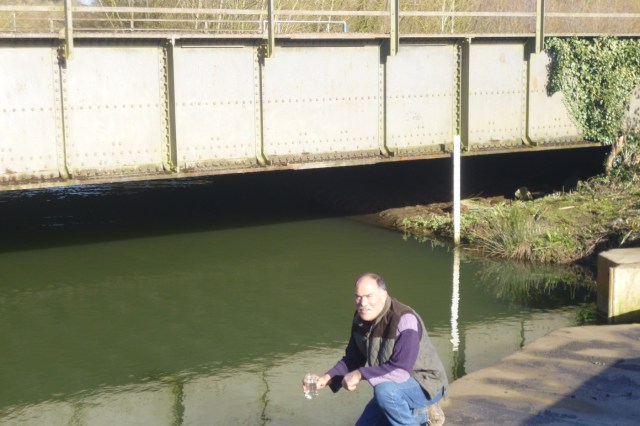
We’ve been lending a hand with the Freshwater Habitats Trust’s ‘Clean Water for Wildlife’ survey. This part of their survey covers the ‘Ock catchment’ which (bizarrely) includes Oxford.

We believe that the Oxford FAS can provide benefits to wildlife alongside the flood risk reduction. Quality of water is important to any such aspiration, so work such as this survey is very important.

Anyone wanting to help can find out more at freshwaterhabitats.org.uk/projects/clean-water.

Storm Desmond, flooding and climate change

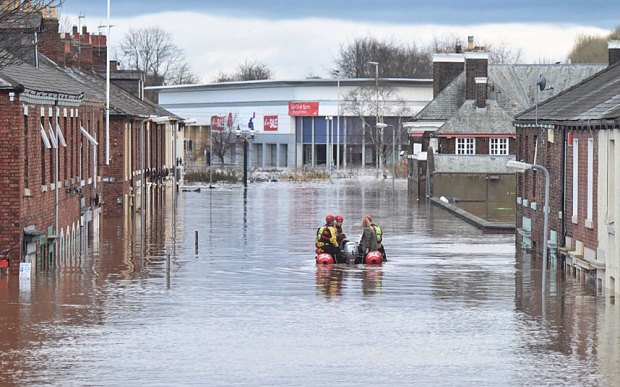
corporation road carlisleCorporation Road, Carlisle (Photo: North News)

There has been widespread and severe flooding in Lancashire and Cumbria due to unprecedentedly heavy rainfall in a short period from Storm Desmond. One feels for the people affected, many not for the first time.

‘The 405mm of rain that fell in Thirlmere in the 38 hours to 8am on Sunday marked a record amount of rain ever to fall in a 48-hour period while the 341.4mm recorded at Honister Pass on Saturday broke the highest rainfall record for any 24-hour period.’

‘Dame Julia Slingo, the Met Office’s chief scientist, said the “extraordinary” conditions were likely the result of climate change. Her comments were echoed by Liz Truss, the Environment Secretary, who told MPs: “Climate change is factored into all the modelling work the Environment Agency does but clearly in the light of this extreme weather we are going to have a look at that modelling and make sure it’s fit for purpose.” ‘http://www.telegraph.co.uk/news/weather/12038356/Floods-caught-ministers-by-surprise.html

‘Prof Hall [Professor Jim Hall, director of the Environmental Change Institute at the University of Oxford] said there was always a trade off between costs and risks. Nevertheless, he added that the latest floods “should be a trigger for a revaluation of protection standards”.’ http://www.ft.com/cms/s/0/57b91e9c-9cf1-11e5-8ce1-f6219b685d74.html#axzz3tiucxtde

There is more on the relation between flooding and climate change here http://www.belfasttelegraph.co.uk/news/uk/heavy-rain-and-flooding-fit-with-climate-change-predictions-34268682.html

Extreme weather events associated with climate change are already more common: we need to make sure the assumptions used in the modelling of the Oxford Flood Alleviation Scheme (Oxford FAS) sufficiently take into account the effects of climate change.

Climate change – Paris 2015

COP21There is lots of attention on climate change just now with the United Nations conference COP21* coming up next week. Whether governments will agree enough, and then do enough, to hold any increase in global warming to 2˚C remains to be seen. Limiting the average global surface temperature increase to 2°C over the pre-industrial average has generally been regarded as an adequate means of avoiding dangerous climate change – though there is some doubt about whether this is sufficiently stringent.

Whatever happens, we can expect an increasing frequency of extreme weather and we need to be investing in ways of mitigating the impact. As far as Oxford and the threat of flooding is concerned that, in our view, means the Oxford Flood Alleviation Scheme (Oxford FAS). See too a previous post on Oxford FAS and climate change .

* COP21 is the 21st Conference of the Parties, i.e. the annual meeting of all countries which want to take action for the climate. It will be held in France, from 30 November to 11 December http://www.cop21.gouv.fr/en/.


Notice of our Annual Public Meeting – next Thursday, November 19th

Oxford Flood Alliance logoANNUAL PUBLIC MEETING:

THURSDAY 19 NOVEMBER 2015

At The Democrats, Osney Island, 7.30 pm. Entrance at the north end of East Street.
Doors open from 7.00 pm.

EVERYONE VERY WELCOME –

YOUR CHANCE TO HEAR THE LATEST FROM

Network Rail on their plans to clear blocked culverts under the railway north of Redbridge.

Environment Agency on the multi-million pound Oxford Flood Alleviation Scheme (FAS) (Western Conveyance)

Thames Water on their major review of Oxford’s sewers.

ALSO

Hear our ideas on how Oxford FAS might be maintained not only for flood alleviation but also for wildlife.

Local planning applications, Weirs Mill Stream – and more.