Application by Oxford City Council to extend Seacourt Park & Ride

Application by Oxford City Council to extend Seacourt Park & Ride  (Oxford City Planning application no. 16/02745/CT3).

We are strongly opposed to this application to build a car park extension right in the Oxford floodplain.

Our key points are:

Inappropriate development in the floodplain – contrary to Oxford City Council Core Strategy, CS2 – this is a greenfield site. It is also contrary to City Council Core Strategy 11 – it is neither ‘essential infrastructure’ nor ‘a water compatible structure’.

Not consistent with national planning policy framework (NPPF) guidelines.

Inappropriate development in the Green Belt.

A planning application for a similar scheme on the same site was rejected by the Secretary of State in 1999. Planning law has become tighter since.

County Transport Strategy envisages new P&R sites at Cumnor and Eynsham over the next few years; the present proposal is at variance with that. Traffic coming off the A34 and A420 may face increased delays in reaching the P&R.

Flood-risk assessment flawed:

  • fails to note the serious floods since 2008
  • does not properly consider the frequency with which this low lying site actually floods, which is often (it’s functional floodplain)
  • permeable pavement recommended only slows run-off when flood event are so low risk it’s irrelevant. As soon as a significant flood event starts to develop the car park will be under water.

Emergency evacuation plan is inadequate and lacks detail. The site is at high risk of flooding, being 0.5-1 m lower than the existing car park. There is a significant risk to vehicles and people during a flood event: any emergency plan has to be very robust. Extra resources could be needed from already stretched emergency services. In a 1 in 100 flood the water would be 2m deep.

The ground is subject to movement and would require further investigation to see if remediable stabilisation would even work.

The site itself may be damaged by prolonged or severe flooding, even with surfaces broken and swept away. The fences proposed for the perimeter of the 2 ha site, and structures on the site, would be very vulnerable in a large scale flood.

The proposed permeable surface will be impaired by silt and other debris: it will require cleaning which may or may not restore its permeability. After prolonged flooding such paving may even have to be replaced (in early 2014 this site would have been under a significant depth of water for several months).

If fences, structures on the site, and cars were swept away they could end up blocking the nearby Seacourt which is a vital flood channel.

The proposal does not take proper account of the latest plans for the Oxford Flood Alleviation Scheme in this area.

The rationale for this extension being needed is that the present car park cannot be given a decking storey because of a covenant on the land. No such covenant has been produced by the applicant and we cannot find one. What there is is a lease agreement, with could potentially be varied by negotiation with the landlord, which could make this whole scheme unnecessary.

Oxford is at risk of flooding. The principle of not building on greenfield sites in the floodplain must be adhered to.

These reasons are set out in more detail in the following documents submitted to the planning authority, Oxford City Council (links download pdfs).

  1. Our initial objections (28 Nov 2016)
  2. Further points (5 Dec 2016)
  3. Address to Council (5 Dec 2016)

We are working hard to get our message across to the decision makers and to other people who may wish to comment. If you agree with us that this development should not be allowed to go ahead please do say so via the Oxford City planning website or speak to your local City Councillor.

Public meeting – Oxford FAS proposed route to be unveiled

The preferred route for the Oxford Flood Alleviation Scheme will be unveiled tomorrow at Oxford Town Hall at a drop-in event open to all.

A talk: Oxford and the Thames – a national hotspot for freshwater wildlife

Later this month,  Dr Jeremy Biggs of the Freshwater Habitats Trust will be giving a talk at South Hinksey Village Hall, on Wednesday 29 June at 2pm titled Oxford and the Thames: a national hotspot for freshwater wildlife, in association with the Oxford Flood Alliance.
 
He’ll look at what makes the Oxford area a national hotspot for freshwater wildlife, what problems freshwaters in the area face and what the solutions are. He’ll consider what the impact of the new flood channel could be and how it could help reverse the century-long decline in the areas freshwaters. There is more information at http://freshwaterhabitats.org.uk/news/oxford-and-the-thames-a-national-hotspot/ or in the flyer Oxford and the Thames_talk flyer_Jun16 FINAL.
  

The talk is free and anyone may attend but space is limited so if you think you would like to come along please let Jo Fever at Freshwater Habitats know so we can try and ensure there is space for all: info@freshwaterhabitats.org.uk or phone 01865 595505.


Clean Water for Wildlife – II

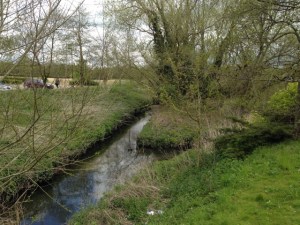
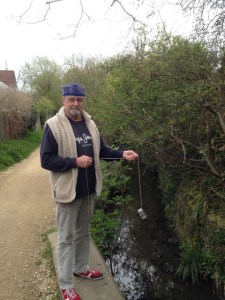
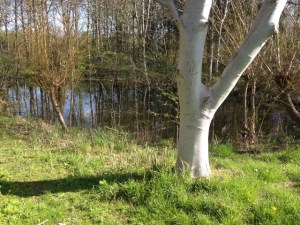
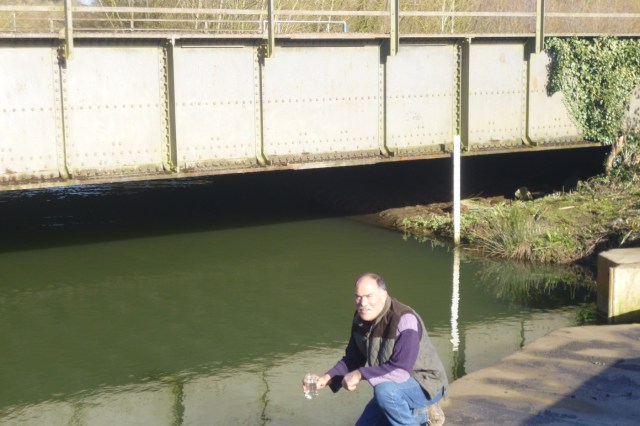
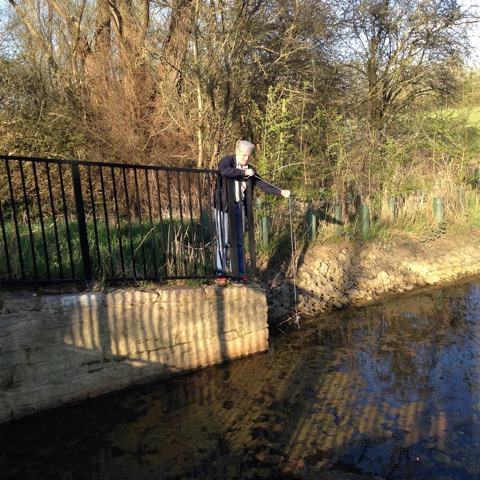
This study has now closed – we contributed results on samples from 31 locations (a few are shown above) – see previous post Clean Water for Wildlife.

As far as we know, this study, by the Freshwater Habitats Trust, is the first of its kind in the UK.

We’ll post the results when they become available.


Clean Water for Wildlife


We’ve been lending a hand with the Freshwater Habitats Trust’s ‘Clean Water for Wildlife’ survey. This part of their survey covers the ‘Ock catchment’ which (bizarrely) includes Oxford.

We believe that the Oxford FAS can provide benefits to wildlife alongside the flood risk reduction. Quality of water is important to any such aspiration, so work such as this survey is very important.

Anyone wanting to help can find out more at freshwaterhabitats.org.uk/projects/clean-water.

Oxford FAS and the Weirs Mill Stream boating community

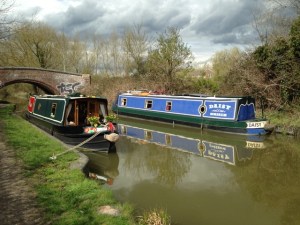
On 20 February one of us joined local councillors and others on a visit to the residential boat community at Weirs Mill Stream, on the weir pool below Donnington Bridge Road.

Residents are  understandably concerned that one of the options (Area 7, Option A) for the Oxford Flood Alleviation Scheme in this part of Oxford would mean them being displaced from their homes for many months, destruction of part of the land where their boats are legally moored and resultant loss of moorings.

There are alternatives which would avoid this: Option C, which crosses open land and would disrupt no one, seems likely to be the best and very likely the cheapest. We therefore oppose Option A.

http://www.oxfordmail.co.uk/news/14294465.Flood_alleviation_scheme_could_spell_the_end_of____our_fanastic_lifestyle____warn_boaters/

Brainstorm meeting: maintaining OFAS

We hosted a meeting today to discuss how we could maintain the Oxford Flood Alleviation Scheme for both flood relief and the environment over the next century. We had an excellent meeting: in attendance were Rodney Rose (County), Chris Brown (County), Bob Price (City). Penny Burt (EA), Emma Formoy (EA), Giles Strother (BBOWT), Jeremy Biggs (Freshwater Habitats Trust), John Mastroddi (OFA), Nick Hills (OFA), Adrian Porter (OFA), Tim Treacher (SOFAG), Rachel Sanderson (OPT), Judy Webb (ecologist and Ashmolean Rare Plants Group), Peter Rawcliffe (OFA), Simon Collings (OFA), Peter Thompson (Civic Society), Peter Lefort (CAG).

The main question: ‘How might we best organise things to keep the channel working well and make the best of all the benefits over the next 100 years?’ There was excellent discussion with the following conclusions:

There was a general agreement with the idea of coordinating management of OFAS, and that this could bring cost savings and enhanced benefits from the scheme.

It is currently unclear what form the coordinating body would take but it is clear that riparian owners will continue to own their land and will be responsible for managing that land. Their participation in the coordinating structure is therefore key.

More detail about exactly what the required maintenance will be, and how this splits across hard physical assets, the stream and the secondary channel is needed before a further discussion.

In the meantime it was agreed that work to consolidate the ecological vision for OFAS was needed. Conversations are already going on with various stakeholders about this and a draft set of ambitions exists. It was agreed that we should build on these.

Further public drop-in meetings for Oxford Flood Alleviation Scheme

Further public drop-in sessions are now arranged for the Oxford Flood Alleviation Scheme. These are for people to see and comment on the various options developed for the channel, ask questions and make comments and suggestions. The consultation will be available online as well.

All are from 2:30 to 7 pm – come when you like:

  • Tuesday 19 January          Oxford Town Hall, OX1 1BX
  • Wednesday 20 January   Abbey House (Council Offices), Abingdon, OX14 3JE
  • Friday 22 January             South Oxford Community Centre, OX1 4RP
  • Wednesday 27 January    Kennington Village Centre, OX1 5PG
  • Thursday 28 January       West Oxford Community Centre, OX2 0BT.