
We had planned to post parking space availability numbers again yesterday and today, but won’t be doing so as they would be unrepresentative because of the snowy weather reducing travelling generally.
Tag Archives: Seacourt
Today’s parking data (9 Dec)
Click table and images to enlarge.
-
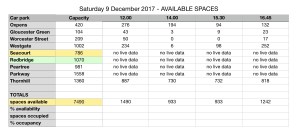
- Empty spaces 9 December 2017
-
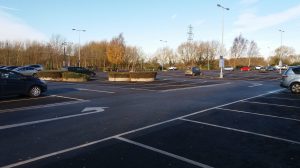
- Seacourt, 9.12.17, 11.10 am
-
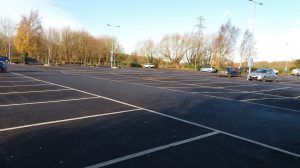
- Seacourt, 9.12.17, 11.10 am
-
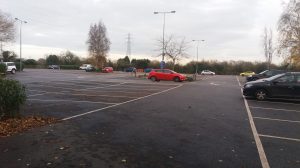
- Seacourt, 9.12.17, 2.30 pm
-

- Redbridge, 9.12.17, 1.40 pm
-
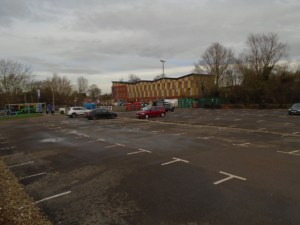
- Redbridge, 9.12.17, 1.40 pm
-
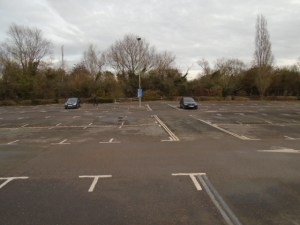
- Redbridge, 9.12.17, 1.40 pm
Weekends are quieter in the park and rides than are weekdays. Nevertheless we collected today’s data. Some was not available, as shown. So we visited Redbridge and Seacourt at peak times and there were plenty of empty spaces as the photos show.
Seacourt – Possible Costs
This seems a potentially costly proposal.
Capital
1) Present budget £4.1 million
2) Difficulty of building in low-lying ground with a high groundwater level in winter
3) Possible need to stabilise unstable ground by treating it with lime to a metre depth
4) Difficulties of creating a working SuDS in a flood plain
Income
5) Occupancy likely to be low
6) Periodically out of use due to groundwater and fluvial flooding, pumping out, repair and maintenance
Maintenance
7) Pumping out (will be required according to the Applicant)
8) Repair of damage to surfaces and buildings – may be extensive after major floods
9) Cleaning and restoration of the porous surfaces required for SuDS
Other
Given the risks associated with large floods and the likely depths and flow rates here, possibly
- compensation for damage to vehicles, including any swept away
- compensation for loss of life.
Risk of local property flooding
From the Planning Officer’s report to the West Area Planning Committee, December 2017:
“9.149. During the consultation process, reference has been made to the suggestion within the Factual and Interpretive Ground Investigation Report that the proposed drainage strategy will require the use of lime stabilisation to avoid damage to the paving within the car park expansion from changes to the clay layer below ground and that this needs to be given further consideration as part of any drainage proposals for the site. The concerns raised are that lime treatment is likely to have an impact on the permeability of soils below the car park, and therefore needs to be appropriately considered.
The applicant has confirmed that the surface water drainage strategy has been designed as a tanked system which assumes no infiltration below the attenuation layer, with all storm water discharge from the site via a controlled outfall into Seacourt Stream. An impermeable membrane is included within the construction to prevent water saturating the clay. The underlying clay is of a low permeability whether lime stabilisation is employed or not, and it is envisaged that the attenuation will operate effectively in either scenario.” [emphasis added]
There is no mention in the Application of tanking, nor of an impermeable membrane. We have therefore not known of this till very recently and had no opportunity to comment. While there is little or no detail, the idea that the car park may be separated from the underlying groundwater table, as this implies, raises an extremely serious question. That is, where will the displaced groundwater go? This is a lot of water over such a large area. It is likely that it will cause a significant rise in groundwater levels around this low-lying site. This could cause (new) groundwater flooding within houses (and gardens) nearby. No decision should be taken until the details of what is planned are made clear, appropriate calculations and modelling done, and presented as part of a further revised Flood Risk Assessment.
[By the same token, when it rains, water will be trapped within the tanking , draining only slowly – more pumping needed?]
No need – car park occupancy today (8 December)
Click table and images to enlarge.
-
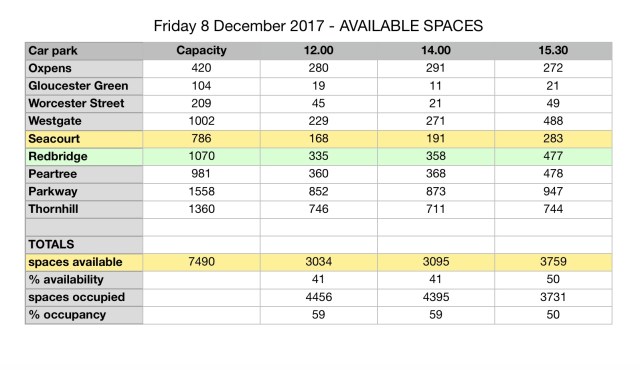
- Available empty parking spaces in Oxford, 8.12.2017
-

- Seacourt P&R, 3pm, 8.12.2017
-
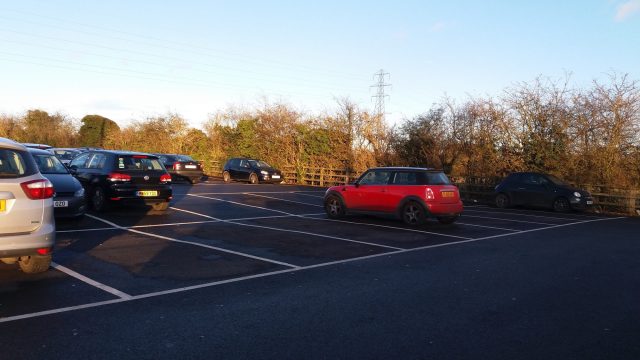
- Seacourt P&R, 3pm, 8.12.2017
-
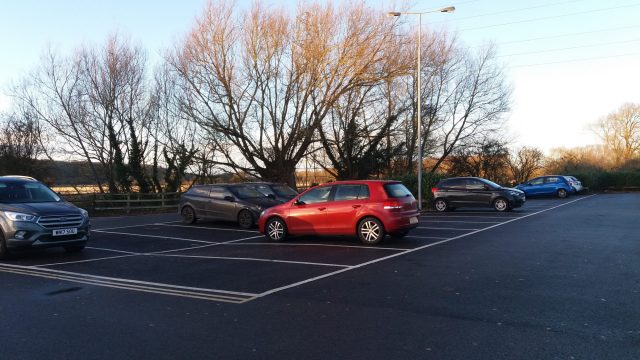
- Seacourt P&R, 3pm, 8.12.2017
Plenty of empty parking spaces again in and around Oxford today, now 16 shopping days to Christmas.
There is NO NEED for any more spaces.
Seacourt: an Important Habitat
Thanks to the Oxfordshire Badger Group for this video, showing the importance of this habitat and what has recently been done to it by Oxford City Council – it is shocking and utterly wrong.
See more on the officially designated wildlife status of the site.
Another Seacourt article in the Oxford Times yesterday
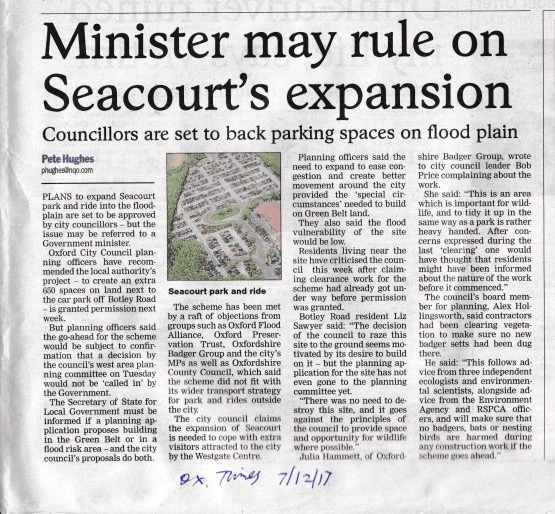
Seacourt and wildlife
-
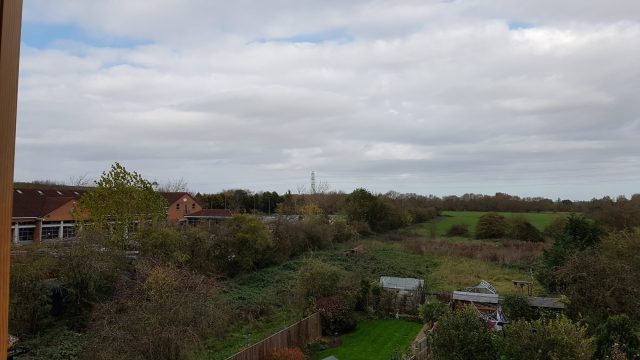
- Seacourt proposed extension site before clearance (photo credit Linda Ward)
-
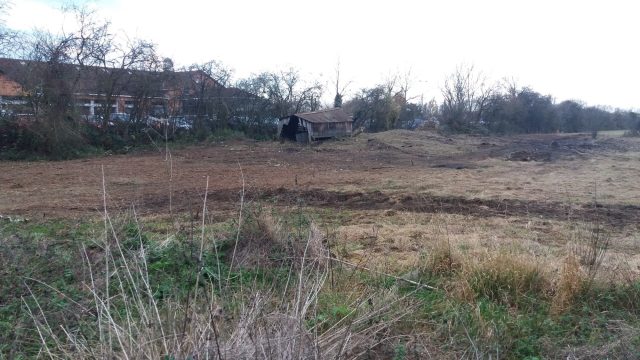
- After clearance
The site for the proposed extension of Seacourt Park and Ride is designated under the Oxford Biodiversity Action Plan (BAP) 2015-2020. This is ‘An overview of actions to support biodiversity in Oxford City Council’s own estate and operations.’ Under this plan the Seacourt proposed extension site is designated as
- a Conservation Target Area
- a Habitat of Principal Importance.
It’s important habitat for many species including several badger setts. But, before the matter has even been before a Planning Committee for a decision, the City Council has cleared the area over the last week or so. The pictures tell the story. What a sad disgrace.
EDIT: and this recent video by the Oxfordshire Badger Group
Seacourt on today’s letters page
Two letters in today’s Oxford Times.
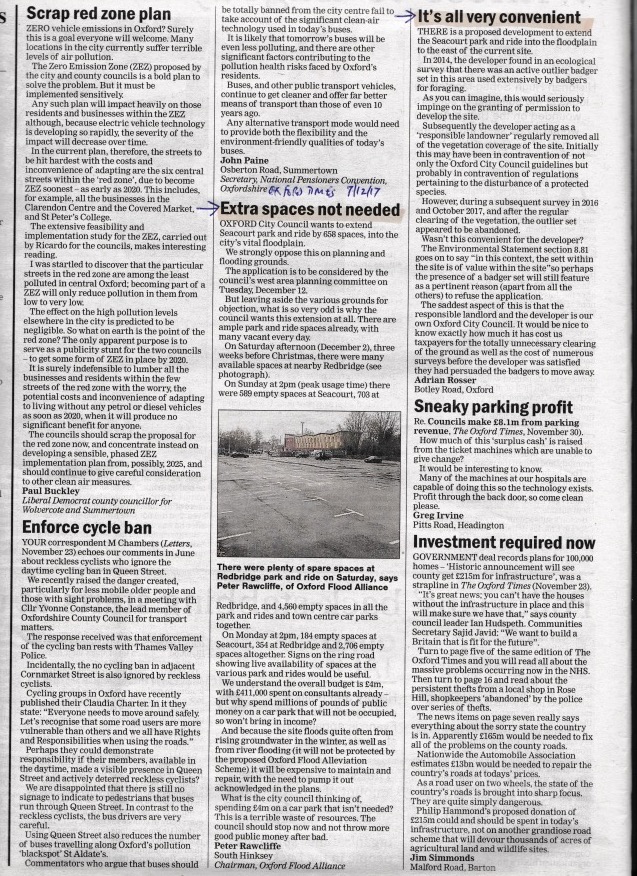
One from us on the fact that extra capacity is simply not needed.
See too the recent parking spaces data in an earlier post.
Would not live signs on the ring road, showing availability at the park and rides be a good idea, optimising the usage of the substantial existing capacity?
Contrary to claims in the Application, our analysis suggests that, for traffic from the south, in terms of time taken to reach the car park from the A34, Redbridge (the bigger of the two) is almost always a quicker option than Seacourt.
The other letter is from Adrian Rosser on the extensive clearance that’s been going on on the site before the Planning Committee has even met to consider the application.
Expensive
An article in today’s online Oxford Mail – £400,000 has already been spent in consultancy fees and other expenses on this unnecessary plan. If it goes ahead the present budget is over £4 million, a lot of public money to no good purpose.
 oxford flood alliance