
Author Archives: rawcy
OFAS – Public Consultation about to begin
Public consultation on the Oxford Flood Alleviation Scheme, OFAS, begins tomorrow.
See https://www.gov.uk/government/consultations/oxford-flood-alleviation-scheme-design-consultation for more about this, and tomorrow the dedicated consultation website should be available from the link there.
Visit by EA Chair
We joined Emma Howard Boyd, Chair of the Environment Agency, the OFAS Project Team and other partners when Emma visited Oxford today. The Public Consultation for the Oxford Flood Alleviation Scheme is due to be launched in two days time, on Friday 23 June.
OFAS: Environmental meeting
-

- Banded Demoiselle (damsefly) (Calopteryx splendens), male
-
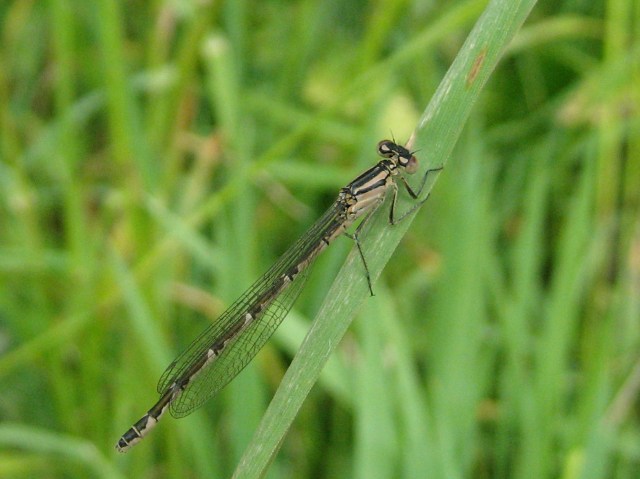
- Common Blue Damselfly (Enallagma cyathigerum), female.
Attended an environmental update meeting yesterday, organised by the EA with a number of local environmental stakeholders attending. A lot of thought is going into making the most of possible environmental enhancements that the Scheme can bring.
Led by Penny Burt of the Environment Agency we covered surveys, ecological trial areas, archaeology, low-flows and existing watercourses, fish passage, Hinksey Meadow, trees and bridges, habitat creation and access. Also mentioned was future maintenance – we felt that the plans were not nearly long-term enough and this was discussed.
For our part we are working closely with the Freshwater Habitats Trust. The Oxford area is rich in freshwater species, though there is, nevertheless, a long term decline: this Scheme could help reverse that trend. We’d like to give the public, including school children, a chance to be involved, including with data collection in the field – sometimes called ‘citizen science’.
The damselflies in the photographs are closely associated with the freshwater habitat.
Potential for risk to life
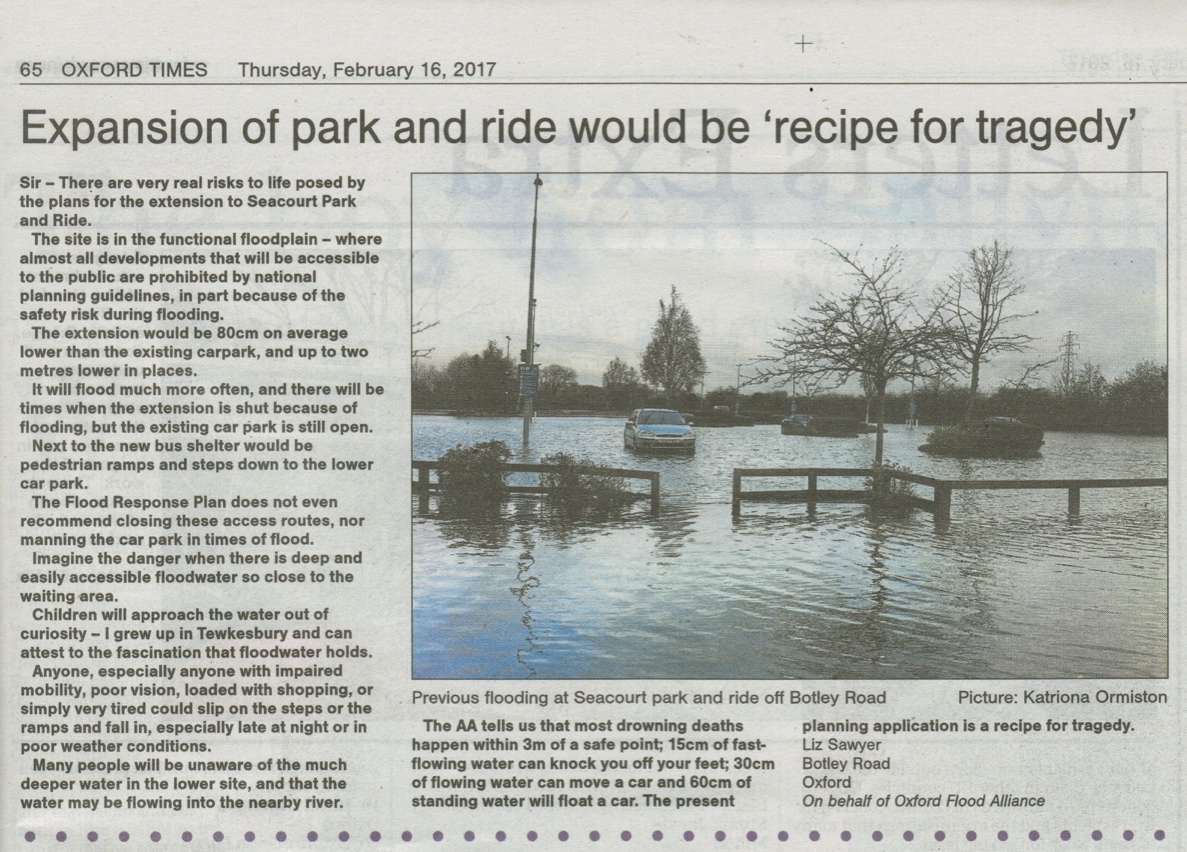
We have a letter published in this week’s Oxford Times (click image to enlarge)
Seacourt P&R in the Oxford Mail; smart signs, plus risk to life
This article in the Oxford Mail talks about the possibility of ‘smart signs’ – electronic boards – on the ring road, to alert drivers to where there are empty park and ride spaces around Oxford. This could obviate the (claimed) need to increase the number of spaces at Seacourt, instead pointing drivers to (say) nearby Redbridge. According to an earlier report in the Oxford Mail there is apparently so much spare capacity at Redbridge that the City Council proposes to remove 270 parking spaces, and is quoted in the newspaper as saying that the loss of these spaces would be ‘marginal’.
It seems to us to be inconsistent for the City Council to argue that removing 270 spaces at Redbridge is perfectly ok, while at the same time arguing a burning need to build new spaces at Seacourt – in the floodplain, on Green Belt land, contrary to local and national planning guidance and, as far as the present application goes, creating a potential risk to life (see towards the end of the first newspaper article and our previous post). Never mind the cost, which has already risen from about £2million to over £4 million.
Our Annual Public Meeting, 22 February
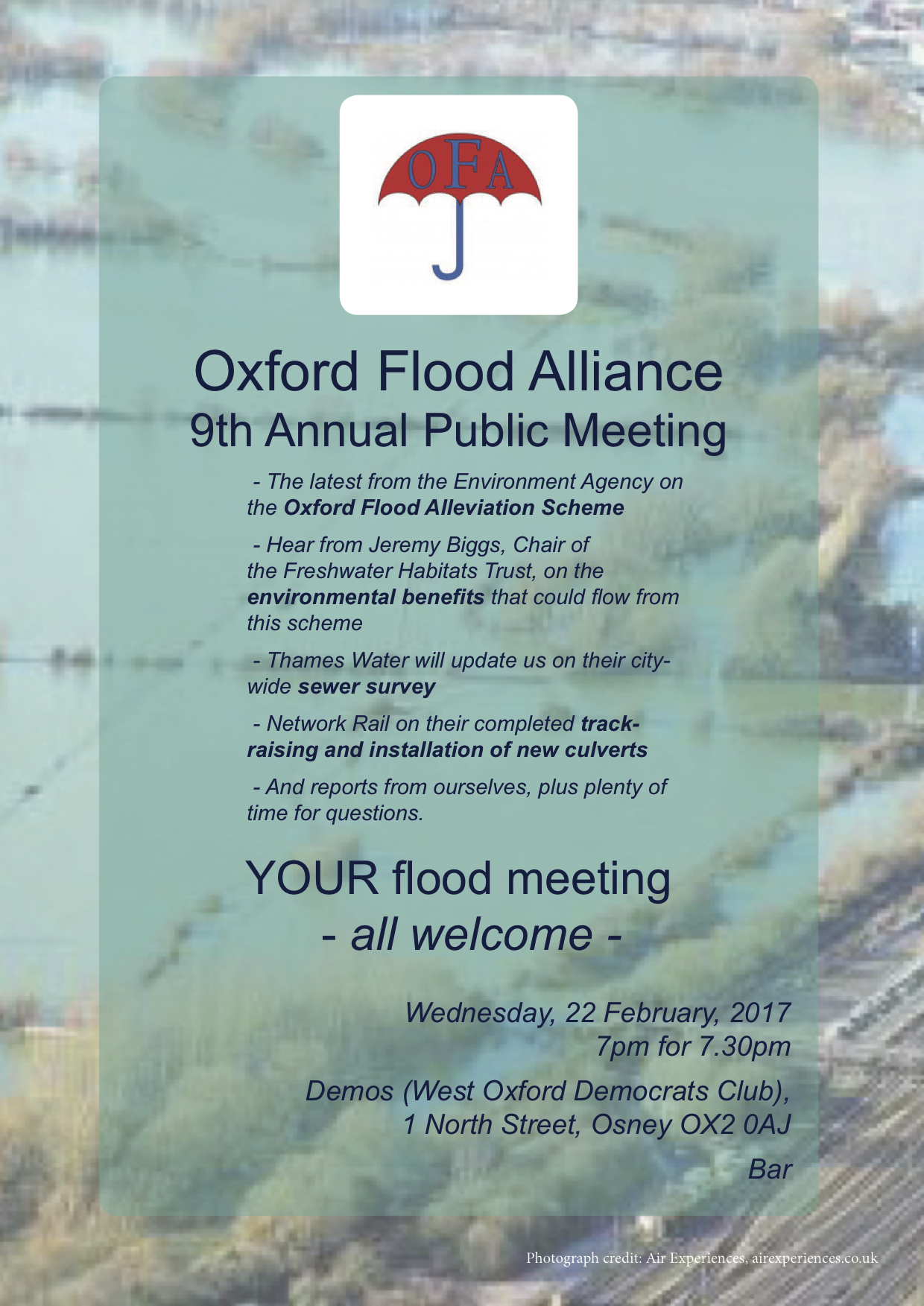
Our 9th Annual Public Meeting is on Wednesday 22 February 2017.
There is lots to hear and talk about and everybody is welcome.
Seacourt P&R extension proposal: potential risk to life
-

- Flood damage in Tewkesbury in 2007, wall demolished, tarmac torn up. .Photograph by kind permission of Steve Goodchild.
Liz Sawyer, who recently joined the OFA Steering Group, addressed Oxford City’s Full Council on 6 February 2017, about the potential risk to life posed by the proposed extension to Seacourt P&R.
There is also, as the photograph above shows so vividly, the potential for damage to the car park itself – and of course to vehicles. The Automobile Association’s ‘Flood Facts’ quoted in Liz’s address set out the risks of floodwaters very clearly.
Liz’s address can be downloaded here (pdf).
Seacourt P&R – Key Point 5: Green Belt
The proposal is inconsistent with both national and local Green Belt policy:
- The site is in the Oxford Green Belt where the presumption is that development is inappropriate. Preservation of ‘openness’ is a key objective of Green Belt policy, The NPPF places great emphasis on it. Attempting to hide the development from view by landscaping does not constitute preserving openness.
- The proposal will also clearly breach Oxford City’s own Core Strategy key policy CS4 for the protection of Green Belt land.
South Hinksey ‘barrier-ready’ works all but complete
In South Hinksey, the works designed to make deploying temporary defences, should flooding threaten, quicker and easier, are almost complete.
Three flap valves have just been installed on pipes which connect into field ditches. These non-return valves will allow water out from within any temporary barrier but not allow it back in from the flooded area outside.
Elsewhere wide garden gates have been installed, reinforced fences built, and removable fence panels fitted.
A very few minor snagging items remain, but the scheme is otherwise complete and fully ready for temporary barriers. Many thanks to the Vale of White Horse District Council for funding and to the Environment Agency for organising the work – not least to engineer Magnus Williams who has managed the scheme from its inception to its completion. Thanks too to farmer Nick Frearson, and to the horse owners for their cooperation during the works.
-
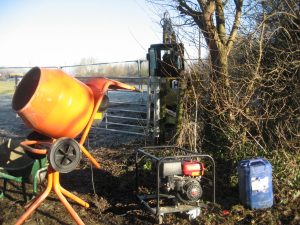
- South Hinksey: preparing to fit non-return flap valves
-
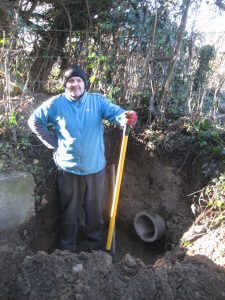
- Site around a pipe which drains a ditch cleared, preparatory to installing a pre-cast header wall with integral flap valve
-
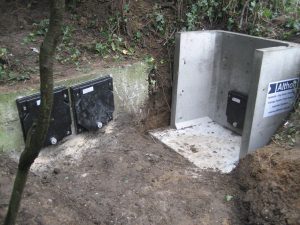
- Job done
-

- New gate, wide enough to accomodate temporary barriers
-
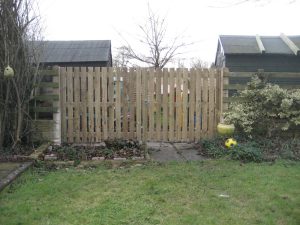
- New garden gates, again wide enough to take a barrier
-
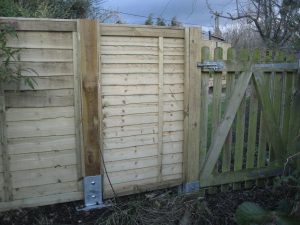
- Removable fence panel and posts to accommodate a barrier
-
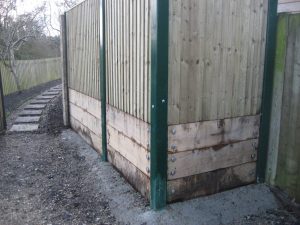
- Reinforced fence, forming a permanent barrier at this point
 oxford flood alliance