Seacourt – Possible Costs

This seems a potentially costly proposal.

Capital 

1) Present budget £4.1 million

2) Difficulty of building in low-lying ground with a high groundwater level in winter

3) Possible need to stabilise unstable ground by treating it with lime to a metre depth

4) Difficulties of creating a working SuDS in a flood plain

Income

5) Occupancy likely to be low

6) Periodically out of use due to groundwater and fluvial flooding, pumping out, repair and maintenance

Maintenance

7) Pumping out (will be required according to the Applicant)

8) Repair of damage to surfaces and buildings – may be extensive after major floods

9) Cleaning and restoration of the porous surfaces required for SuDS

Other

Given the risks associated with large floods and the likely depths and flow rates here, possibly

  • compensation for damage to vehicles, including any swept away
  • compensation for loss of life.

Risk of local property flooding

From the Planning Officer’s report to the West Area Planning Committee, December 2017:

“9.149. During the consultation process, reference has been made to the suggestion within the Factual and Interpretive Ground Investigation Report that the proposed drainage strategy will require the use of lime stabilisation to avoid damage to the paving within the car park expansion from changes to the clay layer below ground and that this needs to be given further consideration as part of any drainage proposals for the site. The concerns raised are that lime treatment is likely to have an impact on the permeability of soils below the car park, and therefore needs to be appropriately considered. 

The applicant has confirmed that the surface water drainage strategy has been designed as a tanked system which assumes no infiltration below the attenuation layer, with all storm water discharge from the site via a controlled outfall into Seacourt Stream. An impermeable membrane is included within the construction to prevent water saturating the clay. The underlying clay is of a low permeability whether lime stabilisation is employed or not, and it is envisaged that the attenuation will operate effectively in either scenario.” [emphasis added]

There is no mention in the Application of tanking, nor of an impermeable membrane. We have therefore not known of this till very recently and had no opportunity to comment. While there is little or no detail, the idea that the car park may be separated from the underlying groundwater table, as this implies, raises an extremely serious question. That is, where will the displaced groundwater go? This is a lot of water over such a large area. It is likely that it will cause a significant rise in groundwater levels around this low-lying site. This could cause (new) groundwater flooding within houses (and gardens) nearby. No decision should be taken until the details of  what is planned are made clear, appropriate calculations and modelling done, and presented as part of a further revised Flood Risk Assessment.

[By the same token, when it rains, water will be trapped within the tanking , draining only slowly – more pumping needed?]


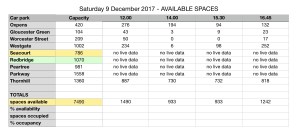
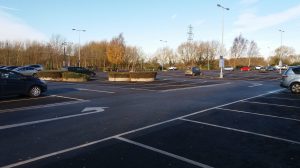
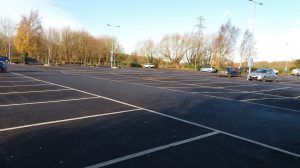
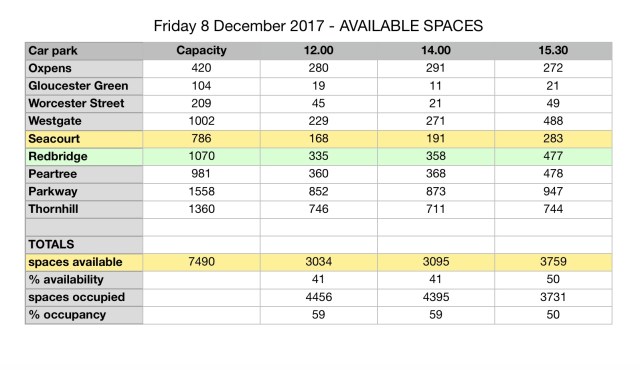
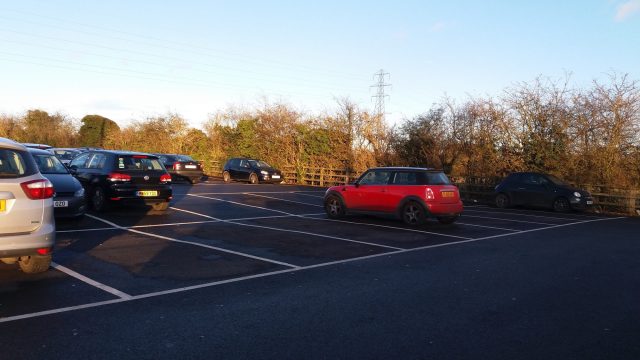
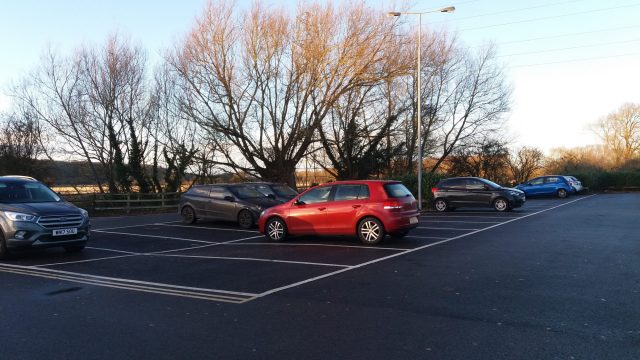
No need – car park occupancy today (8 December)

Click table and images to enlarge.

Plenty of empty parking spaces again in and around Oxford today, now 16 shopping days to Christmas.

There is NO NEED for any more spaces.


Seacourt: an Important Habitat

Thanks to the Oxfordshire Badger Group for this video, showing the importance of this habitat and what has recently been done to it by Oxford City Council – it is shocking and utterly wrong.

See more on the officially designated wildlife status of the site.

Seacourt and wildlife

The site for the proposed extension of Seacourt Park and Ride is designated under the Oxford Biodiversity Action Plan (BAP) 2015-2020.  This is ‘An overview of actions to support biodiversity in Oxford City Council’s own estate and operations.’ Under this plan the Seacourt proposed extension site is designated as

  • a Conservation Target Area
  • a Habitat of Principal Importance.

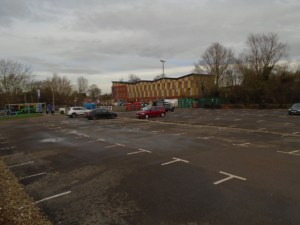
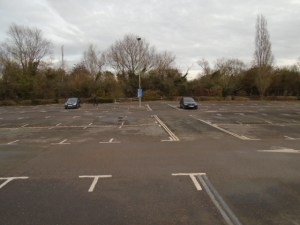
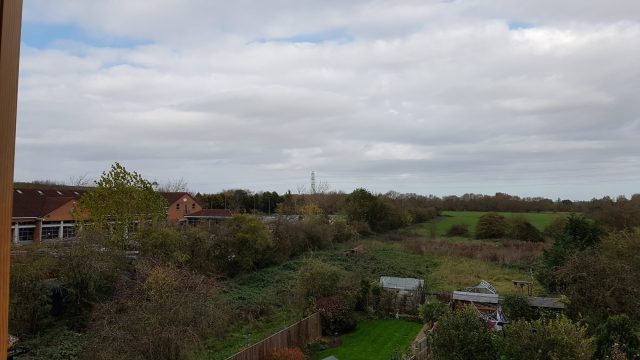
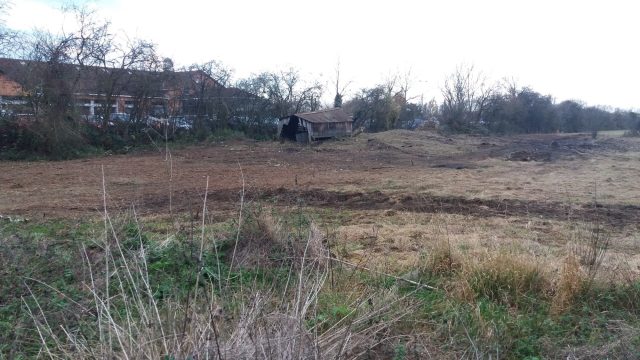
It’s important habitat for many species including several badger setts. But, before the matter has even been before a Planning Committee for a decision, the City Council has cleared  the area over the last week or so. The pictures tell the story. What a sad disgrace.

See too http://www.oxfordmail.co.uk/news/15698598.Council_accused_of_starting_work_on_park_and_ride_before_getting_planning_permission/

EDIT: and this recent video by the Oxfordshire Badger Group

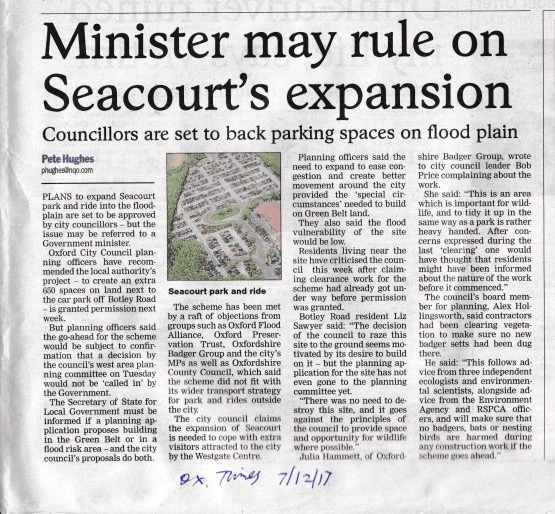
Seacourt on today’s letters page

Two letters in today’s Oxford Times.

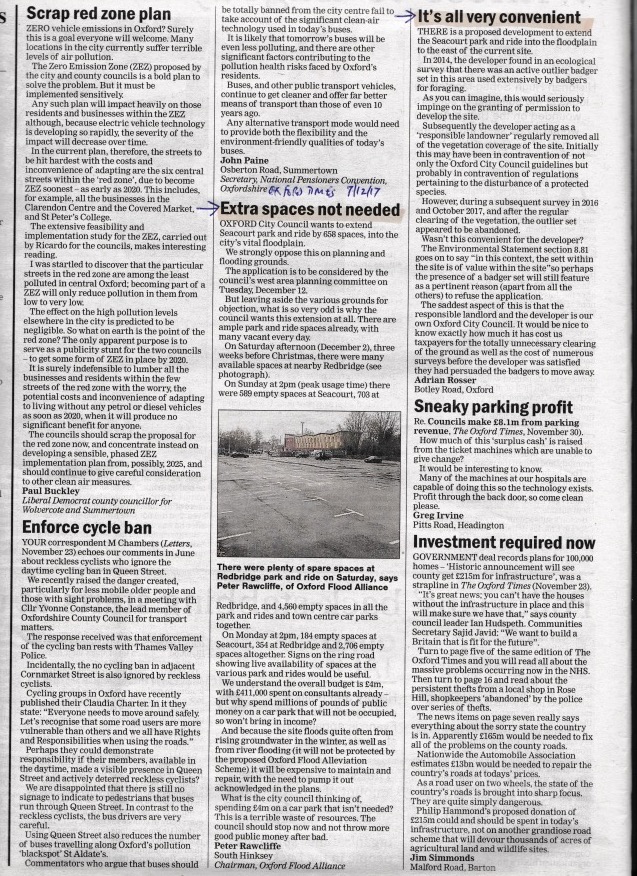
One from us on the fact that extra capacity is simply not needed.

See too the recent parking spaces data in an earlier post.

Would not live signs on the ring road, showing availability at the park and rides be a good idea, optimising the usage of the substantial existing capacity?

Contrary to claims in the Application, our analysis suggests that, for traffic from the south, in terms of time taken to reach the car park from the A34, Redbridge (the bigger of the two) is almost always a quicker option than Seacourt.

The other letter is from Adrian Rosser on the extensive clearance that’s been going on on the site before the Planning Committee has even met to consider the application.

Scheme to reduce flooding in Oxford will NOT put downstream at greater risk 

An independent review of the Oxford Flood Alleviation Scheme, commissioned by Vale of White Horse District Council, has confirmed that the proposed flood alleviation scheme will have no impact on communities downstream in the Vale or South Oxfordshire.
The Oxford Flood Alleviation Scheme will be approximately three miles long and will run from the north of Botley Road to re-join the River Thames near Kennington.  The scheme will reduce the risk of flooding from the River Thames to all homes and businesses in Oxford, as well as to services and major transport routes into the city, particularly around Botley and Abingdon Road.  This will help avoid a repeat of the disruption and damage caused by floods in 2007, 2012 and 2013/14.
Communities downstream were concerned that the Oxford scheme would increase their flood risk.
In 2016 the Environment Agency produced technical modelling using sophisticated computer programmes which showed that the scheme would not change flood risk of communities downstream. As with all Environment Agency modelling this was independently checked.
In 2017, due to local concerns, Vale of White Horse District Council commissioned independent expert, Water Resource Associates, to further review the work carried out by the Environment Agency.
This independent review confirms that the Oxford Flood Alleviation Scheme will not put communities downstream at any greater risk of flooding. To read the full Water Resource Associates’ review visit whitehorsedc.gov.uk/OFAS.
Cllr Matthew Barber, Leader of Vale of White Horse District Council, said: “This is very positive news.  Although we have always been supportive of the Oxford scheme it was important for us to listen and respond to our residents’ concerns.  We’re pleased that the independent review findings confirm the Environment Agency’s modelling, providing much needed reassurance for downstream communities that they won’t be impacted by the new scheme.
“We know communities by the River Thames will always have concerns over flooding and we will continue to work with them and Environment Agency on feasible and appropriate flood prevention projects, such as the St Helen’s Mill scheme in Abingdon.”
Dr Harvey Rodda from Water Resource Associates said: “After receiving all of the documentation from the Environment Agency and their consultants working on the OFAS we were pleased that a thorough investigation on the potential downstream impacts had taken place and the results showed there would be a negligible impact of flooding on the areas along the downstream reach of the River Thames from Sandford to Mapledurham.”
Jo Larmour, Project Director at the Environment Agency said: “The Oxford Flood Alleviation Scheme will have a positive impact on people and communities outside of Oxford. The scheme will reduce disruption to roads and the railway during flooding, a relief to those who commute into Oxford or travel on surrounding transport links. This will also benefit the approximately 7 million people who visit Oxford every year.”

Expensive

An article in today’s online Oxford Mail – £400,000 has already been spent in consultancy fees and other expenses on this unnecessary plan. If it goes ahead the present budget is over £4 million, a lot of public money to no good purpose.

http://www.oxfordmail.co.uk/news/15705321.Revealed__more_than___400_000_spent_on_building_Seacourt_expansion_case/#comments-anchor

Seacourt P&R expansion is, quite simply, not necessary (including 4 Dec parking data)

It’s easy to get lost in the long and complicated arguments over flooding and planning objections.

But one thing stands out, very, very clear, and very, very important:

There is no need to increase capacity at Seacourt P&R. Oxford has more than enough parking, including enough park and ride.

This is despite the opening of the new Westgate shopping area. If the parking isn’t needed then why does the Council want to spend over £4 million of your, public, money on it? Never mind that it will sit largely unused, and be subject to flooding, and expensive pumping out, maintenance and repair. No, we don’t understand it either.

We looked at online data two days ago, Monday 4 December, 3 weeks before Christmas. At the busiest time, 2pm, there were over 2,700 empty spaces, many in park and rides. Seacourt and nearby Redbridge had 538 empty spaces between them.

Click table to enlarge.


See also our letter to the Oxford Times

For more detail look at these reports:

minerva economics report

minerva further economics report

Westgate Transport Assessment Evidence