Oxford’s MPs

Congratulations to Nicola Blackwood (Oxford West and Abingdon) and Andrew Smith (Oxford East) who have both retained their parliamentary seats in yesterday’s general election.

Flooding presents a real threat to the welfare of the people and city of Oxford. Climate change is likely to increase that risk in future. Both our MPs have already expressed their support for the Oxford Flood Alleviation Scheme. We look forward to continuing to work with them and others on this so-important multi-partner project.

The scheme could become a reality within this next parliament: that would be fantastic for the city we are so lucky to live in, helping to ensure it continues to thrive.

Thames Regional Flood & Coastal Committee visit Oxford

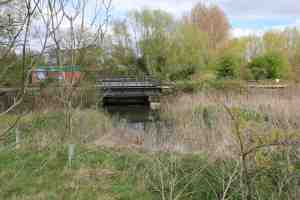
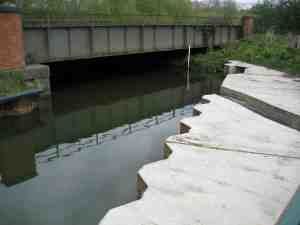
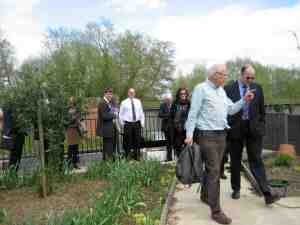
The Thames Regional Flood & Coastal Committee (RFCC) met in Oxford yesterday. Following the meeting, members visited sites in Oxford related to OFAS. Members of our steering group were on hand to welcome them and, with staff from the Environment Agency, showed the visitors some of the problems which need to be surmounted to alleviate Oxford’s recurrent flooding.

Flooding which, unchecked, is likely to threaten further the proper functioning, and the reputation, of the city in the future if (as a consensus of scientists predicts) climate change makes extreme weather more common. OFAS offers the only practicable way towards reducing this all too real danger in time.

Natural flood management, climate change and Oxford: a symposium

Oxford Flood Alliance are hosting their Second Flood Symposium this week, in collaboration with the Environmental Change Institute, University of Oxford. The meeting is fully subscribed.

The topic is Natural flood management, climate change and Oxford.
We will publish a summary of the proceedings on this website.

Flooding and farmland

An interesting article (in December) in the Oxford Mail from Andrew Ingram of the CLA

http://www.oxfordmail.co.uk/yoursay/columns/11639864.OPINION__Sacrificing_farmland_to_save__towns_no_way_to_fight_floods/?ref=arc

8th Annual Public Meeting

APM 2014 welcome13 November 2014

Our 8th Annual Public Meeting attracted a good audience, including local politicians. This year we had three guest speakers as well as presentations from OFA on matters concerning local areas.

John Copley and Barry Russell were made OFA Flood Stars. John has expertly chaired the Oxford Area Flood Partnership since its inception in 2007. Working behind the scenes, he and the partnership have achieved a very great deal in this time. Meanwhile, a well known presence in his waders in every recent flood, Barry, from the Environment Agency, is a key figure in managing flooding on the ground. He has also been involved in many of the flood prevention measures taken here in recent years. We are immensely grateful to them both for all they have done, all the hard work and long hours put in. They have made a real difference.

Ben Ward spoke about Oxford Flood Network’s plans to install water level monitors in the Oxford area to provide live information on water levels, to a computer or smartphone, during flooding, on a much more local scale than at present available. This is an exciting prospect and we welcome it. Ben is looking for people who are prepared to have a (compact) sensor device sited, say, in their garden, or other suitable location.

Nick Ross and Matthew Rose presented Thames Water’s plans for a three-year comprehensive survey (already just begun) of main sewers throughout the Oxford area. This is very welcome as there have been many serious problems with foul sewer overflow, especially during floods.

Richard Harding and Barry Russell of the Environment Agency explained the Oxford Flood Alleviation Scheme. This c. £125 million scheme is intended to reduce the risk of flooding in Oxford to once in 75 years (though some areas may still be affected more often) – assuming that climate change does not conspire to make things worse (as it well may). A lively discussion ensued, which will no doubt be continued elsewhere.

Thank you to everybody who came and for the generous donations to support our work.

2 Oxford FAS meetings

IMG_6013cropfloodplain2008

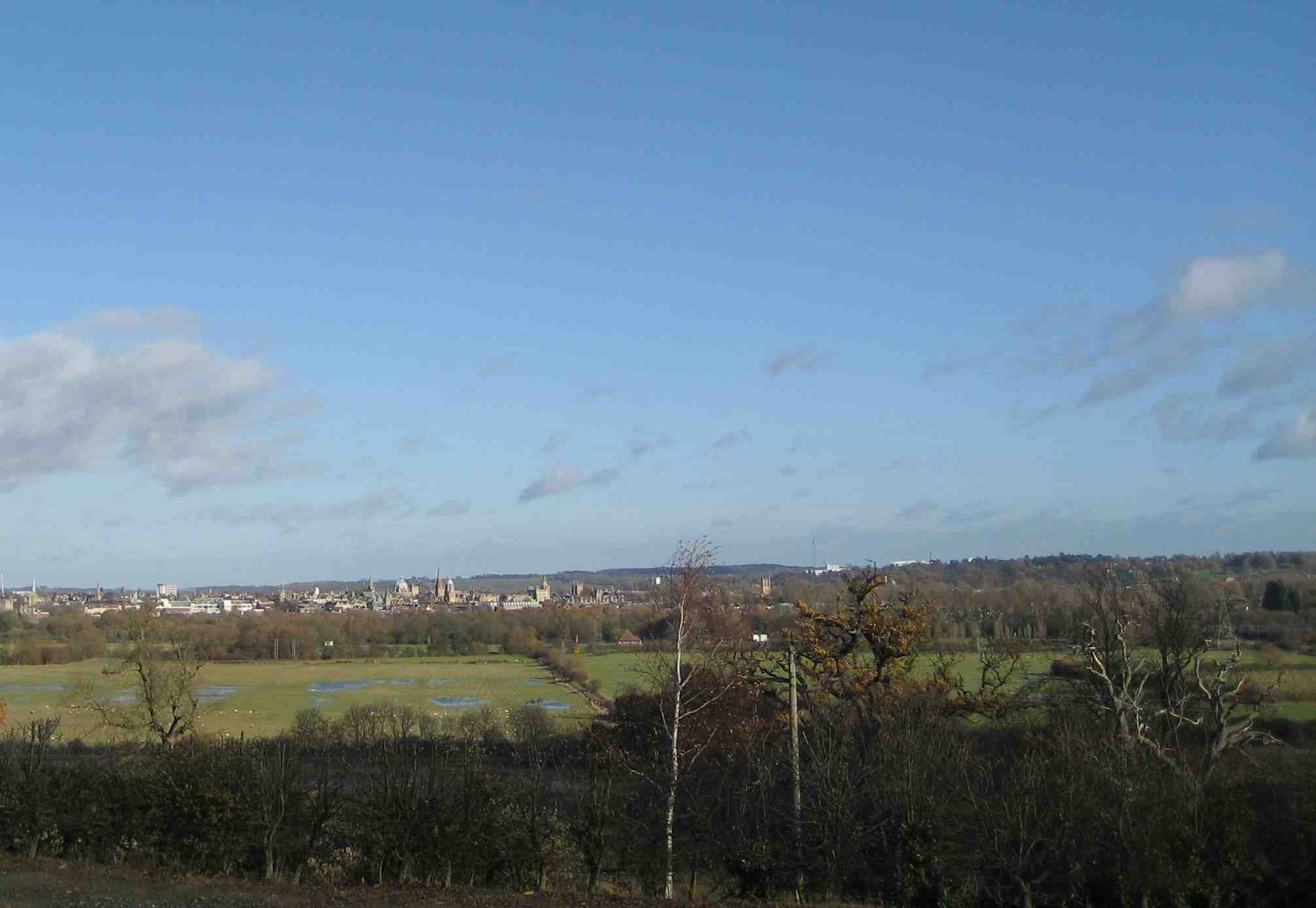
Oxford floodplain in 2008, a little water in the fields

27 October 2014
Two meetings.
First: we are represented on the Oxford Flood Alleviation Scheme (Oxford FAS) (‘the Scheme’) Sponsorship Group – the committee backing these proposals. A few points:
•    There is a long, rigorous assessment procedure to be gone through; it’s up to timetable.
•    The economic case stacks up.
•    The Scheme cannot risk making things worse downstream: this is key and must be established.  [FWIW our view has long been that a successful scheme must keep water moving, getting it away earlier and not allowing it to build up enough to flood roads and buildings. But this will not send MORE water downstream, it doesn’t ‘generate new water’, it will only alter the time course. (Note that our flood plain will still flood, just not quite so deep.) That seems to make sense, but more rigorous evidence will rightly be required re any possible downstream effects.]
•    The Scheme will enhance the natural environment.
•    Public access will be better (cycle paths, footpaths).
•    Climate change projections, if they come to pass, would make things very much worse than now, making the Scheme in our view even more imperative.
•    The Scheme will have as an integral part measures (such as property-level protection) to help local areas/properties that are not ‘saved’ by the removal of existing pinch-points and the more efficient water flow in a redesigned watercourse. (NB that is not a guarantee that every property will be protected.)

Our support for the Scheme is now stronger than ever. But we know others have doubts or other ideas – if you want to discuss these please do come to our APM on November 13th (see below, 16 Oct). We will be there (of course!) and so will the EA.

Second: three of us met with Richard Harding of the EA Project Team for the Scheme. John Mastroddi (of OFA) presented the data from his own observations during the 2013/14 floods: these show that, as in the 1947 and other floods, that there is a 60cm difference in flood levels across the railway near Kennington. This is therefore the serious pinch-point and overcoming it is essential. John also presented his novel ideas about what might be done at Sandford-on-Thames as part of the Scheme: his ideas will now be considered during the assessment process.

Low Carbon West Oxford

21 May 2014

Simon Collings of OFA spoke about the proposed Oxford Relief River (aka Western Conveyance) at a public meeting organised by Low Carbon West Oxford. The main speaker was Dr Doug Parr, the Chief Scientific Officer of Greenpeace, who gave a presentation about climate change. Simon then spoke about the increased frequency of flooding in Oxford in recent years, the steps which have been taken to reduce flood risk in the city, and about why we need the larger scheme being proposed by the Environment Agency.

Meeting with senior members of the Environment Agency

8 November 2010

Peter Rawcliffe, representing the Oxford Flood Alliance, met with David Jordan, national Director of Operations at the Environment Agency, John Russon, Head of Operations, Howard Davidson, Regional Director, and Matt Carter and Barry Russell from the local EA area, on a recent visit to Oxford. We were pleased to have such an opportunity.

A wide-ranging discussion included:

A presentation by OFA emphasising the crucial importance of improving things at Munday’s underbridge in north Kennington.

How community flood groups form and become involved (‘the Big Society’) in working with the EA on flooding. The difficulties of establishing such engagement where it does not already exist.

Attitude to risk and particularly how it relates to the Big Scheme (OFRMS) for Oxford. OFA said there was public scepticism about whether the Big Scheme would ever happen and that people would like things done now to remedy obvious deficiencies, making the most of what already exists, even though they together fall short of a 1 in 100 year standard of protection (as is inevitable).

Once such remedial measures were taken, then incremental improvements to existing watercourses, particularly widening Hinksey Stream, working up the floodplain, might be a sensible approach, rather than relying on a possible new grand Western Conveyance which might very well never materialise.

Having said all that, information gathered for the Big Scheme can inform decisions in the meantime and if climate change makes things worse it might then be implemented. We suggested that improvements now should not be put off for fear of jeopardising the value for money of the Big Scheme – because of the very real and widespread doubt as to it ever materialising (even were no improvements made in the meantime).

Climate change and OFRMS

1 December 2009

Appalling news from Cumbria. A policeman loses his life. Water 8 ft deep in Cockermouth, bridges and homes destroyed. A 1 in 1000 year flood we are told.

Major adverse weather events seem to be getting more common – global warming, whatever its cause, the alleged culprit.

Oxford, in a flood plain and permeated by watercourses, has no flood defences. Recent renovation of existing waterways, though welcome, will not prevent big floods.

The EA has come up with a plan to give Oxford protection against any flood up to a 1 in 100 year flood. It’s called the Oxford Flood Risk Management Strategy.

There will be concerns about some aspects of the plans. But surely the city of Oxford cannot afford to do without protection against what nature seems increasingly likely to throw down on us? The Environment Agency says that 3600 properties – 3100 dwellings and 500 businesses – could be flooded in an a 1 in 100 year flood. The nearest we have had to that in living memory was in 1947. This would dwarf the floods Oxford has seen in more recent years. 10,000 people could be flooded.