Climate change and OFRMS

1 December 2009

Appalling news from Cumbria. A policeman loses his life. Water 8 ft deep in Cockermouth, bridges and homes destroyed. A 1 in 1000 year flood we are told.

Major adverse weather events seem to be getting more common – global warming, whatever its cause, the alleged culprit.

Oxford, in a flood plain and permeated by watercourses, has no flood defences. Recent renovation of existing waterways, though welcome, will not prevent big floods.

The EA has come up with a plan to give Oxford protection against any flood up to a 1 in 100 year flood. It’s called the Oxford Flood Risk Management Strategy.

There will be concerns about some aspects of the plans. But surely the city of Oxford cannot afford to do without protection against what nature seems increasingly likely to throw down on us? The Environment Agency says that 3600 properties – 3100 dwellings and 500 businesses – could be flooded in an a 1 in 100 year flood. The nearest we have had to that in living memory was in 1947. This would dwarf the floods Oxford has seen in more recent years. 10,000 people could be flooded.
Nigel Bray, new OFA Flood Star

26 November 2009

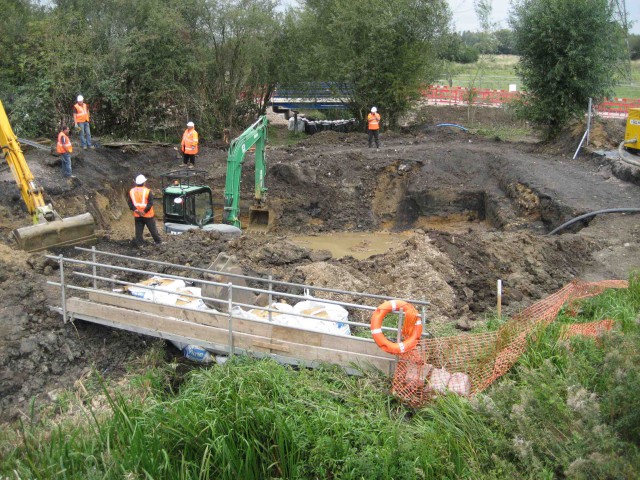
Nigel Bray is our new Flood Star. Consulting Engineer to the EA, Nigel has worked on reducing flood risk in Oxford since 2000. During that time he has become well known to many people in the area and gained their respect. He has worked, apparently tirelessly, in developing schemes small and large, has overcome the many obstacles to implementing them, and has kept us informed at evening meetings in various village halls. Nigel has not just done his job, he’s done it well and beyond what might be expected. Typically, earlier this year he put on his wellies, rolled up his sleeves, waded in and shifted concrete bags to help sort out a problem in Kennington. Thank you Nigel.

Clearing Hinksey Stream

2 November 2009

Clearance of Hinksey Stream by the Environment Agency starts near South Hinksey. Improving the flow of water here will benefit everyone upstream, to the Botley Road and beyond.

Clearing Seacourt Stream under the A34 near Wytham

2 October 2009

Work began a couple of days ago on the Seacourt Stream just below Wytham, where it goes under the A34. The Environment Agency has desilted the stream and cut back the bank immediately above the culvert. We’re told that further work will be done to clear vegetation in the near future.

Kathy Day, Clerk to Wytham Meeting, writes:

‘This is Wytham’s ‘pinch point’ as the water from our part of the flood plain has to flow into the Seacourt Stream, then through the relatively narrow channel under the A34. Our thanks to OFA – and to Nigel Bray, EA, who have listened to the Parish Meeting’s points about this and acted upon them’.

OFA comments:

This work is very welcome. The improvement must maintained by regular maintenance in the future. It should never have been allowed to get into its recent poor state in the first place. Budgets for maintenance need to be substantially increased centrally so the local team can get on with the job. This applies not only here but throughout the Main River system in the area. Good work has been done recently to clear Seacourt Stream below the Botley Road and this is, we understand, to be extended south. Very welcome news but, again, it must be kept clear in future by adequate maintenance.

Temporary barriers for the Hinksey Park area

22 September 2009

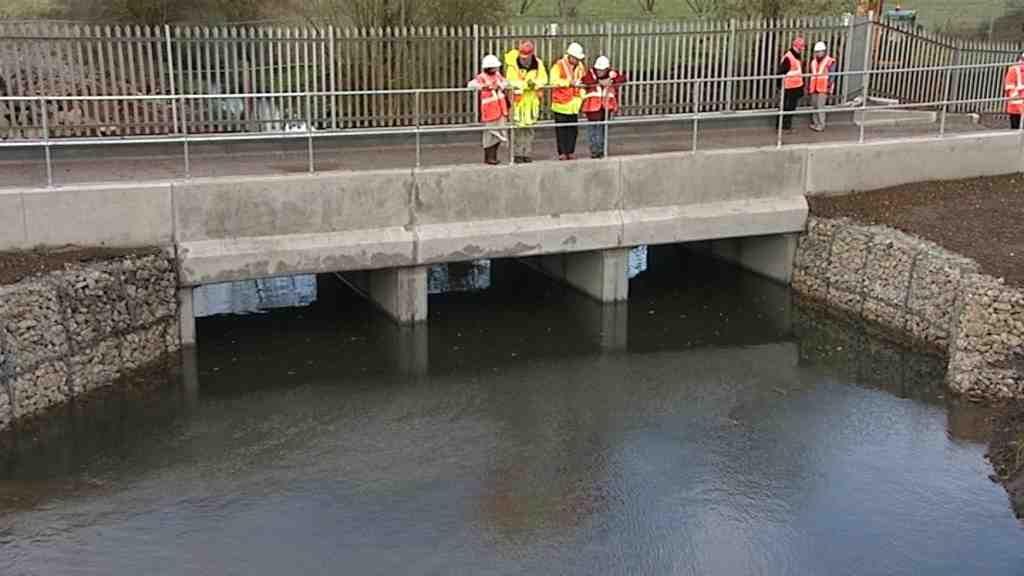
The Environment Agency demonstrated their new demountable (temporary) flood barriers for the Lake Street / Vicarage Road area this afternoon. The well-attended event showed the barriers being put into place – over 300m in about 1.5 hours. These barriers are to protect houses in Lake Street and surrounding roads which have flooded in recent years.

Earl and Duke Streets

15 September 2009

The Earl Street/Duke Street Area Working Party is bearing fruit. This inter-agency group was established in response to a suggestion from OFA, quickly taken up by the EA and then taken forward by the agencies involved and OFA, led by John Copley of Oxford City.

Work has now begun. Engineers working for Thames Water are installing Penstock valves in each street. The Duke Street valve has already gone in and another is about to go in in Earl Street. The valves will be operated, if flooding threatens, to isolate the drains north of the Botley Road at this point from those in Earl and Duke Streets to the south, relieving the pressure on the drains there which are easily overwhelmed.

Further work, by Oxford City, will connect the rainwater gullies along both streets into the existing large underground pumps at the southern end, which pump into the meadow beyond.