Annual Public Meeting 2015

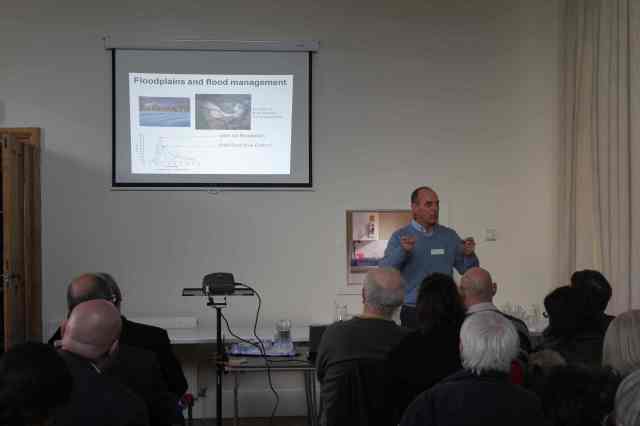
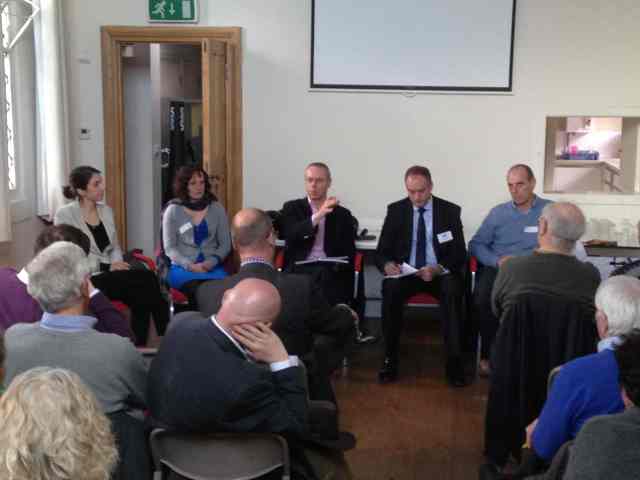
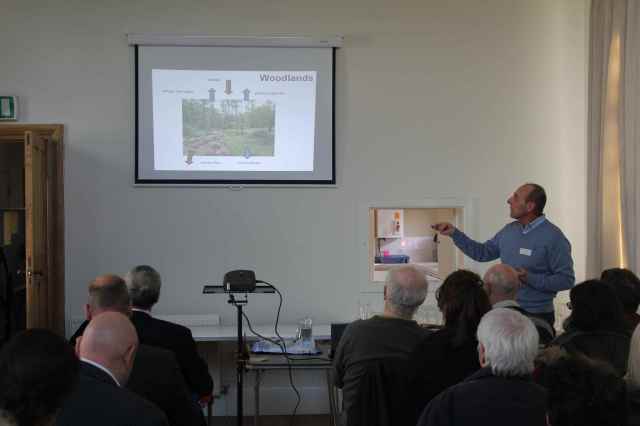
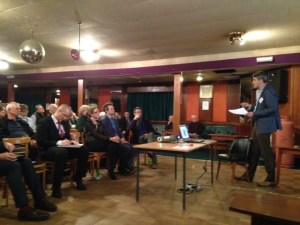
Our Annual Public Meeting on 19 November was well attended – we were delighted to welcome many members of the public, local councillors, representatives of all the local flood agencies, an Oxford University researcher and Andrew Smith, MP for Oxford East. Nicola Blackwood, MP for Oxford West and Abingdon, and Rodney Rose, Deputy Leader of Oxfordshire County Council, sent their apologies.

Adrian Porter began the evening by setting out our three key current objectives:

  • support for the proposed multi-partner Oxford Flood Alleviation Scheme (Oxford FAS)
  • maintenance of existing waterways
  • that as and when the Oxford FAS happens, maintenance should be properly provided for from the start.

He went on to give an overview of the past year including our recent boat trip, with the Environment Agency, which identified necessary maintenance on Weirs Mill Stream: this work is being planned and funding being sought. John Mastroddi provided detail on the clearance under Munday’s bridge, which completes the project begun in 2013. Impending planning applications at Seacourt P&R and Oxford Four Pillars Hotel, both firmly in the floodplain, are on our radar.

Nick Hills, our Treasurer, told us that we had £346 in the bank, enough for several years at the present rate of spending! Nevertheless, being the good treasurer he is, he asked people to leave any donations as they left: this raised a very generous £110. Nick set out some of the things we’d been pleased to see in the year: among those not referred to in more detail later on were the permanent pipe under the Botley Road to allow pumping across the road without disruption to traffic (County and City Councils), Waitrose’s use of SUDS at their new shop and the successful public events for OFAS during the summer.

He explained how we support OFAS in principle and are contributing to the process along with the other partners – but always reserving the right to be a ‘critical friend’.

The first of our guest speakers, Joanna Grew from Network Rail, gave an account of their proposed Hinksey Flood Alleviation Scheme: this includes the clearing of culverts at Coldharbour (for which we have been pushing for some time), track raising and installation of new culverts. More detail can be seen in Joanna’s presentation downloadable here. You can download a leaflet about the scheme here.

James Playfair explained the progress of Thames Water’s ongoing sewer survey across Oxford, the Oxford Catchment Study. This is about to enter its second year: already some issues have been resolved including significant improvements to the pumps at Littlemore Pumping Station. The presentation can be downloaded here.

Last but not least Emma Formoy from the Environment Agency gave the meeting an up-to-date account of the Oxford FAS; Emma mentioned the possible wider benefits of the scheme, including for wildlife, and the crucial importance of rigorous modelling. More detail in the presentation downloadable here: this includes dates of the next round of Public Events in January 2016 when a consultation on the route options for the scheme will begin. These can be also seen in the Oxford FAS Newsletter – November 2015, perhaps more easily. In parallel with these events, people will be able to view these proposed options and partake in the consultation online.

Apart from these individual achievements and plans, what is remarkable, and heartening, is the considerable cooperation, for example sharing of modelling data, between these three agencies – i.e. they talk to each other! As one of us commented later, we have come a very long way since 2007. We are grateful to our guests for coming to talk and for all the work their organisations are doing. The sum (assuming they all reach fruition) will give Oxford a better, and more secure and sustainable, future.

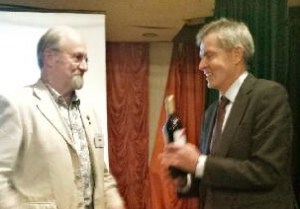
Nick Hills presented Steve Smith, Engineer with Oxford City Council, with our Flood Star award for this year. This is in recognition and thanks for Steve’s sterling work on many flood schemes and smaller works over the years, as well as co-ordinating the Oxford Area Flood Partnership.

Peter Rawcliffe spoke about OFA’s suggestion for maintaining Oxford FAS: as this is to be largely a ‘natural’ channel it will be subject to inevitable deterioration – so providing both a problem and an opportunity. OFA proposes that a trust be established, in perpetuity, to manage for both flood alleviation and wildlife. Trustees could be drawn from the several stakeholders – landowners, local authorities, Environment Agency, academics and wildlife bodies – to name just a few. We believe this is a practical way to make the most of what the scheme offers Oxford and its residents and visitors. This 7km channel will be ever more essential to Oxford if climate change develops as predicted. Each km may cost £18 million to build. We need to treasure it: in our view a local trust with local accountability, and autonomy to manage as it sees fit, fits the bill.

Simon Collings discussed modelling: as mentioned above this is absolutely vital to developing the case for OFAS – both to be as sure as humanly possible that it will work and equally importantly that no one downstream will be disadvantaged. We recently attended a meeting at the School of Geography, Oxford University: Simon explained some of the potential pitfalls of modelling that we had learned of there, and suggested that community review of the OFAS modelling (assisted by expert modellers) be included in the scrutiny process. This in addition to review by academic modeller(s) which is already under discussion for the scheme and which we strongly support.

We thank those who attended for their support and we thank our visiting speakers for helping to make the meeting a success. Our thanks too to the West Oxford Democrats Club for generously allowing us to use their hall once again.

Notice of our Annual Public Meeting – next Thursday, November 19th

Oxford Flood Alliance logoANNUAL PUBLIC MEETING:

THURSDAY 19 NOVEMBER 2015

At The Democrats, Osney Island, 7.30 pm. Entrance at the north end of East Street.
Doors open from 7.00 pm.

EVERYONE VERY WELCOME –

YOUR CHANCE TO HEAR THE LATEST FROM

Network Rail on their plans to clear blocked culverts under the railway north of Redbridge.

Environment Agency on the multi-million pound Oxford Flood Alleviation Scheme (FAS) (Western Conveyance)

Thames Water on their major review of Oxford’s sewers.

ALSO

Hear our ideas on how Oxford FAS might be maintained not only for flood alleviation but also for wildlife.

Local planning applications, Weirs Mill Stream – and more.

South Hinksey sewer flooding

We held a meeting on 20 August 2015 to discuss this, especially in relation to possible temporary bunding of the village at time of river flooding.

Representatives from Thames Water (TW), the Environment Agency (EA) and of OFA from South Hinksey met. We had an interesting and fruitful discussion. These actions were agreed:

Thames Water (TW) to initiate a clean of the box culvert north of the village (by today, 27 Aug, this has already been ordered) and update us further on the work that has been, and still is being, done to considerably improve the pumping station at Littlemore.

TW will consider OFA’s suggestion of a sewer bypass for the village, as part of the ongoing Oxford Catchment Study.

Adrian Porter for OFA will fit a chain and handle to the existing non-return flap valve on the Manor Road surface water outlet to enable manual override if necessary.

The suggestion of a memorandum of understanding between the EA and TW, as to how sewer flooding would be dealt with at times of fluvial flooding, especially if a temporary bund were deployed, will be taken forward by the EA.

Many thanks to Thames Water and the Environment Agency for meeting with us and their very positive approach to the problems.

Meeting in South Hinksey

South Hinksey concrete flood wall, March 2014, post-floodOn Thursday evening 16 July,  30 or so parishioners met in South Hinksey Village Hall with Peter Collins and Magnus Williams from the Environment Agency (EA). We were pleased that local farmer Nick Frearson and a land agent on behalf of landowner Oxford City Council, were present too: they are important stakeholders in the project.

Groundwork
Engineer Magnus Williams presented his initial design ideas for groundwork to support deployment of temporary barriers for the village when flooding threatens. Magnus is talking to individual householders to ensure that everyone is happy with the specifics of the proposals.
We’re grateful to the Vale of White Horse District Council for providing £60k for the works and to the EA for providing the engineering design input, obtaining of permissions and so on.
We hope that things can move ahead as fast as possible as winter approaches and the risk of our flooding increases yet again.

Oxford FAS
Peter Collins, EA’s Asset Management Performance Team Leader for the Oxford area updated us on the aims and progress of the scheme.

Many thanks to Magnus and Peter for giving up their evening to meet us, much appreciated.

Working to reduce sewer flooding

Simon Collings represented OFA at the second meeting of Oxford City Council Scrutiny Panel on sewer flooding. Thames Water (TW) gave an update on where they are with a) Grandpont and b) the Oxford Catchment Study:

At Grandpont they have identified the most likely causes of sewer flooding and TW will now work with the City Council and residents to improve things. Local resident Brian Durham of OFA and SOFAG has been closely involved in this work.

On the Catchment Study they are engaged in two parallel processes:

  • a physical inspection of assets across the city – with any issues they identify being fixed as they go along (where the business case is obvious). This includes an inspection of both main trunk sewers.
  • customer surveys to help them understand where problems arise during a flood and how these manifest themselves.

So far they haven’t encountered anything which would suggest they need major capital investments, though they do plan to upgrade the pumps at Littlemore.

TW are talking to the Environment Agency (EA) team working on the Oxford Flood Alleviation Scheme, and the two modelling teams are going to share data and work together. By good luck the option development phases of both projects are working to similar timetables. EA will help TW understand how the river flooding affects the sewers, and TW will contribute to that work.

There will be one more meeting of the Scrutiny Panel in November/December but from then on formal reports will be given through the Oxford Area Flood Partnership, to avoid duplication of meetings.

Maintenance in Hinksey Stream

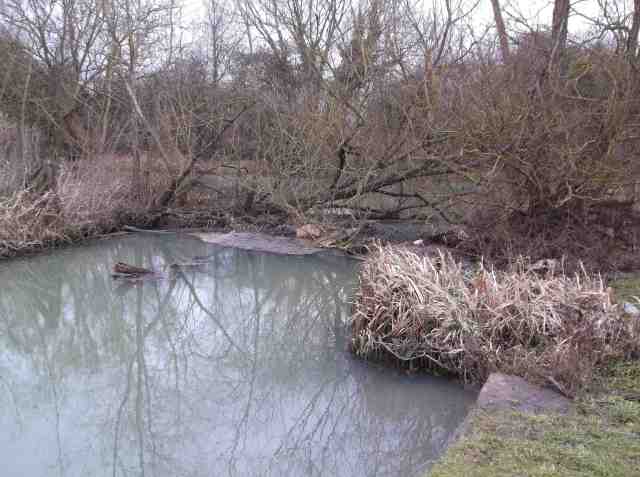
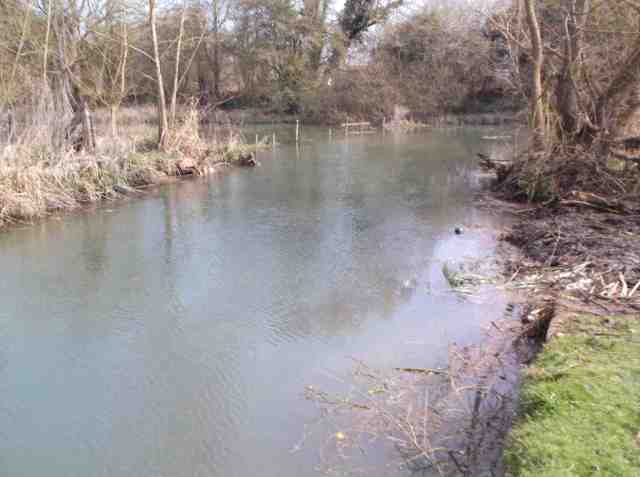
The Environment Agency have recently been clearing in the Hinksey Stream, this taken just south of South Hinksey.

OFA symposium on natural flood management techniques : Summary Report

OFA symposium on natural flood management techniques : Summary Report
26 March 2015, Oxford, in collaboration with the Environmental Change Institute, University of Oxford

Could techniques such as planting trees and creating more wetlands in the upper Thames help to reduce flood risk in Oxford? This was the question we asked a number of experts to address at a symposium attended by around 60 people – a mix of academics, local residents and officials from local councils and the Environment Agency – on 26 March 2015.

Professor Mike Acreman, a rivers and wetlands expert from the Centre for Ecology and Hydrology at Wallingford, gave an overview of what science today can tell us. Prof. Acreman started by pointing out that fluvial flooding is natural, with benefits to the environment. We cannot stop it happening. He said that in theory tree cover should help to reduce runoff, through ‘canopy intervention’ and’ improved soil infiltration’ but the scientific data on this are weak. A study at Pontbren, in the Brecon Beacons, showed that soil infiltration was increased by hedges and trees. Restoration of mires on Exmoor has also shown some benefit in improved water retention. But the volumes involved are small compared to the total volume of water involved in a flood event. Foresting small areas of a catchment might bring localised benefits, but would have no measurable effect at the level of the wider catchment. To impact the whole catchment change to the landscape would be required on a massive scale, and even then this would have very limited impact in a major flood: soil can only retain so much water. During a period of prolonged rainfall the ground becomes saturated, as happened in late 2013 in the Thames catchment. Any additional rainfall simply drains into the river system. He also explained that interventions which have local benefits may have unintended consequences downstream. Flooding has temporal as well as spatial scale effects, and delaying the peak from a tributary can result in it being superimposed on the peak in the main river, rather than arriving before it, so increasing the overall peak level. Prof. Acreman argued that we need a mix of conventional engineering approaches, and enhancement of natural processes, to effectively manage risks.

Lydia Burgess-Gamble, a research scientist with the Environment Agency, talked about the work the agency is doing on natural flood-management (NFM) techniques. She explained that since the Pitt Report on the 2007 floods the EA has been engaged in more work of this kind and a small number of schemes have been established, with positive early results. These are small, localised interventions such as the 30 attenuation ponds (10,000 m3 of storage) built on 10 km2 of farmland around the village of Belford in Northumberland. In Pickering in North Yorkshire conventional flood defences have been supplemented by woody dams and tree planting by the Forestry Commission. Here the aim is to reduce flood risk from 25% a year to 4% by arresting flow in a ‘flashy’ beck which runs through the town. In the Thames valley there has been work including leaky dams slowing runoff into the Evenlode at Honeydale Farm. Flooding in Stockton-on-Tees is being tackled through building 40 storage ponds in locations identified through modelling. This scheme is at the initial stages of implementation. The EA plans more of these projects, creating ‘opportunity maps’ and working with natural processes where there is potential to achieve ‘healthy catchments’. ‘Catchment laboratories’ (including data collation and workshops) are proposed, building on ‘green engineering’, but there remain many knowledge gaps and the full impact of these types of interventions will not be understood for some time. Lydia said NFM was one tool only.

Derek Holliday of the CLA, which represents farmers and other landowners who together manage 70% of the land in England, described the major shift which has occurred in the last 10–15 years away from subsidies for crop production towards payment for ‘ecosystem services’. He argued that even bigger shifts need to happen but this requires a clear policy framework – farmers need to make spot decisions between land management options, and his members say they tend not to have the necessary information to favour flood-friendly options. They also worry about the `reversibility’ of these options, policies being changed. Without a clear framework, landowners will not make the investments which change would require.

With the fourth speaker, Nathalie Schaller from the Environmental Change Institute at the University of Oxford, we changed tack slightly and looked at climate change and its likely implications. After each extreme weather event the public wants to know if ‘climate change’ was a contributing factor – but limited research has so far been done. Nathalie presented the results of a study of the degree to which human-generated greenhouse gases increased the likelihood of the Jan/Feb 2014 floods in the UK: this type of approach is known as ‘event attribution’. A large number of computer simulations were run for different scenarios to try to separate out anthropogenic carbon from underlying climate variation. The study found that human activity had on average increased the risk of the 2014 floods happening by 40%. The implication of this for the future is that extreme weather events are likely to be more common.

Following the presentations there was discussion, with the presenters responding to points from the audience. The conversation ranged across many issues and it is not possible to capture all the points made. The overall conclusion was that natural flood-management techniques can bring benefits in smaller catchments, especially in lower-order flooding events. Isolated projects in the upper Thames would, however, have no measurable impact on Oxford with its large catchment (about 2,500 km2 upstream). A complete re-landscaping of the Thames catchment might, if it could be achieved, reduce flood peaks by 10–15%. Achieving the transformations in land-use necessary to deliver this benefit would require radical new legislation and/or a new culture, taking ‘around 40 years’ to implement. As a means of addressing flood risk in the city ‘natural’ methods would not replace the proposed flood relief  scheme for Oxford and Abingdon, but might help prolong its life expectancy.

An interesting point of detail concerned the role of insurance companies which in theory should have an interest in funding flood-risk reduction measures for land, but which are not incentivised to make such investments.

There was also some discussion of groundwater, which is a major contributor to flooding in Oxford, over and above fluvial flooding. There appeared to be little which could be done to reduce groundwater at a macro level directly. Lowering surface water levels tends to lead in due course to lower groundwater levels.

There is potential scope for natural flood management techniques to benefit small communities, depending on the local catchment characteristics. There is still much to understand about what does and doesn’t work, and in what context, but the Environment Agency and others are establishing more schemes and are keen to implement projects in the Thames catchment if suitable sites can be identified.

These links download pdfs of this Summary Report, and of three of the speakers’ presentations:

OFA Symposium 2015, NFM and Oxford, Summary Report + links

Presentation by Mike Acreman

Presentation by Lydia Burgess-Gamble

Presentation by Nathalie Schaller.

2nd OFA Flood Symposium

On 26 March 2015 South Hinksey Village Hall was packed to capacity, with over 60 people attending the Second OFA Flood Symposium, organised in conjunction with the Environmental Change Institute, University of Oxford. The afternoon was devoted to Natural Flood Management and Climate Change, particularly in relation to Oxford.

Prof. Mike Acreman is a wetlands specialist from the Centre for Ecology and Hydrology, Wallingford. Dr. Lydia Burgess-Gamble, a research scientist with the Environment Agency, has national oversight of research on natural flood management techniques. They opened the meeting with two excellent presentations on natural flood management, its potential and its limitations.

Derek Holliday, National Head of Environment at the CLA gave us an enlightening insight into the problems, economic and practical, faced by landowners and farmers in relation to what they may be able to do to reduce flood risk on their own land or elsewhere.

Dr. Nathalie Schaller, leader of the research project ‘Human influence on climate in the 2014 Southern England winter floods and their impacts’, Environmental Change Institute, Oxford then gave us a wonderfully clear account of this project, suggesting that anthropogenic factors may well have played a part in these floods – with obvious implications for the future.

The success of the afternoon can perhaps be judged from the wide-ranging and lively discussion which followed for well over an hour.

More detail on the main messages which emerged during the afternoon will be published on this website soon.

Oxford & Abingdon Scheme

We attended a ‘Councillor Update’ on the scheme at County Hall last evening. Cllr Rodney Rose introduced the evening, followed by contributions from the Environment Agency, Oxford City Council, Vale of White Horse District Council and the Local Enterprise Partnership (LEP). There was a good attendance from councillors, and plenty of questions and discussion after the presentations.

Maintenance – site visit to junction of Hinksey Stream and Hinksey Drain

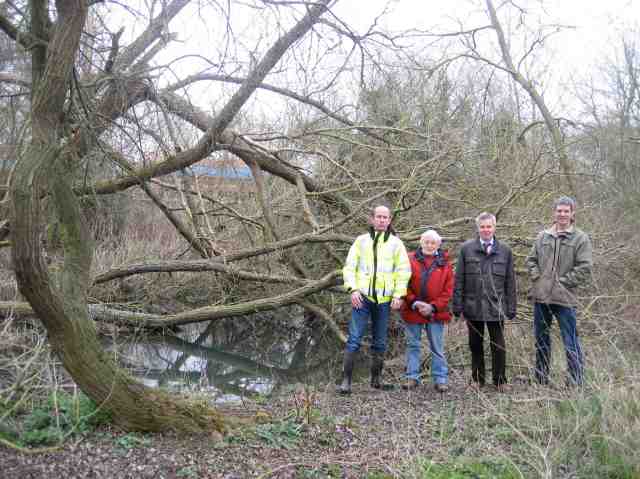
Four of us met this afternoon to inspect this important area. Hinksey Stream and Hinksey Drain are designated Main Rivers: the visit today was to the point, south of South Hinksey, at which the Stream goes under the mainline railway and the Drain diverges from it.

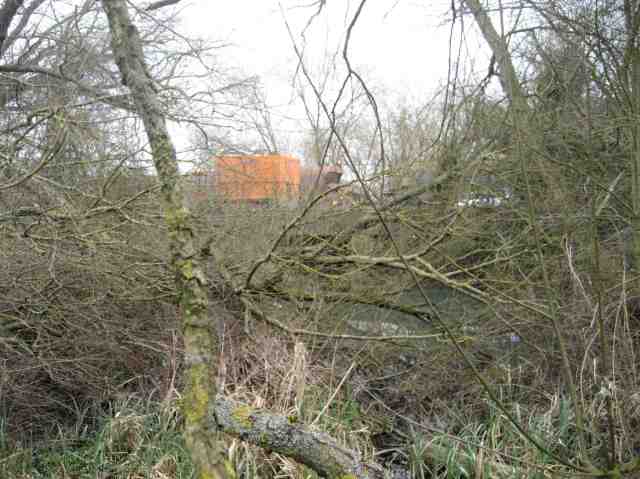
As mentioned on our Home Page we are determined that maintenance of the waterways is properly planned for and given high priority, so everything works as well as possible. We want to see riparian owners fulfilling their legal responsibilities to keep waterways clear. We have for years been agitating that this particular area receive attention as it is in an appallingly poor state.

Today’s meeting took this an important step further on. Present were Peter Collins, Environment Agency, Steve Smith, engineer from Oxford City, and Adrian Porter and Peter Rawcliffe from OFA. There was unanimous agreement that extensive clearance of this area is needed as soon as possible. Steve Smith will be checking on the ownership – once this is certain, Peter Collins will work with whoever it is (seems likely to be Oxford City or Network Rail) and the tenant farmer of the adjacent field, to start clearance asap (subject to bird nesting).

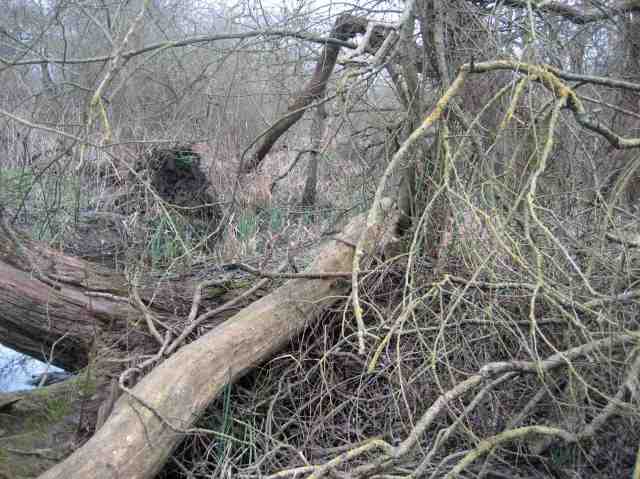
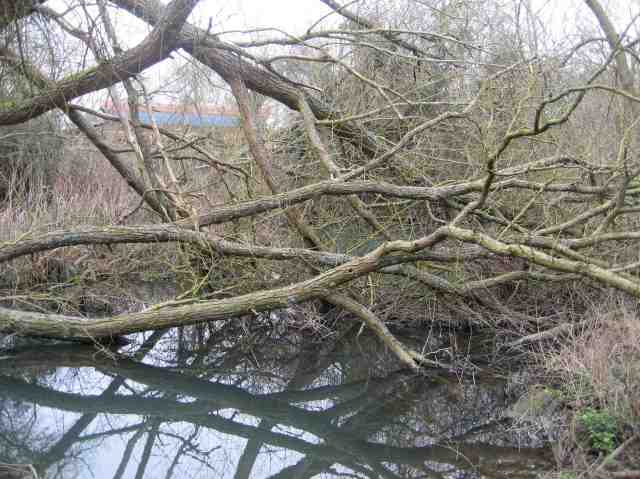
These photos can only give an idea of just how very badly looked after this vital area is. We thank Steve and Peter for taking this on and will be supporting them if any difficulties arise.